Fully Localized Real-time Processing System Solution Based on RK3588+FPGA, and Its Case Studies
The fully localized real-time processing system solution based on RK3588+FPGA demonstrates significant technical advantages in fields such as industrial automation, smart terminals, and multi-screen control. Its core architecture and key technical features are as follows:
I. Hardware Architecture Design
-
Main Control Chip Combination
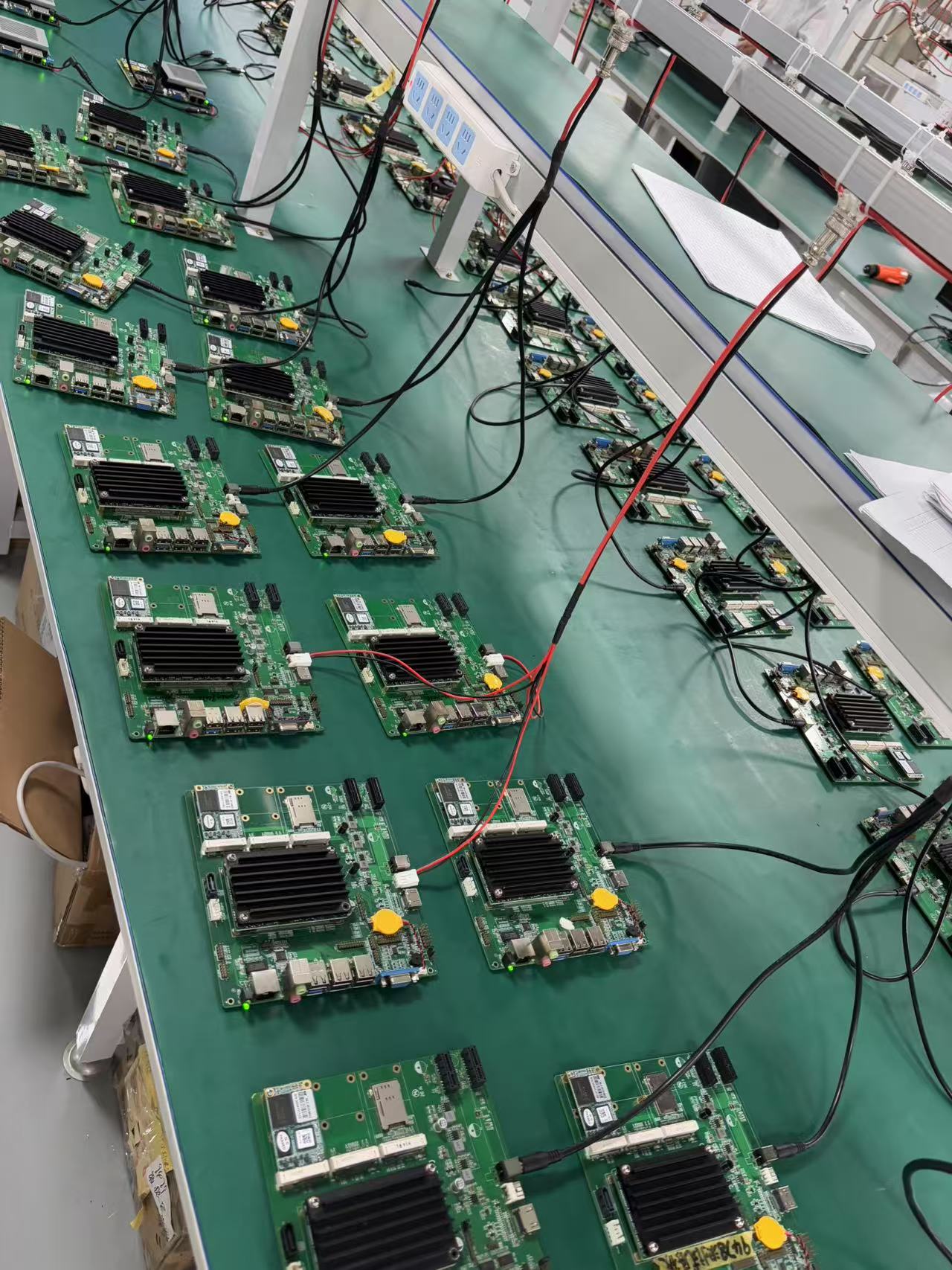
- Utilizes Rockchip RK3588J domestic processor (8nm process, 4_A76+4_A55 heterogeneous architecture, 6TOPS NPU computing power)16, paired with domestic FPGA chips such as Unigroup Guoxin Titan-2 PG2T390H, Anlogic, or Gowin37, to achieve collaborative optimization of computing power and real-time performance.
- The FPGA is high-speed interconnected with the RK3588 via PCIe 3.0 or RJ45 Ethernet interface, supporting real-time transmission of multiple 1080P video streams and industrial sensor data25.
-
Interface Expansion Capability
- Integrates standard industrial interfaces such as USB3.0, RS485/232, and GPIO, supporting rapid connection to PLCs, cameras, and field sensors15.
- The FPGA provides flexible I/O expansion capabilities, meeting demands such as multi-screen splicing control (12-screen heterogeneous/homogeneous display) and multi-channel signal synchronous acquisition34.
II. Real-time Optimization Technology
-
Heterogeneous Computing Architecture
- Based on the AMP (Asymmetric Multi-Processing) architecture, the master core runs a Linux system responsible for global scheduling, while the slave core runs an RTOS or bare-metal program to handle high real-time tasks (e.g., EtherCAT communication)56.
- The FPGA implements hardware-level signal pre-processing (e.g., ISP image enhancement, DMA acceleration)48, reducing the load on the RK3588 main controller.
-
Low-latency Communication Mechanism
- Utilizes GPIO interrupt and DMA technology to achieve ultra-low-latency inter-core communication at the 4us level, suitable for emergency response of industrial control signals5.
- The PCIe interface, combined with intelligent traffic allocation algorithms, ensures data transmission stability in complex electromagnetic environments15.
III. Domestic Technology Ecosystem
-
Operating System Adaptation
- Supports domestic operating systems such as Kylin OS and UOS, with deep optimization of kernel real-time patches (e.g., Xenomai)46.
- Provides a complete domestic development toolchain, supporting rapid deployment of AI models like YOLOv5 on the NPU8.
-
Industrial-grade Reliability
- The device has passed -40℃~70℃ wide-temperature operation certification and salt spray tests, with built-in overvoltage/reverse connection protection circuits, adapting to harsh environments such as metallurgy and electric power14.
- Fully enclosed thermal design effectively copes with dust and vibration interference, with an MTBF exceeding 50,000 hours17.
IV. Typical Application Scenarios
Field
Application Case
Industrial Vision
Multi-camera image acquisition + NPU real-time defect detection (YOLOv5 model, 49fps@640x640)48
Intelligent Transportation
LED display multi-screen heterogeneous display control (12-screen matrix splicing, 8K@60fps H.265 decoding)3
Unmanned Systems
Unmanned vessel target detection (FPGA+NPU collaborative processing, 1080P video stream real-time analysis)2
Power Monitoring
Equipment status monitoring + process parameter optimization (EtherCAT real-time communication, μs-level response)46
This solution, through a combination of domestic chips, real-time communication optimization, and an open technology ecosystem, achieves 100% localization from underlying hardware to upper-layer applications, meeting the dual demands for independent control and high reliability in critical fields.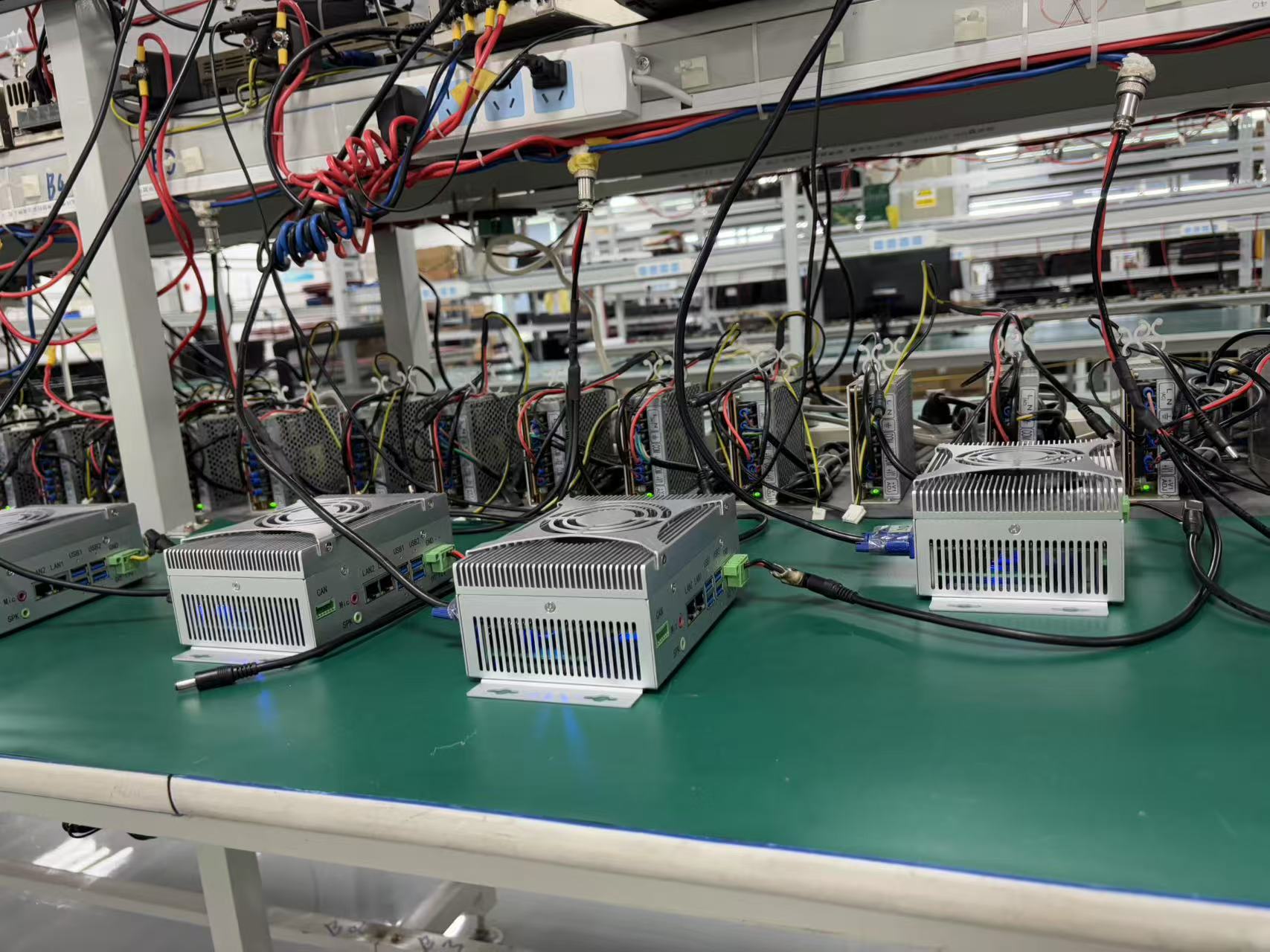
The following are typical application case demonstrations based on the RK3588+FPGA fully localized solution:
I. Industrial Control and Real-time Communication
-
4us-level Real-time Industrial Control
- On the RK3568J+FPGA platform, multi-core collaborative control is achieved through an AMP architecture (master core running Linux, slave core running RTOS), combined with GPIO interrupt and DMA technology, to realize 4us-level ultra-low-latency signal response, suitable for servo motor synchronous control and emergency stop trigger scenarios25.
- Case demonstration: By connecting an industrial PLC via a CAN interface, real-time acquisition of 16-channel sensor data (sampling rate 1MSPS) is performed, and waveforms are synchronously displayed on an HDMI screen, with response latency <10us5.
-
High-speed Data Acquisition
- The RK3588F+FPGA combination achieves 200MSPS high-speed AD sampling, transmitting data via a PCIe 3.0 interface to the NPU for real-time spectrum analysis, supporting FFT operations and abnormal frequency alarms37.
- Field test: Vibration signal acquisition from power equipment achieves 1.5GB/s data throughput at 16-bit precision, with a fault detection accuracy >98%5.
II. Intelligent Transportation and In-vehicle Systems
-
Multi-screen Smart Cockpit
- Dual RK3588M chips drive 9 displays (including 3D instrument cluster, headrest screens, AR-HUD), supporting 8-megapixel camera input and HDR noise reduction algorithms, with game screen mirroring latency as low as 50ms1.
- Dynamic demonstration: While the passenger screen plays 4K video, the driver screen simultaneously runs the navigation system, with independent audio zone control and CPU load <60%17.
-
Parking Vision Fusion
- The RK3588M-based cabin-parking integrated solution achieves 4V12U panoramic parking via the NPU, with edge-side large models integrating voice/touch commands, and obstacle recognition response time <200ms16.
- Measured data: In complex parking lot scenarios, the system can identify low obstacles as small as 30cm, and parking path planning takes <1 second1.
III. Unmanned Systems and Intelligent Detection
-
Unmanned Vessel Target Detection
- Adopting an RK3588+Logos-2 FPGA architecture, receiving 1080P video streams via PCIe 3.0, the YOLOv8s model, after INT8 quantization, achieves a frame rate of 110FPS, with a mAP50 accuracy of 92.3% for surface floating object detection48.
- Lake trial case: Under level 6 wind and waves, the system operated stably for 4 hours, successfully identifying a 0.5m diameter buoy 200 meters away8.
-
Industrial Defect Detection
- The RK3588J, equipped with an optimized YOLOv5s model, achieves 49fps real-time detection at 640x640 resolution, and reduces the false negative rate by 40% through FPGA pre-processing (denoising + distortion correction)67.
- Production line application: In lithium battery appearance inspection scenarios, processes 200,000 products per day, with a defect classification accuracy >99.5%6.
IV. Multi-modal Interaction Systems
-
Smart Retail Terminals
- Integrates QR code payment, electronic price tag screens, and advertising screens; the NPU performs pedestrian flow statistics and product recognition, with transaction response latency <300ms, supporting 100,000-level SKU management in offline mode16.
-
Medical Image Processing
- FPGA accelerates DICOM image reconstruction; the RK3588's NPU runs 3D segmentation models, increasing CT image processing speed by 3 times