x86+FPGA-Based Solution for Digital Medical Devices
Digital Medical Devices
Digital Healthcare is far more than a simple collection of digitized medical equipment; it is a new, modern approach to healthcare that applies contemporary computer and information technology to the entire medical process. With digital healthcare, patients can complete appointments with minimal procedures, doctors' diagnostic accuracy is significantly improved, and patient medical records archive all current and historical patient health information, greatly facilitating doctor diagnoses and patient self-checks. It truly enables the comprehensive patient data retrieval required for remote consultations, providing fast, effective services. Another major advantage of digital healthcare is the ability to share resources between medical equipment and medical experts. For medical institutions, a comprehensive health information database lends greater authority, and the establishment of such a system can significantly enhance competitiveness.
Key Characteristics of Digital Healthcare:
[Digitization of Medical Equipment]
The digitization of healthcare begins with the digitization of medical equipment, which forms the foundation of digital healthcare. Digitized medical equipment refers to devices where data acquisition, processing, storage, and transmission are all based on computer technology and operate under computer software. These have gradually replaced conventional equipment to become the mainstream in clinical settings. Digitized medical equipment can store, process, and transmit the information it collects.
[Networking of Medical Equipment]
Digital healthcare enables the sharing of internal hospital equipment resources, facilitates the transmission of images and document data, reduces patient waiting times for registration, payment, medication, and consultations, and allows for electronic billing and e-prescriptions, thereby reducing the probability of errors. In terms of telemedicine, digital healthcare can facilitate remote education and video conferencing, remote consultations and surgeries, online inquiries and assistance, as well as online registration and appointments. This ultimately achieves global resource sharing.
[Informatization of Hospital Management]
Administrators can monitor the hospital's operational status and the work of various departments at any time via the network, ensuring the hospital consistently operates at its optimal state. Furthermore, hospitals can provide patients with various necessary information at any time.
[Personalization of Medical Services]
People can make appointments and register from home via the internet. Patients no longer need to wait for test results in examination departments; various diagnostic images and data can be directly transmitted to the attending physician, enabling doctors to provide timely and accurate diagnoses and treatments. Private healthcare services and public medical consultation services, based on the internet, cable TV, etc., will constantly remind the public to undergo physical examinations, predict the onset and progression of certain diseases, and recommend new treatment methods to patients. This allows patients to enjoy personal doctor healthcare services without leaving their homes.
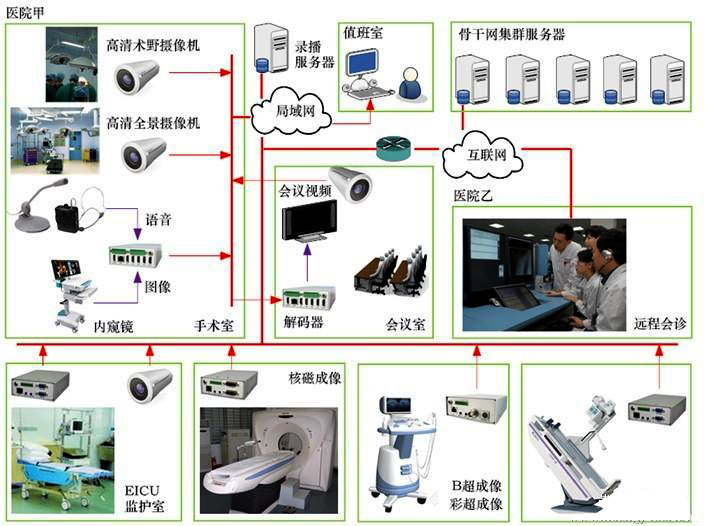
Application Scenarios
