X86/ARM-based SLAM+AI Robot Controller [Semiconductor Solutions] Smart Logistics Upgrade for Semiconductor Packaging and Testing Process Segments
A globally renowned semiconductor enterprise is undergoing a smart logistics upgrade for its packaging and testing process segments. This project covers two cleanroom scenarios, involving over 70 pieces of various semiconductor equipment, with a total route length exceeding 5 kilometers. More than 40 AMRs are deployed on-site, operating 24 hours a day without interruption, which severely tests the durability of both the AMR scheduling system and the AMR vehicles themselves.
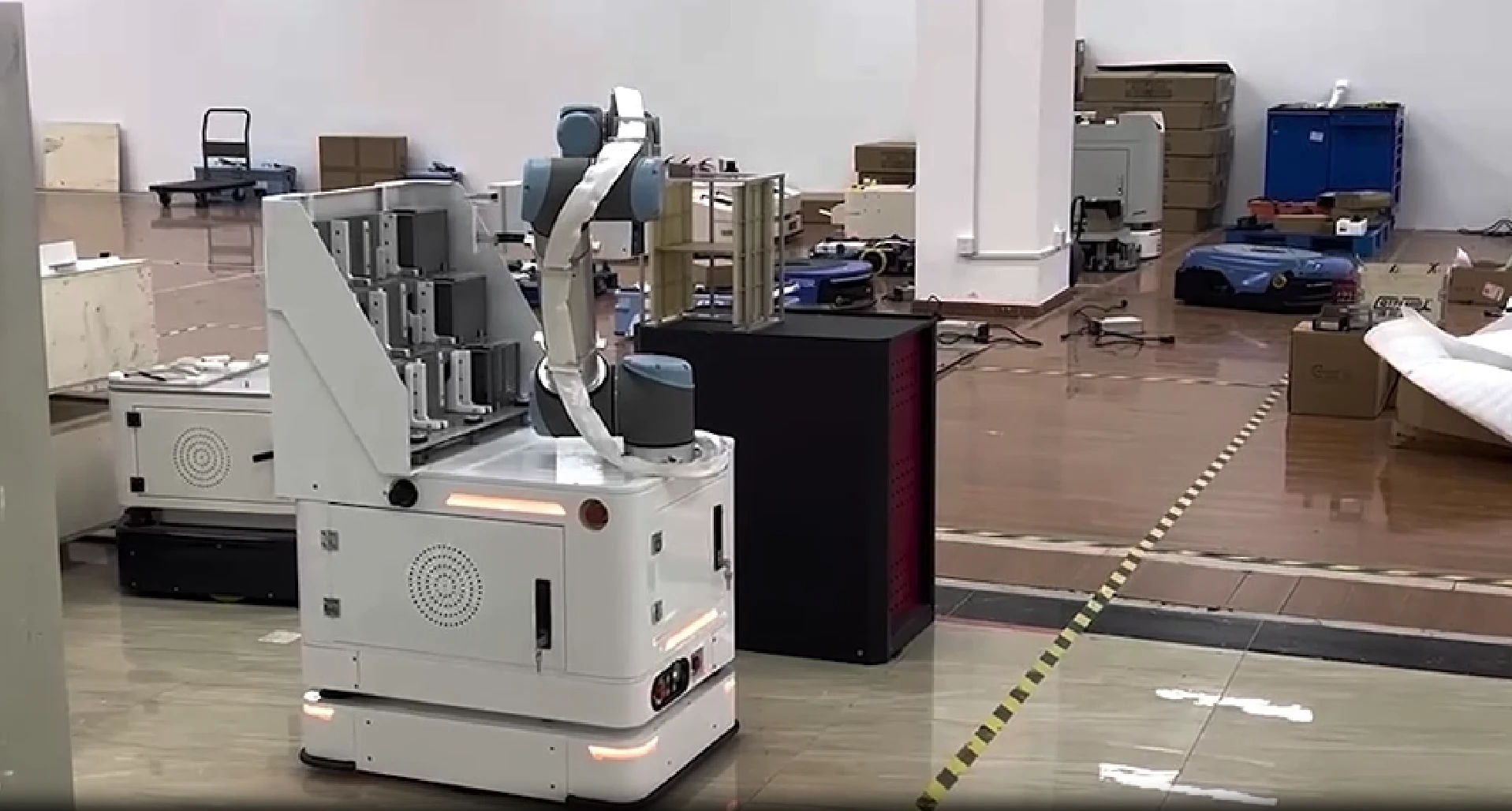
Solution Highlights:
40+ cleanroom-certified composite robots specifically for packaging and testing
Line-side buffer stations
Warehouse and Logistics Management System (MWMS)
Unified Resource Dispatching System (RDS)
Challenges and Solutions:
Challenge 1: Difficult and lengthy deployment of 2D vision solutions
Solutions:
- No markers required for production or installation
- Significantly reduced deployment cycle for multiple devices
- No additional light source needed, more reliable recognition
- SRC controller enables unified control of chassis, robotic arm, and vision
Challenge 2: Safety issues during gripping
Solutions:
- Patented new gripper design
- Integration of all arm-mounted auxiliary devices with the SRC controller
- 360° omnidirectional safety sensing capability.
Challenge 3: Mismatched cycle times between processes and low efficiency
Solutions:
- Advantage of underlying algorithms, considering globally optimal task assignment from the ground up to prevent AMRs from idle running.
- Powerful on-board caching capability and modular storage slot design
- Diverse AMR transport modes
- Customized line-side buffer "micro-warehouses" combined with a self-developed MWMS system to enable intelligent order planning and intelligent order volume early warning based on customer production schedules.
- Powerful software simulation capabilities, with simulation results directly applied to real-world operations (WYSIWYG simulation).
Hardware Specifications
Hardware Platform
Processor
RK3588, 4 x A76, 4 x A55, 2.0GHz
Memory
8GB LPDDR4
Storage
On-board 64GB eMMC5.1
Interface Type
Serial Port
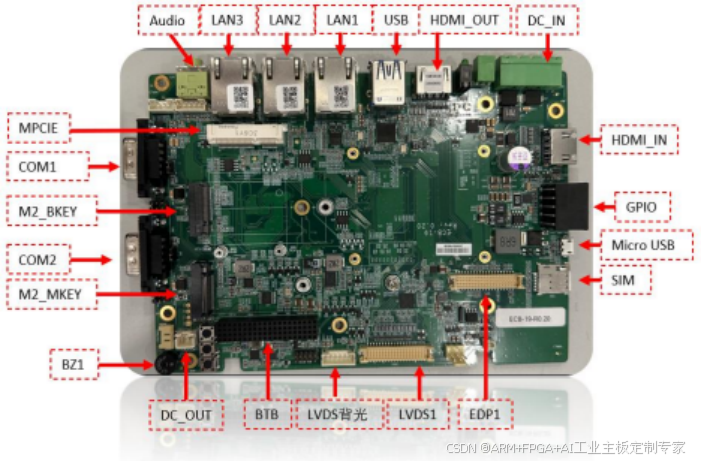
2x RS232/RS485, DB9 Connector for external (COM1/COM2) Serial port baud rate: 9600~115200bits/s
USB
USB1: 1x USB3.0/USB2.0 Host, Type-A Stack ports; USB2: 1x USB3.0/USB2.0 Host, Type-A Stack ports
Ethernet Port
1x GbE port by RJ45 with RTL8211F Controller
2x GbE port by RJ45 with Intel I210AT
M.2
1x M.2 M-Key 2242/2280 (PCIe3.0/SATAIII)
1x M.2 B-Key 3042/3052 (USB3.0/2.0), supports 4G/5G
GPIO
8x GPIO, 2*5Pin, PH=3.5mm, supports APP customization
Mini PCIe
1x Internal Mini PCIe (USB2.0), 52P, for WIFI module connection
SIM
1x SIM Card SLOT, NANO-SIM (4G/5G*1)
Power Interface
DC9~36V input, with reverse polarity protection
Audio
1x Audio Jack, Φ3.5mm, Green (Line out)
Display
HDMI IN/OUT
1x HDMI OUT2.1, supports 4K display; 1x HDMI IN, supports 4K@60fps video input
LVDS (Internal)
1x LVDS, supports 1920 x 1080@60Hz resolution
eDP (Internal)
1x eDP interface, DF13, supports 8K@60fps
LED
1x Power indicator, typically green, 3mm
1x Hard drive indicator (M.2), typically yellow, 3mm
Features
Watchdog Timer
Software programmable 1–255 level
Physical Characteristics
Dimensions
206130mm45mm
Structural Material
Black anodized aluminum heat sink / Outer frame: Iron casing (SECC) / Black mounting ears
Mounting Method
Wall Mount Ears
Operating Temperature
-20℃~60℃
Storage Temperature
-30℃~70℃
Relative Humidity
10%~90%