X86/ARM+SLAM-based Robot Controller: [Machinery Industry] Empowers Customers to Achieve Smart Manufacturing
Project Background
With the comprehensive advancement of a new round of technological revolution, production automation and the realization of intelligent internal logistics have become one of the most pressing topics for many manufacturers within the global manufacturing system, and also a critical issue that factory workshops urgently need to address. Especially for large, well-established enterprise workshops, where production automation is gradually maturing, solving internal logistics automation and intelligence has become the next critical step in building smart factories, which is of great significance for achieving high-efficiency and lean production.
Client Challenge
The client is a foreign-funded enterprise and a globally renowned manufacturer of pneumatic and electric components, modules, and systems. In the pneumatic component production workshop of one of its branches in North China, due to the frequent need to move semi-finished products between processing locations, relying on traditional manual transportation for internal logistics was not only inefficient but also hindered the realization of workshop production informatization. To keep pace with the current wave of smart manufacturing development and achieve a high degree of informatization and automation, the client sought to introduce a complete smart logistics solution to address issues related to inbound/outbound logistics and automated production line docking.
Solution
Based on the client's on-site conditions, we assisted the integrator in implementing logistics automation transformation for the factory workshop. Through a complete solution including AMB-based lifting roller robots, AMB-based lifting robots, ground roller conveyors, call PDAs, and an enterprise digital platform, we helped the client achieve automated and intelligent internal logistics in their warehouse and workshop.
The client's site has two areas: the warehouse and the production line. Raw materials from the warehouse (raw material area) need to be transported to the workshop production line. On the workshop production line, there are currently 9 workstations. Each workstation has 2 rollers (one for input, one for output). These specifically include the blank preparation station, processing area 1, processing area 2, processing area 3, processing area 4, deburring station 1, deburring station 2, measurement station, and cleaning station. Production line docking needs to be performed by mobile robots.
The enterprise digital platform is integrated with the user's MES system. Call PDAs are equipped in both the warehouse material dispensing area and the production line workstations. AMB-based lifting robots complete material transportation between the warehouse and the production line, while AMB-based lifting roller robots complete workshop production line docking.
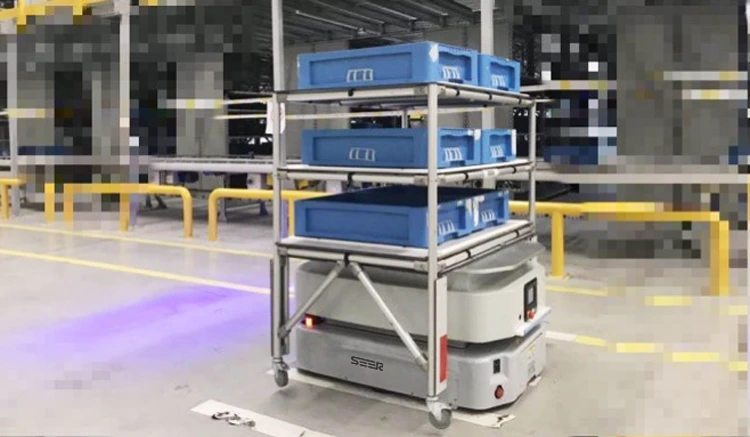
In the warehouse area, workers place packages of goods onto material racks. They then scan the picking list, material dispensing area, material rack barcode, and employee ID for information entry. Once completed, an AMB-based lifting robot is called via PDA to pick up the materials. After a material picking task order is generated, the enterprise digital platform determines if there is an available slot at the production line workstation. If a slot is available, the order is executed; if not, the order is suspended. When an order is suspended, a warning light illuminates, and the PDA prompts that there is an empty material rack at the production line workstation. Once the empty material rack is removed, the order resumes execution.
In the production line area, AMB-based lifting roller robots complete the production line docking for the blank preparation area, processing area, deburring area, measurement area, and cleaning area. Because the heights of the roller conveyors at the client's site vary, the AMB-based lifting roller robots can adjust their height according to the production line workstation, flexibly completing production line docking tasks.
Implementation Challenges
- The client currently lacks a WMS system, making it impossible to detect available slots in warehouse locations and production line workstations.
- The client's requirements are relatively complex, necessitating the collaborative work and coordination of different types of robots.
- The workshop experiences high personnel turnover, requiring comprehensive detection and early warning mechanisms to ensure transportation safety.
Solution Highlights
- The enterprise digital platform enables global logistics information monitoring, allowing real-time detection of warehouse and production line workstation status and timely feedback.
- The SEER dispatching system can simultaneously manage and uniformly dispatch hundreds of different types of mobile robots, solving the challenge of multi-type mobile robot collaboration.
- This implementation utilized dual-laser mobile robots and a comprehensive alarm mechanism, achieving 360° blind-spot-free detection, ensuring transportation safety while improving efficiency.
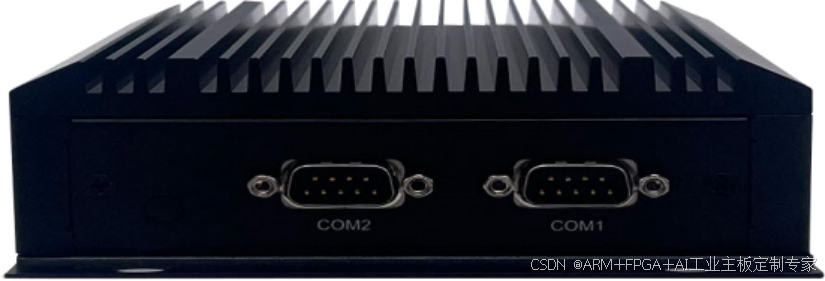
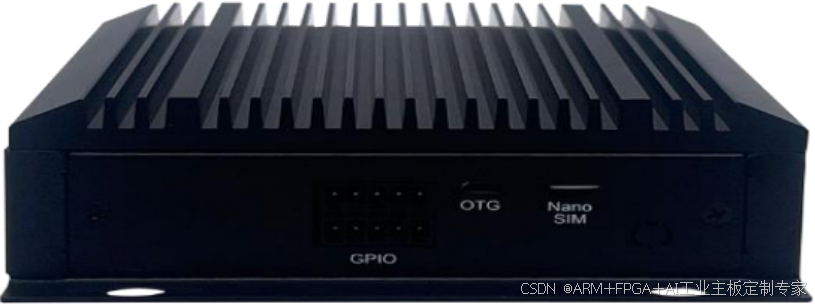
Hardware Specifications
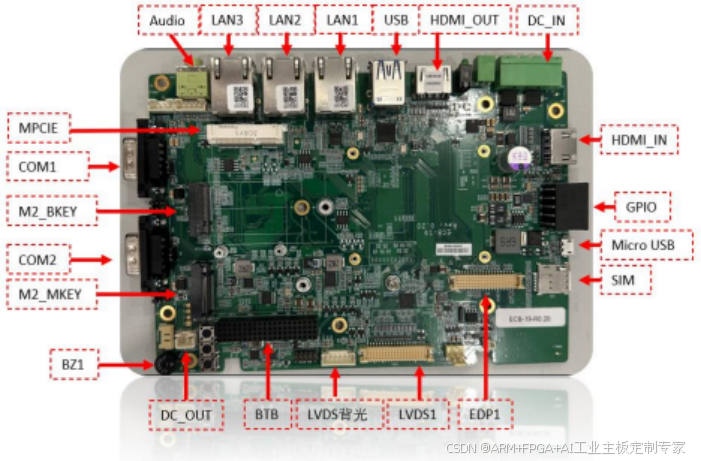
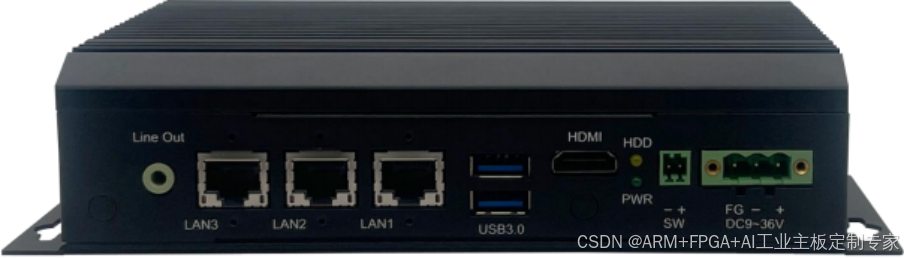
| Hardware Platform | | |---|---| | Processor | RK3588, 4 x A76, 4 x A55, 2.0GHz | | Memory | 8GB LPDDR4 | | Storage | On-board 64GB eMMC5.1 | | Interface Type | | | Serial Port | 2x RS232/RS485, DB9 Connector for external (COM1/COM2) Serial Port Baud Rate: 9600~115200bits/s | | USB | USB1: 1x USB3.0/USB2.0 Host, Type-A Stack ports; USB2: 1x USB3.0/USB2.0 Host, Type-A Stack ports | | Ethernet Port | 1x GbE port by RJ45 with RTL8211F Controller 2x GbE port by RJ45 with Intel I210AT | | M.2 | 1x M.2 M-Key 2242/2280 (PCIe3.0/SATAIII) 1x M.2 B-Key 3042/3052 (USB3.0/2.0), supports 4G/5G | | GPIO | 8x GPIO, 25Pin, PH=3.5mm, supports APP customization | | Mini PCIe | 1x Internal Mini PCIe (USB2.0), 52P, for WiFi module connection | | SIM | 1x SIM Card SLOT, NANO-SIM (4G/5G1) | | Power Interface | DC9~36V input, with reverse polarity protection | | Audio | 1x Audio Jack, Φ3.5mm, Green, (Line out) | | Display | | | HDMI IN/OUT | 1x HDMI OUT2.1, supports 4K display; 1x HDMI IN, supports 4K@60fps video input | | LVDS (Built-in) | 1x LVDS, supports 1920 x 1080@60Hz resolution | | eDP (Built-in) | 1x eDP interface, DF13, supports 8K@60fps | | LED | 1x Power indicator light, commonly green, 3mm 1x Hard drive indicator light (M.2), commonly yellow, 3mm | | Features | | | Watchdog Timer | Software programmable 1–255 level | | Physical Characteristics | | | Dimensions | 206130mm45mm | | Structural Material | Black anodized aluminum heat sink / Outer frame: Iron casing (SECC) / Black mounting ears | | Mounting Method | Wall Mount ears | | Operating Temperature | -20℃~60℃ | | Storage Temperature | -30℃~70℃ | | Relative Humidity | 10%~90% |