【Intelligent Transportation】Application of Onboard Smart AI Box in Intelligent Management Systems for Muck Trucks, Construction Vehicles, and Sanitation Vehicles (Part 3): Blind Spot Management, Driver Monitoring, Illicit Vehicle Management, etc.
-
- Blind Spot Monitoring
The system supports the installation of four cameras, with driver monitoring inside the cab and roof monitoring being mandatory installations. Additionally, it supports the expansion of at least two video channels. This can prevent fatalities and injuries caused by blind spots. Intelligent pedestrian recognition in blind spots uses image recognition technology to intelligently detect pedestrians, triggering external audible and visual alarms, in-cab alarms to alert the driver, and uploading image data to the platform.
-
-
- Blind Spot Pedestrian Recognition (BSD)
-
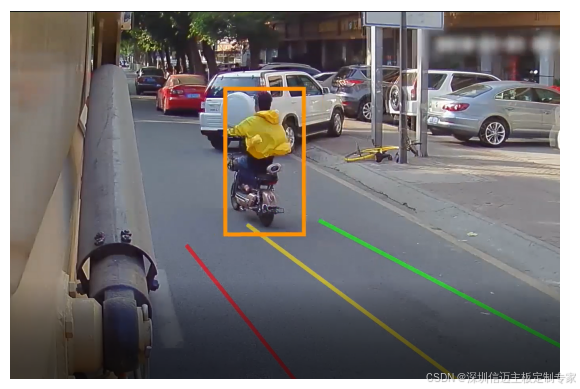
Supports the recognition of pedestrians, electric bike riders, and bicycle riders in the forward right-side blind spot, and can distinguish between pedestrians and ordinary obstacles.
-
-
- Operating Hours
-
When the vehicle's ACC status is ON, the blind spot pedestrian monitoring function remains continuously active.
-
-
- Blind Spot Pedestrian Collision Warning
-
If a pedestrian is less than 3m from the right side of the vehicle, a Level 3 right-side pedestrian collision warning should be triggered. If a pedestrian is less than 2m from the right side of the vehicle, a Level 2 right-side pedestrian collision warning should be triggered. If a pedestrian is less than 1m from the right side of the vehicle, a Level 1 right-side pedestrian collision warning should be triggered.
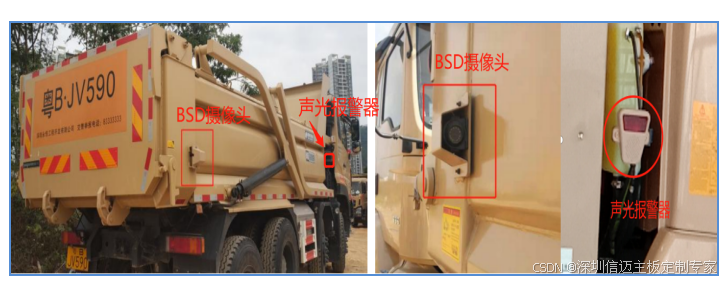
By installing a high-definition wide-angle camera on the top front of the vehicle, real-time video data from the area in front of the vehicle is collected. This data is then compared with the BSD image algorithm recognition library to achieve precise recognition of target objects within that blind spot. Finally, timely warnings are issued to the driver via the in-cab vehicle monitoring screen, thereby reducing the likelihood of accidents.
-
-
- Warning Prompts
-
Warnings alert the driver to avoid pedestrians using sound and graphics. A Level 3 pedestrian collision warning displays a green pedestrian on the screen, a Level 2 pedestrian collision warning displays a yellow pedestrian, and a Level 1 pedestrian collision warning displays a red pedestrian. During pedestrian collision warnings, the system supports audible and visual alerts for pedestrians outside the vehicle to urge them to move away quickly.
-
-
- Warning Response Time
-
The time interval from when a target meets the alert criteria to the issuance of audible and graphical warning indications shall not exceed 300ms. The time interval from when a target no longer meets the alert criteria to the invalidation and cancellation of the warning indication shall not exceed 1s.
-
-
- Environmental Adaptability
-
The right-side blind spot pedestrian collision warning function can be implemented in different time periods and lighting conditions, such as day, night, dusk, and dawn.
-
- Unsafe Driving Behavior Alarms
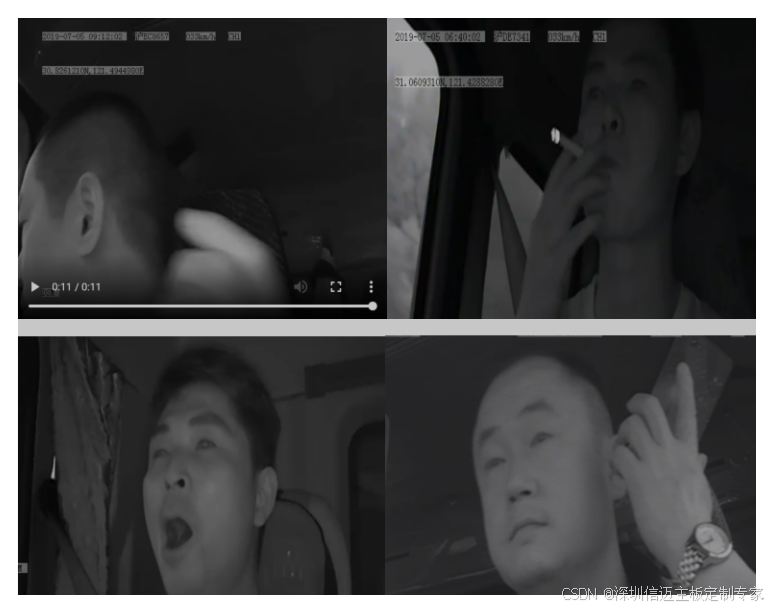
Using facial recognition technology, the system intelligently analyzes unsafe driving behaviors such as driver fatigue, smoking, drowsiness, and using a mobile phone. Voice prompts remind the driver to drive safely, and photos or videos of violations are uploaded to the regulatory platform.
-
-
- Fatigue Driving Alarm
-
While the vehicle is in motion, the onboard smart terminal should be able to detect driver fatigue behaviors such as drowsiness through facial feature recognition. An audible alarm should be issued, the vehicle speed should be automatically limited to 20km/h, and a fatigue driving alarm should be simultaneously reported to the platform.
-
-
- Smoking While Driving Alarm
-
While the vehicle is in motion, the onboard smart terminal should be able to detect driver smoking behavior through contact or non-contact methods. An audible alarm should be issued, the vehicle speed should be automatically limited to 20km/h, and a smoking while driving alarm should be simultaneously reported to the platform.
-
-
- Calling While Driving Alarm
-
While the vehicle is in motion, the onboard smart terminal should be able to detect driver phone use behavior through contact or non-contact methods. An audible alarm should be issued, the vehicle speed should be automatically limited to 20km/h, and a calling while driving alarm should be simultaneously reported to the platform.
-
-
- Distracted Driving Alarm
-
While the vehicle is in motion, the onboard smart terminal should be able to detect, via video, when the driver's eyes and attention are diverted from the front for an extended period, indicating a distracted state. This constitutes distracted driving behavior. An audible alarm should be issued, the vehicle speed should be automatically limited to 20km/h, and a distracted driving alarm should be simultaneously reported to the platform.
-
-
- Environmental Adaptability
-
The system can recognize fatigue driving, distracted driving, smoking, and phone use behaviors under various lighting conditions such as day, night, dusk, and dawn. It can detect fatigue driving and distracted driving behaviors even when the driver is wearing hats, glasses, or sunglasses.
-
- Anti-Tampering Function
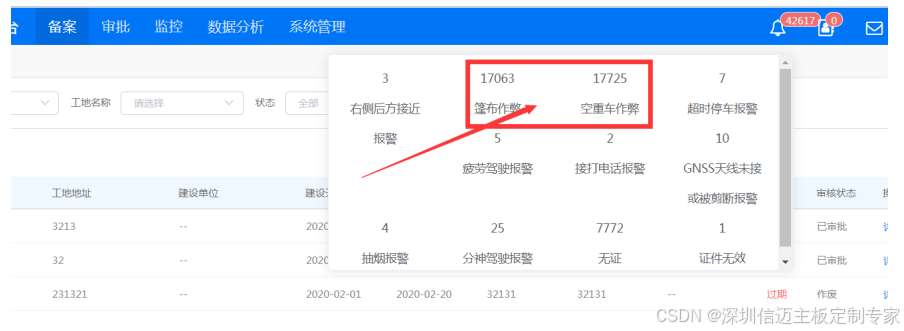
The system automatically detects tampering information and processes it by limiting speed, locking the vehicle, etc., depending on the severity of the tampering. The system should support tampering detection for sensor signals such as roof cover, empty/loaded status, and lifting, as well as tampering detection for positioning information, network connection information, and ECU information.
-
- Enterprise Integrity Management
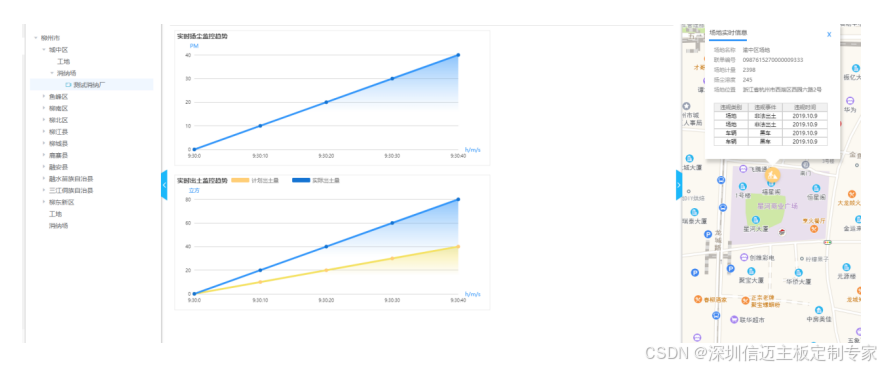
The platform evaluates enterprise integrity by independently assessing whether the enterprise has vehicle violations, citizen reports, and on-site enforcement situations. Enterprises with low scores will face restrictions in obtaining transportation permits and accepting projects from construction sites in the future.
-
- Illicit Vehicle Intelligent Recognition System
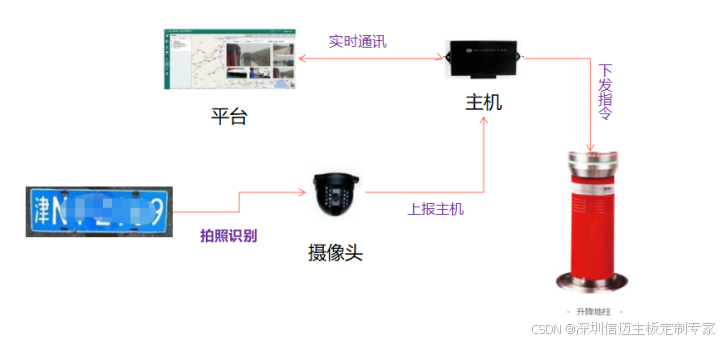
Supports receiving data uploaded by construction site monitoring equipment. When a vehicle exits the construction site, it automatically performs license plate recognition and sends the recognized license plate number and photo to the cloud.
If the recognized license plate number is not in the cloud's regulated vehicle database, the vehicle is identified as an illicit vehicle.
If the recognized license plate number is in the cloud's regulated vehicle database, but the vehicle's current device is normal and its location is not at that construction site, the vehicle is identified as a cloned vehicle (using a false plate).
Suspicious cases are automatically generated for illicit vehicles and cloned vehicles, automatically pushed to the mobile phones of local enforcement officers and the municipal regulatory platform for enforcement by law enforcement personnel.