Design Ideas for Intelligent Power Systems Based on RK3568 Smart Gateway and Convolutional Neural Network Algorithm
1 Background
Infrastructure development plays a crucial role in a nation's economic growth, and the power system is a vital component of infrastructure. The stable operation of the power system is essential for the steady development of primary, secondary, and tertiary industries, including agriculture, industry, and commercial services. Among these, agricultural labor shortages are a current reality in agricultural production. Agricultural production is increasingly reliant on various agricultural machinery, and large-scale mechanized production in agriculture cannot function without the support of the power system, for tasks such as agricultural irrigation and drainage, crop threshing, and the production, processing, and packaging of agricultural products.
Electricity prices for agricultural production are significantly lower than those for industrial and commercial use. The average retail price for general industrial and commercial electricity is above 0.6 yuan/(kW·h), whereas for agriculture, the average retail price for 1-10 kV is only 0.59 yuan/(kW·h), and for over 10 kV, it is even lower than this standard. In agricultural production, the average retail price for electricity used for agricultural irrigation and drainage and crop threshing at the 1-10 kV level is as low as 0.439 0 yuan/(kW·h). The peak price does not exceed 0.602 0 yuan/(kW·h), the high-peak price is only 0.541 8 yuan/(kW·h), and the off-peak price is as low as 0.301 0 yuan/(kW·h). The power system provides high-quality and affordable electricity support for agricultural production, which undoubtedly contributes significantly to improving agricultural production efficiency.
2 Significance of Power System Intelligence
2.1 Addressing the Complexity of Grid Layout
The power system's grid layout is highly complex. Intelligent power systems can use data models to address complex grid layout issues, and building precise models can ensure the long-term stable operation of the grid system.
2.2 Managing Extensive Grid Coverage
The power system's grid coverage is very extensive. Given China's vast territory and diverse and complex topography, full power system coverage faces practical difficulties. Intelligent power systems can achieve smart operation and intelligent monitoring across the vast land, effectively addressing the challenge of widespread grid deployment.
2.3 Enhancing the Grid System's Resilience to Natural Disasters
The grid system is vulnerable to natural disasters such as typhoons, snow, ice, and freezing weather, which can cause severe destructive consequences. Intelligent power systems, through sensors and IoT systems, can detect the onset of disasters in advance, precisely pinpoint problem locations, and efficiently resolve issues, thereby enhancing the grid system's risk resistance capabilities.
2.4 Reducing Labor Costs
In the context of an aging society with low birth rates, relying solely on increasing labor to build power systems, identify, and solve problems would undoubtedly incur huge costs and, to some extent, reduce efficiency. Power system intelligence can effectively address issues of excessive labor costs and low work efficiency.
2.5 Improving Management Efficiency
Intelligent power systems, utilizing intelligent substation inspection image algorithms, can achieve multiple functions such as one-click sequential control, image discrimination, recognition of damaged or deformed scenes, and meter status identification. This is of great significance for comprehensive control of the power system and efficient resolution of practical problems.
2.6 Providing Safe and Convenient Services
Intelligent power systems can provide smart services. Even if users are agricultural producers with limited education, intelligent power systems can still provide safe, stable, and convenient electricity services.
2.7 Supporting Agricultural Modernization
Agricultural modernization relies on the support of modern agricultural systems such as integrated water and fertilizer management, plant protection drones, fully automatic harvesting, threshing, and drying machines, and agricultural IoT, as well as the support of intelligent power systems. Modern agricultural systems and intelligent power systems, working in conjunction, can effectively improve agricultural production efficiency and alleviate issues of high agricultural labor costs and labor shortages.
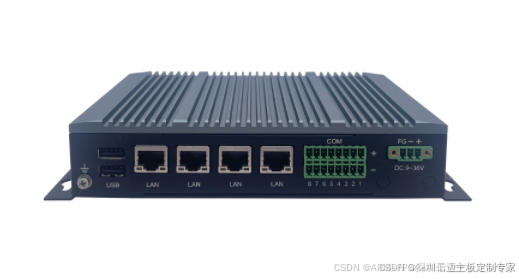
● Industrial-grade design, metal casing, fanless controller ● Rockchip RK3568, ARM-based quad-core Cortex-A55 processor, with a main frequency up to 2.0GHz ● 4GB DDR4, expandable up to 8GB ● 4 x GbE LAN ● 8 x RS485 (2KV isolation) ● 5 x DI dry contacts, NPN/PNP selectable, 2KV opto-isolation ● 5 x DI wet contacts, NPN/PNP selectable, 2KV opto-isolation ● 4 x DO, relay application, NO/NC selectable, 2KV opto-isolation ● 1 x M.2 B-Key, 1 x M.2 E-key, 1 x M.2 M-Key ● Operating System: Debian 11 Server

4 Introduction to Convolutional Neural Network Algorithm
The Convolutional Neural Network (CNN) algorithm is a core algorithm in intelligent substation inspection image processing. The advantage of the CNN algorithm lies in significantly compressing the information volume of raw input images. For power grid systems, using CNN algorithms can effectively process massive images and achieve rapid extraction, accurate recognition, and efficient output.
4.1 Selecting the Input Layer
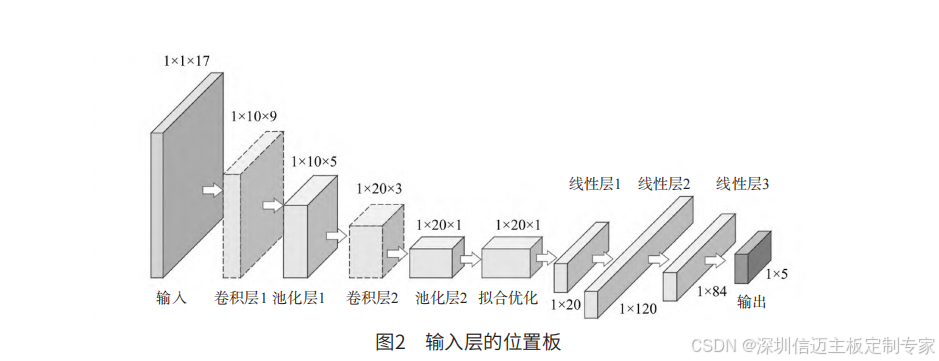
Figure 2 shows the input layer's position board. This paper should select images processed by the Convolutional Neural Network algorithm, typically two-dimensional color images containing RGB [a color model representing three color channels: red, green, and blue].