AI Servers: Application Cases of Domestically Produced PCIe 5.0 Retimer Cards
With the rapid advancement of computer technology, high-speed interconnect technologies are continuously evolving. PCI Express (PCIe), as one of the most prevalent I/O bus standards today, sees a significant increase in data transfer rates with each iteration. PCIe 5.0 doubles the per-lane transfer rate to 32 GT/s, up from 16 GT/s in the previous generation. However, as data rates increase, signal integrity issues become more prominent, especially in long-distance transmission or complex environments, where signal attenuation and distortion can severely impact system reliability and performance. In such scenarios, Retimers become one of the key components for ensuring signal quality.
1
Role of Retimers
A Retimer is a signal regeneration device whose primary function is to detect, process, and regenerate signals during transmission, thereby ensuring that the signal maintains good quality even after long-distance transmission.
In PCIe 5.0, the application of Retimers is crucial, especially in the following scenarios:
Long-Distance Transmission: When signals need to traverse long distances, signal attenuation can prevent the receiver from correctly decoding them. A Retimer can capture the signal midway, reshape and regenerate it, and then retransmit it, thus ensuring the signal remains clear and discernible at the far end.
Multi-Link Systems: In multi-link or complex interconnect systems, signals may experience multiple reflections and interferences, leading to degraded signal quality. Retimers can help restore signal quality, ensuring accurate data transmission between various nodes.
Mixed-Media Environments: When signals need to be transmitted through different types of media (e.g., copper cables and optical fibers), Retimers can act as a bridge between these different media, ensuring signal integrity during the conversion process.
2
How Retimers Work
The basic workflow of a Retimer includes the following steps:
Signal Detection: The Retimer detects the received signal, assessing its quality and integrity.
Signal Processing: The Retimer processes the signal, including operations such as noise removal and compensation for signal distortion, to ensure signal clarity.
Signal Regeneration: The Retimer regenerates the signal as needed and then transmits it to the next node.
Transparent Transmission: The Retimer's operation is transparent to the user throughout the entire process and does not affect data integrity or consistency.
3
Retimer Application Cases
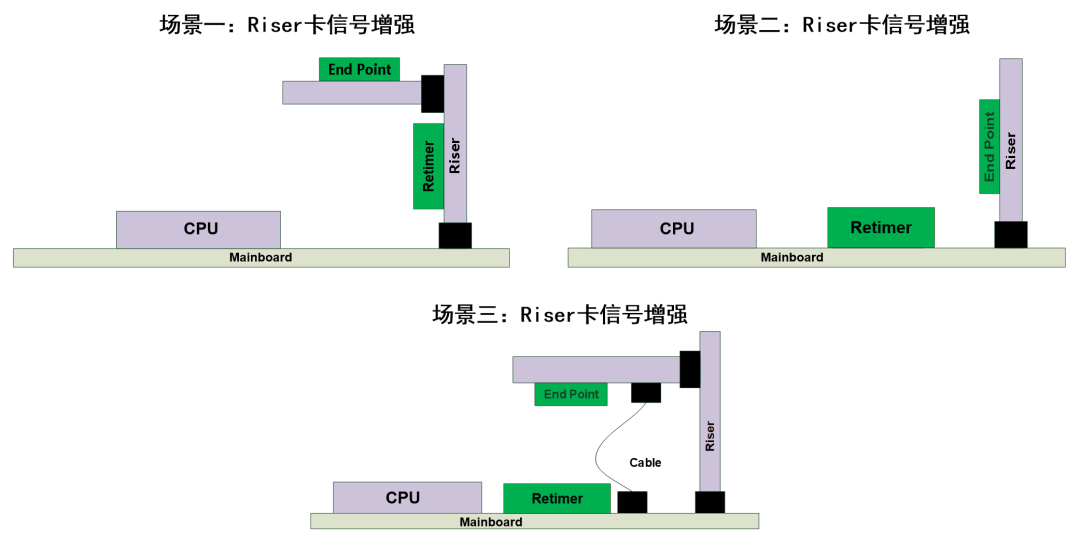
Case 1: Server AIC Cards
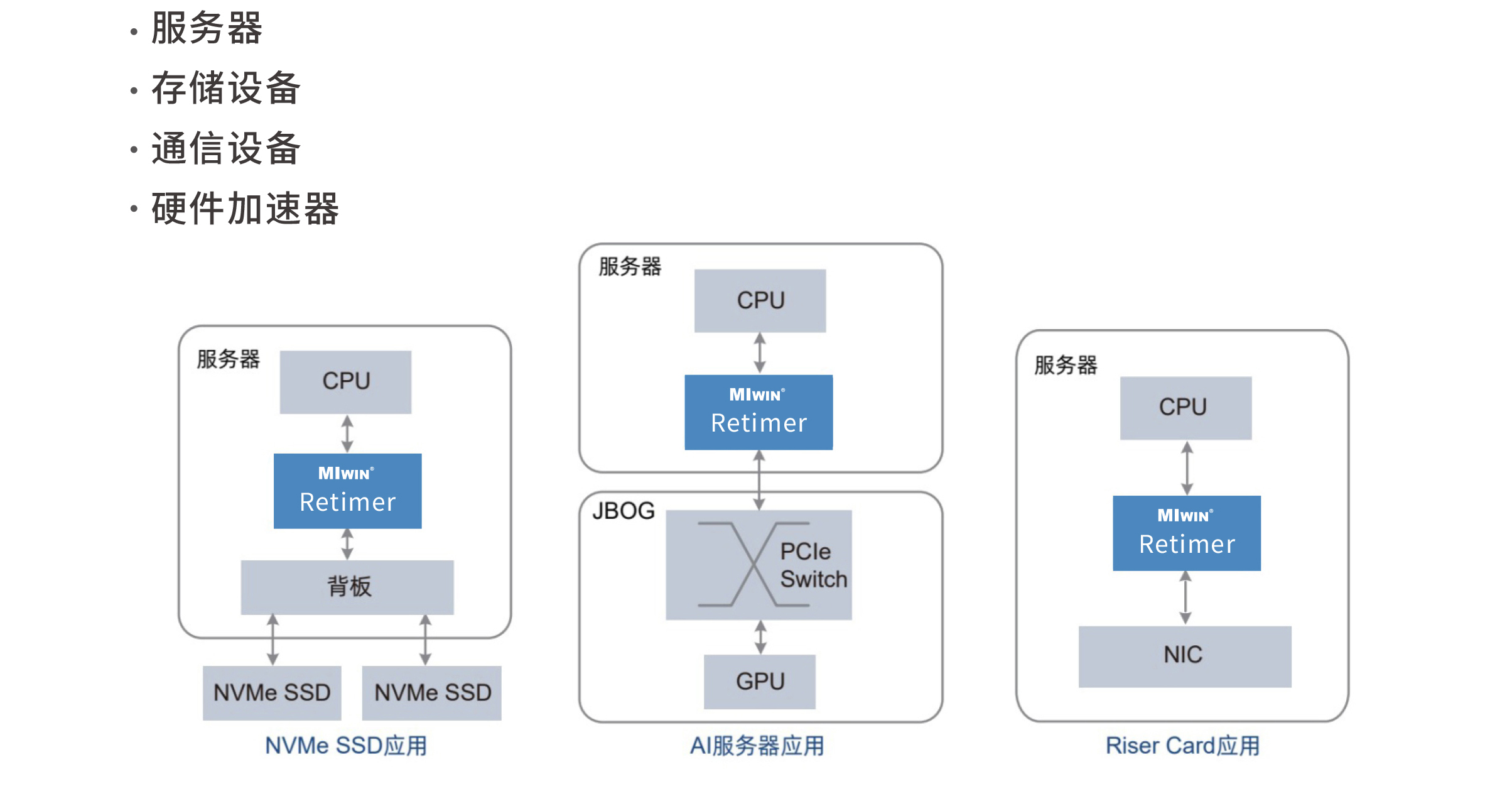
The application of Retimer technology is crucial in server AIC (Add-in Card) cards. AIC cards, as expansion cards, typically handle additional computing tasks such as AI acceleration. Since they require high-speed data exchange with the server motherboard, signal quality and transmission efficiency directly impact the overall system performance. Retimers can re-time signals in high-speed signal links, eliminating the effects of signal reflections and noise, thereby ensuring data integrity and consistency during transmission. Especially in scenarios requiring long-distance transmission, the role of Retimers is even more pronounced, as they can significantly reduce the bit error rate and improve system reliability.
Case 2: High-Performance Server Motherboards
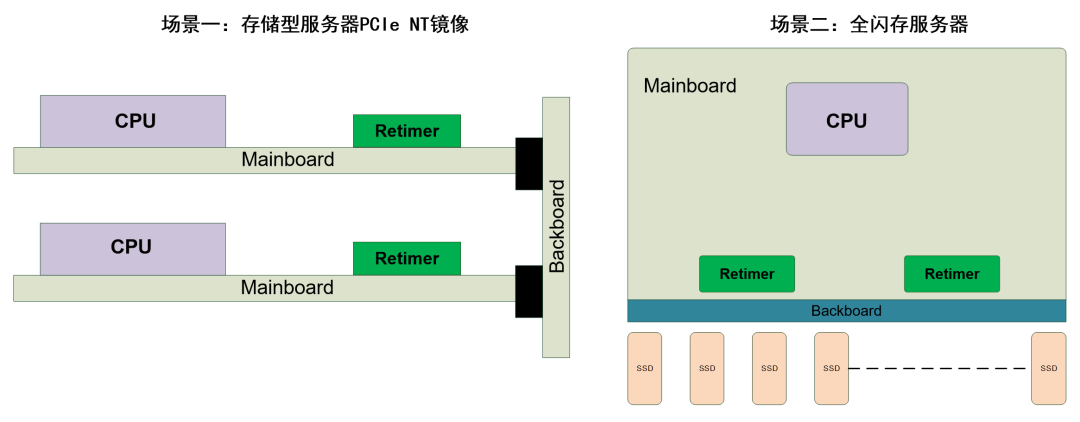
In the design of high-performance server motherboards, Retimers also play a vital role. As the number of server cores increases and bandwidth demands grow, signal traces on the motherboard become increasingly complex, placing immense pressure on signal transmission. By integrating Retimer chips, motherboards can regenerate signals at critical nodes along the signal transmission path, compensating for signal loss and maintaining signal strength. This is crucial for ensuring efficient collaborative operation among various components within the server.
Case 3: GPU Servers
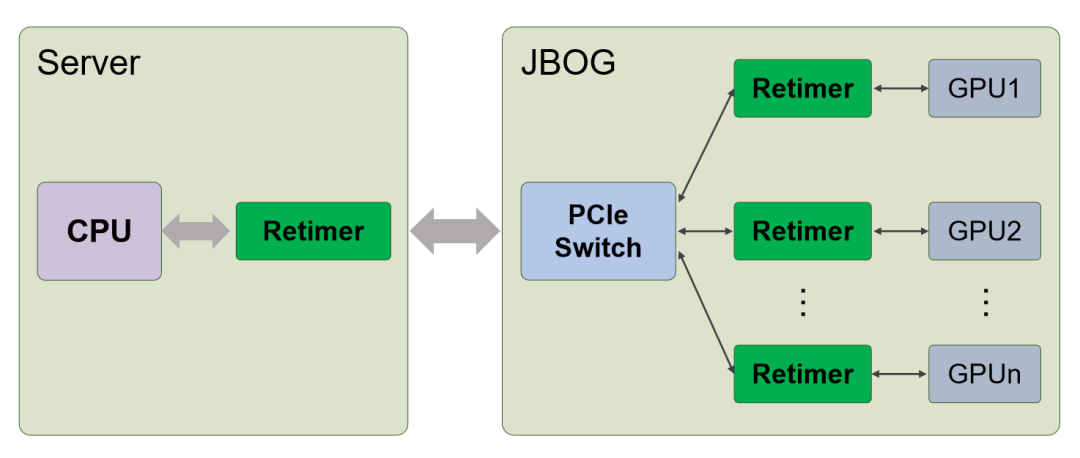
GPU servers, as a critical component of high-performance computing, have particularly stringent requirements for signal integrity. GPU servers are typically configured with multiple high-performance graphics cards to support compute-intensive tasks such as complex graphics rendering and machine learning. In such application environments, Retimers can not only make high-speed data transmission between GPUs and CPUs more stable but also effectively extend the effective operating distance of GPU servers, enabling them to perform with greater efficiency in large-scale distributed computing clusters.
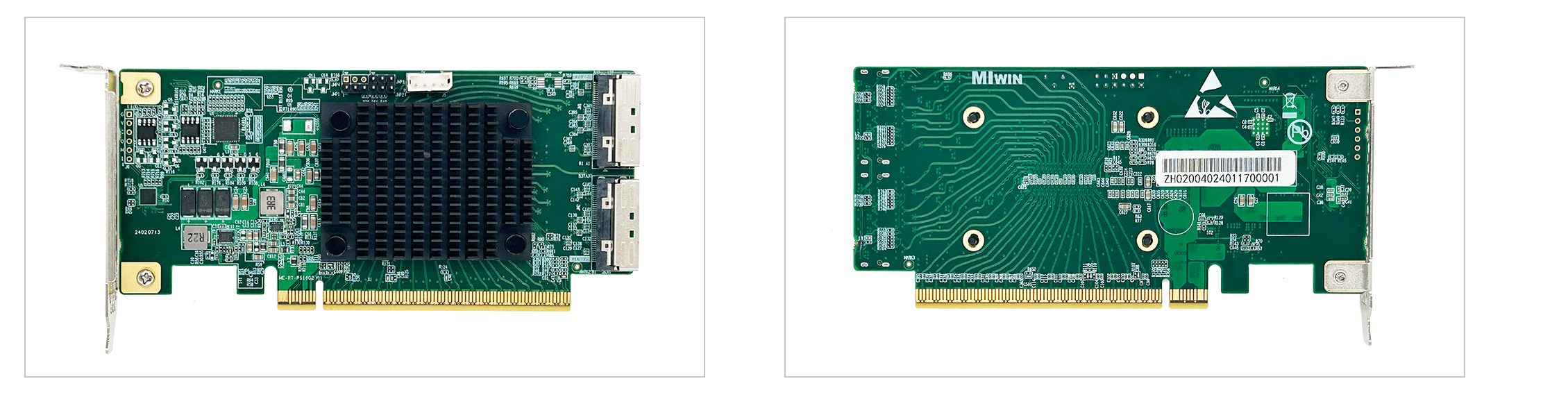
===================PCIe 5.0 Retimer Card Cases===============
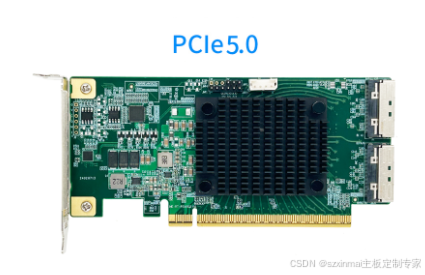
- Eliminates deterministic and random jitter
- Tx/Rx per-channel adjustable performance
- 2*MICROx8 interfaces
- Supports hot-plugging
- Low power consumption, low latency
- Complies with PCIe 5.0 Base Specification.
Typical Application Scenarios
Features
· High-performance 32GT/s SerDes;
· 2*MICROx8 interfaces;
· Tx/Rx per-channel adjustable performance;
· Supports channel polarity inversion;
· Supports hot-plugging;
· Low power consumption, low latency;
· Complies with PCIe 5.0 Base Specification;
☑ Shenzhen Xinmai supports OEM/ODM customization services