【Localized AI Servers】Domestic PCIe Switch, Replacing Broadcom AI Server I/O Interconnect Card Solutions, Supports Customization
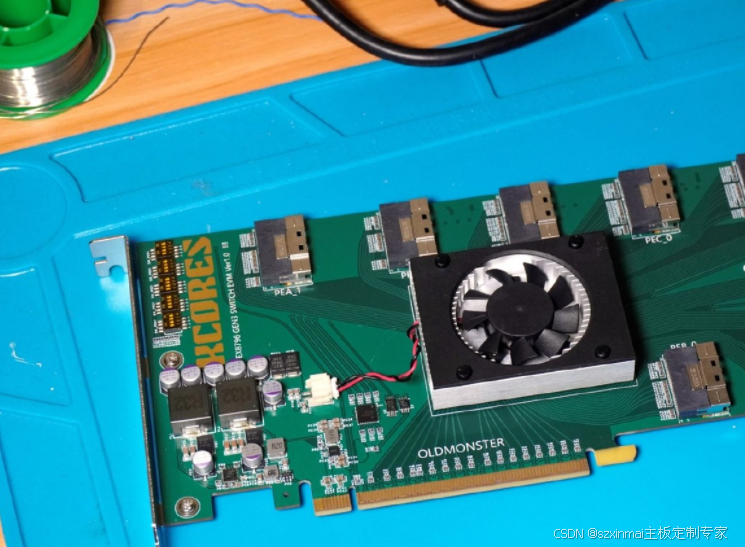
Domestic PCIe switch, replacing Broadcom AI server I/O interconnect card solutions, supports customization.
The PEX8796 has a total of 96 PCIe lanes, of which x16 are fixed for upstream connection to the motherboard slot. The remaining 80 PCIe 3.0 lanes are all designed to be routed out via SFF-8654 8i interfaces.
To route out all 80 PCIe lanes, the entire card's size is quite large. At 255mm, it's among the largest even when compared to dual-fan mid-range graphics cards.
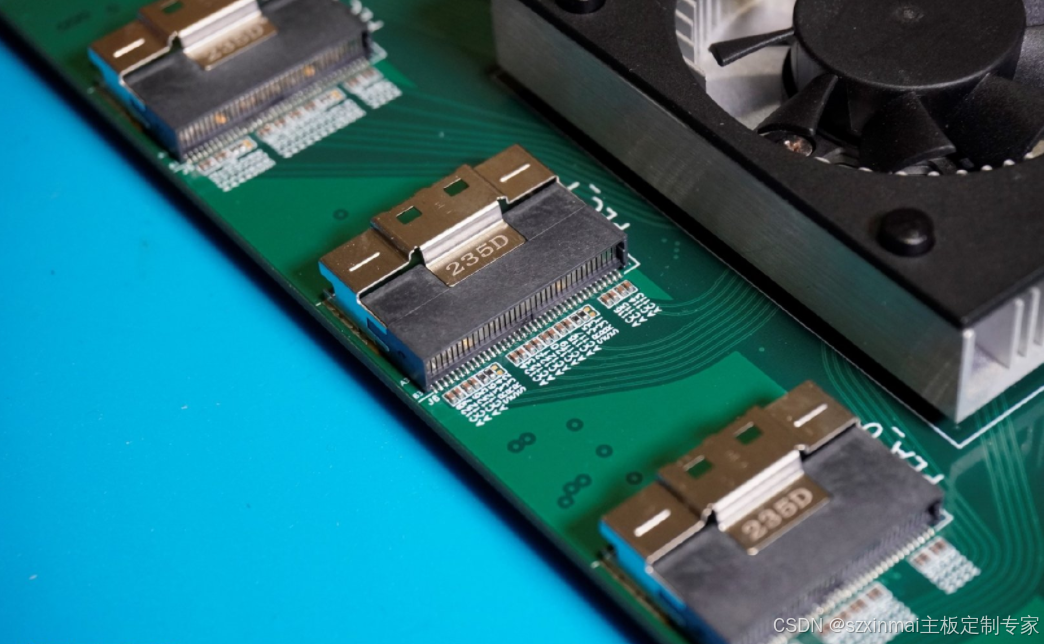
Each SFF-8654 8i interface has 8 PCIe lanes and 2 PCIe clock signals. By default, each SFF-8654 8i can connect two U.2 SSDs via an adapter cable, allowing for a maximum of 20 NVMe SSDs to be connected.

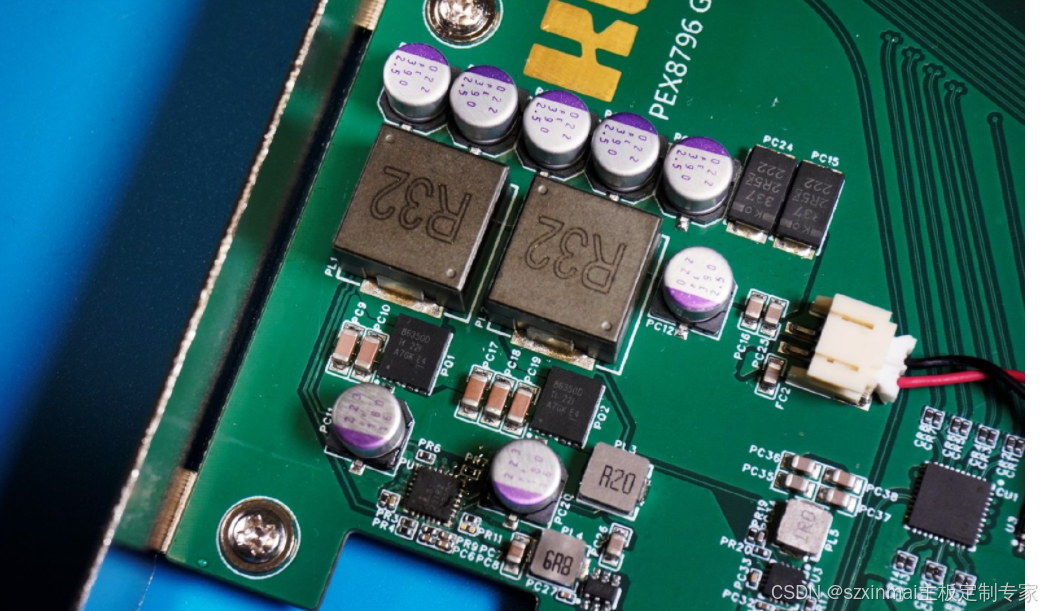
Judging by the size of these power delivery inductors, the PEX8796 is not a power-efficient component.
A 2+1 phase power supply is designed to "serve" Broadcom's "heating element." Its maximum power consumption can exceed 30W, comparable to a basic discrete graphics card.
For such a large chip designed purely for servers, it's best not to have any illusions about its power-saving capabilities.
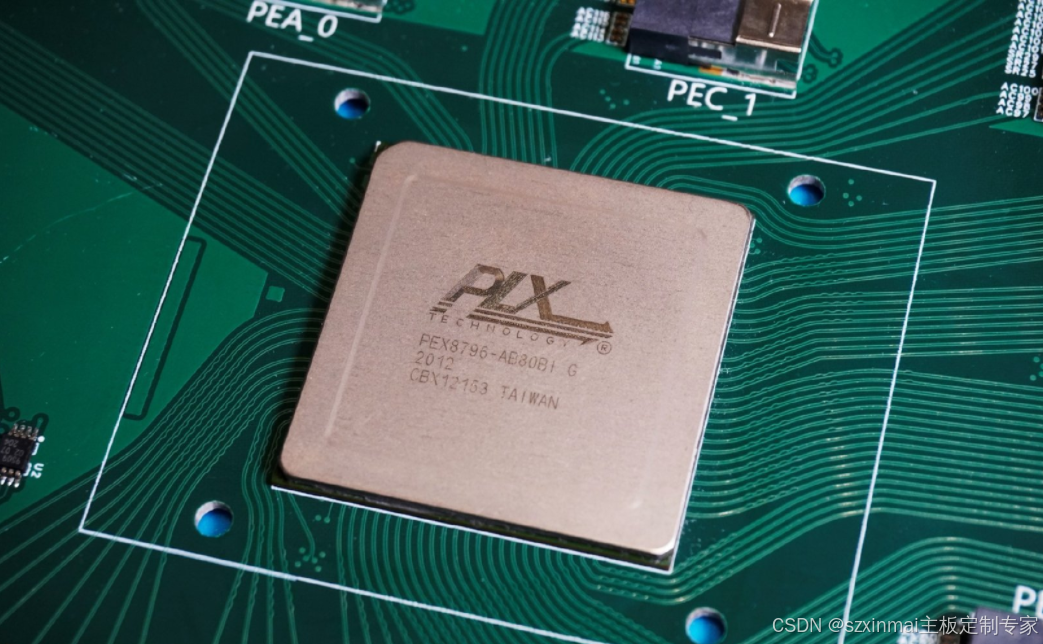
Lifting off the seemingly makeshift heatsink reveals the PEX8796 chip itself. Normally, you might find it in some early GPU servers and NVMe storage servers.
This type of chip that expands PCIe interfaces is called a PCIe Switch, not PLX!
Microchip also has PCIe Switch products. PLX Technology is just a company that has been acquired by Broadcom, and the PLX brand has been marginalized on new products.
So, this thing is called a PCIe Switch, not PLX!
It's like you wouldn't call all cars "Santana" just because the first car brand you encountered was Santana 2000.
Shenzhen Xinmai provides customization services for PCIe Switch AI server boards.