【ARM+Codesys Customer Case Study】 Application of RK3568/A40i/STM32 + CODESYS in Factory Automation: Eaton Rapid Link System
The world's most advanced material handling systems today are configured using modular and decentralized systems. For example, internationally renowned warehousing system suppliers have already used the Rapid Link system in multiple projects. This system, developed in collaboration with German industrial software company CODESYS, can guarantee the system's safety, stability, flexibility, reliability, and speed to the greatest extent. At the same time, system manufacturers and operators are continuously ensuring its outstanding advantages in planning and installation.

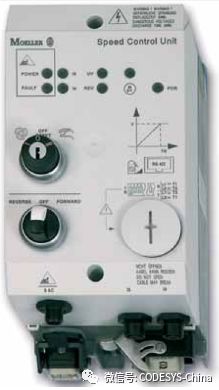
This case study focuses on the baggage handling system at Europe's largest airport.
As one of the international transport hubs, the airport handles over 65 million passengers annually, and this number is trending upwards. To meet the continuously growing passenger volume over the next 20 years, the airport added a new terminal and three satellite buildings at its location. By 2011, when the project was finally completed, up to 30 million travelers from around the world would pass through this terminal annually, with a total terminal area equivalent to about 10 football fields. Aircraft would be able to park at 60 stands, with a quarter of them accommodating Airbus A380s. This project was highly complex, encompassing 15 main projects and over 100 sub-projects. The completion of the new terminal would double the company's total assets. Naturally, such a massive airport required a more sophisticated and intelligent baggage handling system.
Over 4,000 Rapid Link motor control units were used for the decentralized control of the 18-kilometer baggage handling system. Compared to integrated motor drive systems, Rapid Link has been widely accepted by system designers and operators. During the design phase, the benefits of Rapid Link were evident: Through collaboration with German company CODESYS, motor starters and frequency inverters could be controlled by the PLC in the same manner. Additionally, Rapid Link modules themselves implemented logic functions, thereby reducing the need for control program development. For instance, Rapid Link could automatically handle time-critical tasks, such as correcting eccentric points, according to the required speed and precision, without requiring high-speed counting on PLC inputs.
The Rapid Link system can use standard material handling modules (e.g., linear and curved conveyor modules) to combine and create complex systems, and also supports the creation of this functionality within standard software modules. The Rapid Link units on-site, as a modular system, feature full plug-and-play capability. Complete conveyor units underwent full functional checks during pre-assembly. Power and data buses integrate insulation displacement technology to ensure time-saving and error-free installation. Manual operating devices on Rapid Link units can save a lot of commissioning time, as conveyor modules can be electrically and mechanically commissioned before the control system is operational.
The Rapid Link system also provided significant benefits to the airport operator, particularly in troubleshooting and maintenance. By installing control modules with local visualization near the motors, status and diagnostic messages were clearly displayed on the screen, and the results processed by the controller were accurately fed back to the motor drives.
Furthermore, even if the control system failed, manual operation allowed for quick intervention. Moreover, thanks to the flexible design of its plug connectors, each Rapid Link unit could be replaced within minutes. Because the integrated electronic motor protection function automatically adjusted Rapid Link devices to the required motor ratings, the airport operator only needed to keep a few spare devices. Moeller was able to adapt the Rapid Link system optimally to the customized requirements of the airport's baggage handling system. Consequently, Rapid Link now provides comprehensive monitoring information for maintenance and technical troubleshooting. By upgrading the existing digital inputs, PPI encoders can be used to track and record the transport route of all baggage, ensuring that no baggage is lost during transit.
Xinmai offers localized customization for ARM+CODESYS.