【ARM+Codesys Case Study】Application of Controllers Developed Based on RK3568/A40i/STM32+CODESYS in Automatic Conveying and Sorting Systems, Customizable
In 2021, JD.com's "618" cumulative order value exceeded 343.8 billion yuan, setting a new record! From placing an order to receiving goods, various items can be delivered to any household nationwide within just a few days through an extensive logistics network. The rapid development of e-commerce and express logistics has placed higher demands on warehousing, sorting, and distribution efficiency and accuracy, accelerating the development of smart logistics.
Smart logistics is an important component of Industry 4.0. Industrial production logistics systems, commercial distribution logistics systems, and the smart logistics equipment industry chain constitute the three major elements of smart logistics equipment, with automation being its foundation. Against the backdrop of the new economic normal and industrial upgrading, as labor, land, and warehousing rental costs continue to rise, the emergence of smart logistics equipment is an inevitable trend, with the overall market size expected to exceed hundreds of billions of yuan.
Currently, smart logistics equipment is widely used in the tobacco, automotive, construction machinery, and large-scale retail sectors. In the future, it is expected to maintain rapid growth in industries such as cold chain, pharmaceuticals, e-commerce, express delivery, textiles and apparel, and food and beverages. Advanced logistics technologies and equipment such as Automated Storage and Retrieval Systems (AS/RS), conveying and sorting systems, logistics robot systems, Automated Guided Vehicle (AGV) systems, and automatic identification and sensing systems are rapidly growing, becoming new market drivers.
, duration 01:34
1
Automatic Conveying and Sorting Equipment
Automatic conveying and sorting equipment is one of the core pieces of equipment in smart logistics. E-commerce and express delivery companies require high-performance conveying and sorting equipment to handle a massive volume of packages.
2
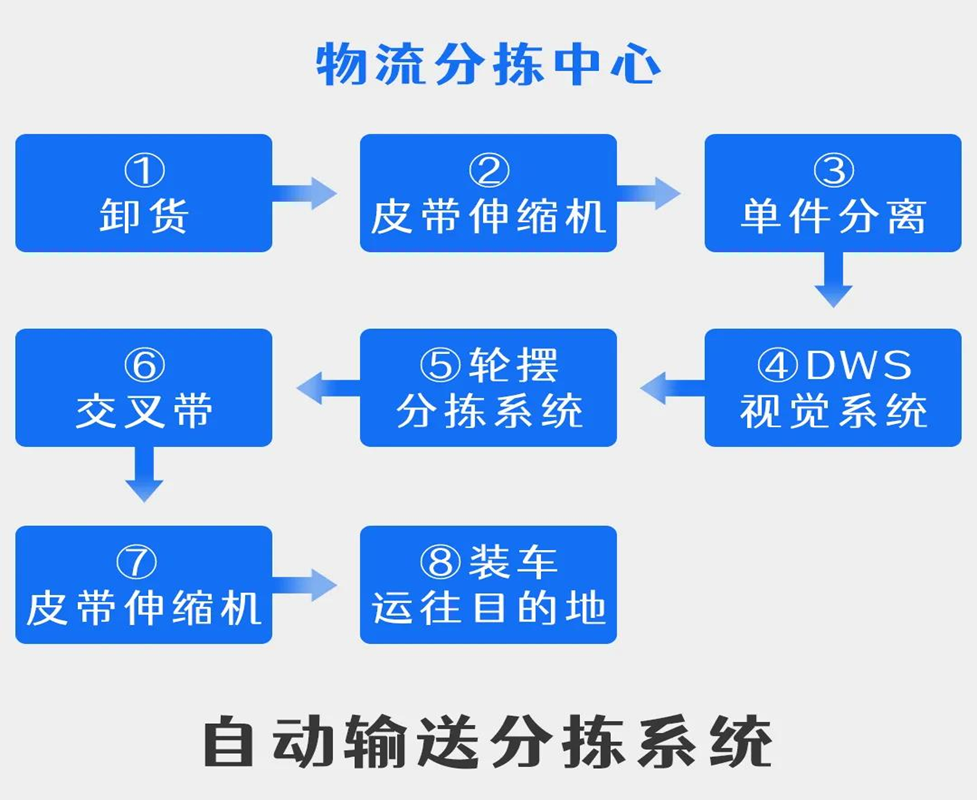
Automatic Conveying and Sorting Workflow
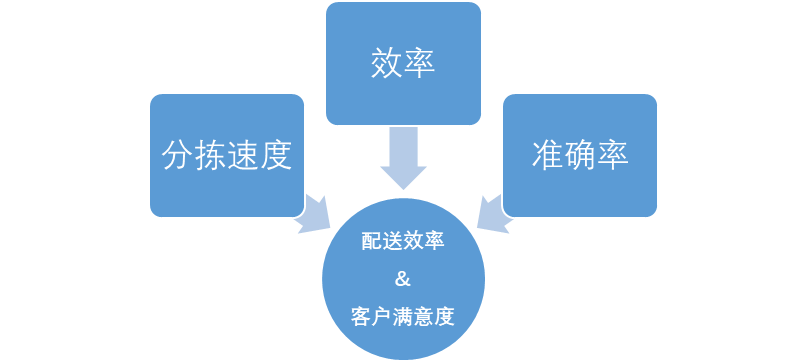
Automatic conveying and sorting equipment needs to balance rapid sorting with high accuracy, capable of continuous, high-volume sorting of goods, essentially achieving unmanned operation.
Highly efficient sorting operations significantly shorten order-to-delivery cycles. The sorting equipment processes 16,000 items per hour with an extremely low error rate.
3
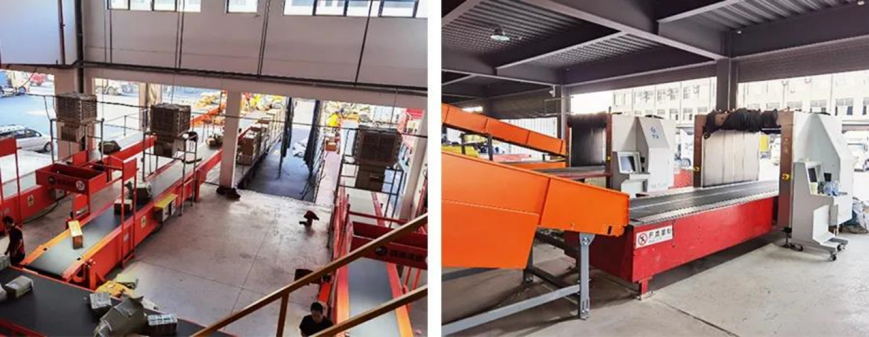
Telescopic Belt Conveyor
The telescopic belt conveyor primarily handles unloading and loading.
4
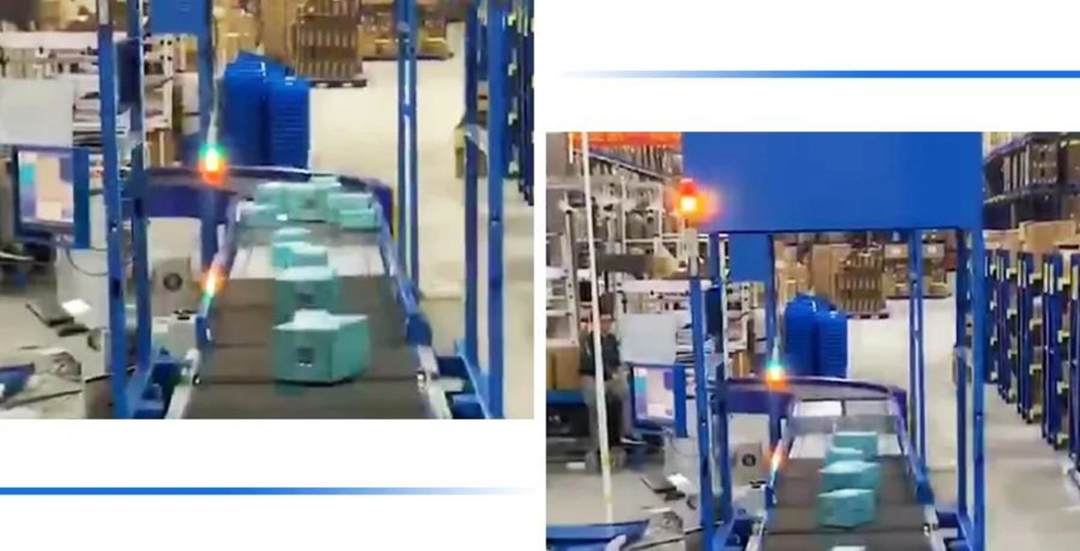
Single-Piece Separator System
The single-piece separator system is capable of aligning, separating, and intelligently queuing packages, thereby transforming bulk packages into single-piece arrangements, forming a very neat "formation."
5
DWS Vision Inspection System
The package automatic weighing, volume measurement, and barcode scanning equipment (Dynamic DWS system) automatically performs weighing, volume measurement, barcode scanning, and other tasks on packages during the conveying process.
6
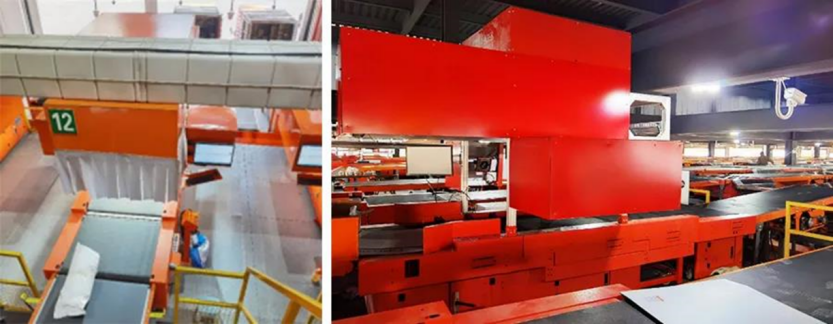
Tilt-Wheel Sorter System
Tilt-wheel sorting equipment can achieve three-way sorting.

7
Cross-Belt Sorter
The cross-belt sorter consists of a main conveying table and a tilt-wheel sorting table. It quickly and accurately sorts goods according to type, owner, storage location, or destination.

8
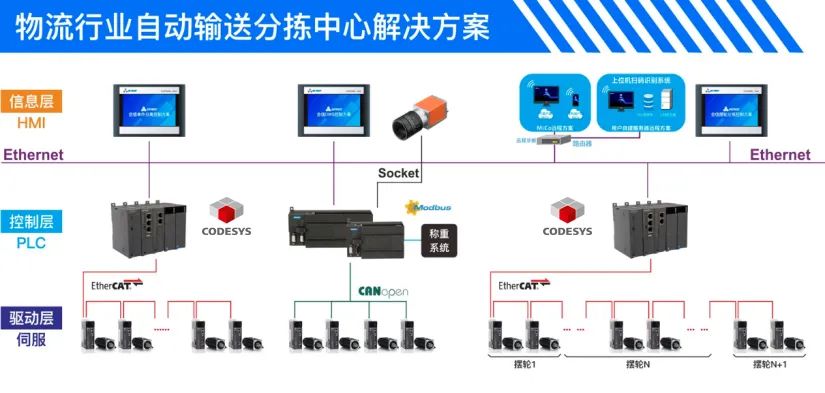
Automatic Conveying and Sorting Center Solution for the Logistics Industry
Key Control Points:
- The single-piece separator/tilt-wheel sorting control system uses Heshin's CTH300 series medium-sized PLC, developed based on CODESYS, for control, communicating with servos via EtherCAT.
- Heshin's CTH300 series PLC, developed based on CODESYS, communicates with the DWS host computer system and industrial vision cameras via Socket.
- The tilt-wheel sorting system is controlled by a Heshin PLC paired with multiple A3 series servos, equipped with a TP07i touchscreen, achieving networked control of the entire system.
- Each line can extend multiple tilt-wheels via EtherCAT, requiring only one PLC to control multiple tilt-wheel systems across the entire line.
- Each tilt-wheel is independently driven by two servos, ensuring efficient and rational sorting.
9
Control System Advantages
● CTH300 series medium-to-large PLCs developed based on CODESYS offer large program and data space, strong expansion capabilities, and fast processor scan speeds.
● CODESYS integrates mainstream industrial bus protocol stacks. This solution uses the high-speed EtherCAT bus to control the servo system, offering simple wiring, high control accuracy, fast speed, and real-time response.
● CODESYS software allows for effective viewing and tracking of variable trend curves, facilitating adjustments.
● CODESYS integrates complex motion control functions: It supports electronic cams, allowing custom cam curves, with rich built-in configuration options for freely adding or reducing follower numbers and trigger forms. It supports CNC functions, complying with the DIN66025 G-code standard, using forward and inverse kinematic transformation algorithms and path preprocessing function blocks for various mechanisms. It supports robot programming, including rich kinematic transformation libraries to support the development of industrial robots with different kinematics, such as Delta robots, SCARA robots, and gantry robots. It supports virtual axes, allowing project testing using virtual axes linked to physical axes. Using electronic cams on capping machines allows for better control of the process.
10
CODESYS Motion Control Advantages
CODESYS unifies motion control and logic control, integrating them into the IEC 61131-3 standard CODESYS programming system and CODESYS Runtime system, forming the CODESYS SoftMotion (CNC) toolkit. From single-axis motion to complex CNC control and robotic applications, CODESYS SoftMotion (CNC) can be used for programming.
In contrast to traditional motion control solutions, CODESYS SoftMotion (CNC) provides a toolkit directly integrated into the CODESYS programming environment to implement all motion control functions. The CODESYS SoftMotion (CNC) toolkit is based on the international standard IEC 61131-3 programming languages, allowing users to develop the most complex motion control applications.
CODESYS SoftMotion Features:
(1) Motion control programming is independent of bus and drives.
(2) Can be used with drives for numerous standard motion controllers, such as CiA DSP 402 controllers, stepper motors, frequency inverters, virtual axes, etc.
(3) Bus and drives can be configured directly within the CODESYS programming environment.
(4) Provides a POU library containing all motion control function blocks, enabling fast and efficient development of simple motion programs.
(5) Supports designing electronic cams in the integrated editor.
(6) Supports the integrated DIN 66025 editor (G-code support) for planning and editing complex movements.
(7) Develop multi-axis robot controllers by using PLCopen Motion Part 4 and the axis group editor.
(8) Rich set of library functions, including geometric data processing (path preprocessing), spline curve calculation, CNC tool position correction, etc.
(9) Includes rich exchange libraries (for backup and data exchange) to support the development of industrial robots with different kinematics, such as Delta robots, SCARA robots, portal robots, and gantry robots.
(10) Supports online CAM editor and CNC editor, allowing machine operators to graphically create and edit CNC programs.
Xinmai provides localized customization for ARM+Codesys.