[Nvidia + AI Camera] Coating Vision Inspection Solution Focused on Enhancing Lithium-Ion Battery Quality Control Standards
The quality of lithium-ion battery cells is crucial across various manufacturing sectors, especially in industries like new energy vehicles and high-end consumer electronics. Products in these sectors heavily rely on lithium-ion batteries for continuous, stable power supply. High-quality lithium-ion battery cells not only enhance product performance and user experience but also ensure operational safety. Therefore, guaranteeing the quality of lithium-ion battery cells is essential for ensuring product competitiveness, meeting market demands, and safeguarding consumer safety.
Key Steps in Lithium-Ion Battery Manufacturing
The coating process using slurry is a critical step in lithium-ion battery manufacturing, and its quality directly impacts the overall performance of the battery cell.
Multiple Challenges in Coating Inspection
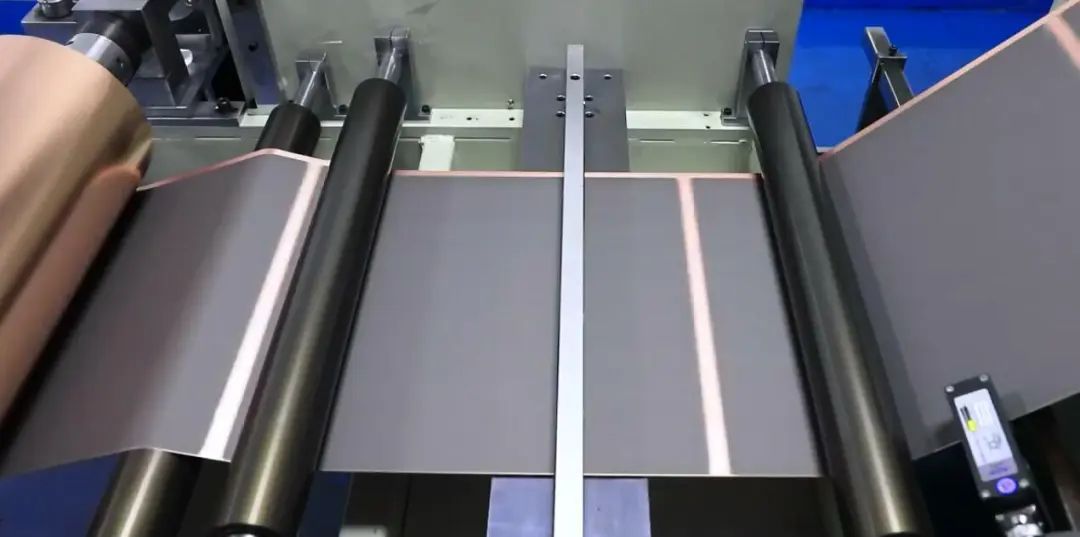
Firstly, with coating speeds in battery production reaching up to 80 meters per minute, such high production speeds generate a vast amount of image data during visual inspection. Concurrently, to accurately identify potential defects during the coating process, these images must maintain a high level of detail. This necessitates high image resolution for the visual inspection system. However, high image resolution implies larger data volumes, posing significant challenges for traditional image processing systems.

High battery coating speed
Secondly, due to factors such as varying coating methods, slurry viscosity, and coater precision, the coating layer may exhibit defects like uneven thickness, bubbles, and cracks. These defects can be hidden in various areas, requiring the inspection system to possess high flexibility and accuracy to handle diverse and complex inspection scenarios.

Types of defects that may occur during the coating process
Scale: 1 mm
Source: Schoo A, Moschner R, Hülsmann J, Kwade A. Coating Defects of Lithium-Ion Battery Electrodes (...). Batteries. 2023; 9(2):111. https://doi.org/10.3390/batteries9020111
Targeted and Efficient Solutions
High-Sensitivity Line Scan Cameras for Clear Image Acquisition
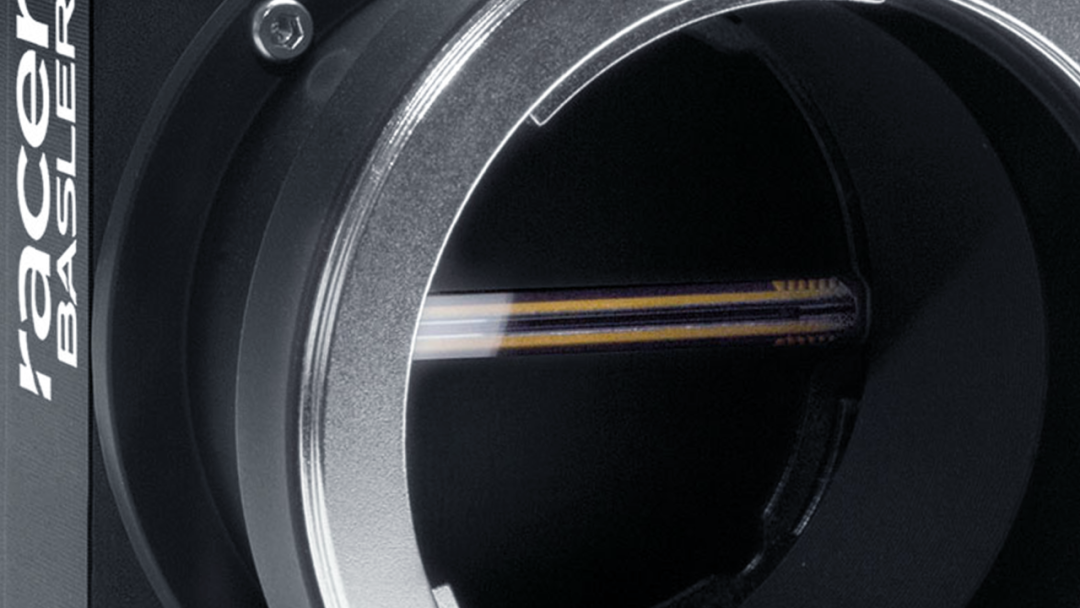
Firstly, high-sensitivity line scan cameras, based on their line-by-line scanning characteristic, offer superior image capture capabilities for large-format, high-precision, and cylindrical object scanning - enabling them to capture clear, high-quality images under high-speed production conditions. Equipped with advanced image sensors and image processing technology, they can maintain high image resolution while reducing image noise and distortion, ensuring the accuracy of inspection results.
VisualApplets Combined with Frame Grabbers
Enabling Time-Division Strobing
The VisualApplets solution can output precise trigger timing signals via a CXP-12 frame grabber, which, in conjunction with a low-latency power module, can trigger and control multiple external light sources to achieve time-division strobing.
VisualApplets Combined with Frame Grabbers
Precise ROI Localization
Secondly, the VisualApplets solution, combined with a frame grabber, can localize and process image data only for critical irregular areas (Region of Interest - ROI). This not only enhances image processing efficiency but also reduces hardware performance requirements, allowing the system to better handle the vast image data generated under high-speed production conditions.

Left: Full image of defective coating (5056 px × 1032 px)
Right: Single defect ROI with dimensions of only 96 px × 44 px
pylon vTools for Further Image Processing
Finally, pylon vTools can be used to further analyze irregularities within the ROI. The system can accurately identify and precisely classify different defects. Then, based on the defect type, it determines whether the defect falls within an acceptable tolerance or if further actions are required, such as precise cutting of the defective area. This ultimately improves the quality of lithium-ion battery cells and minimizes material waste.
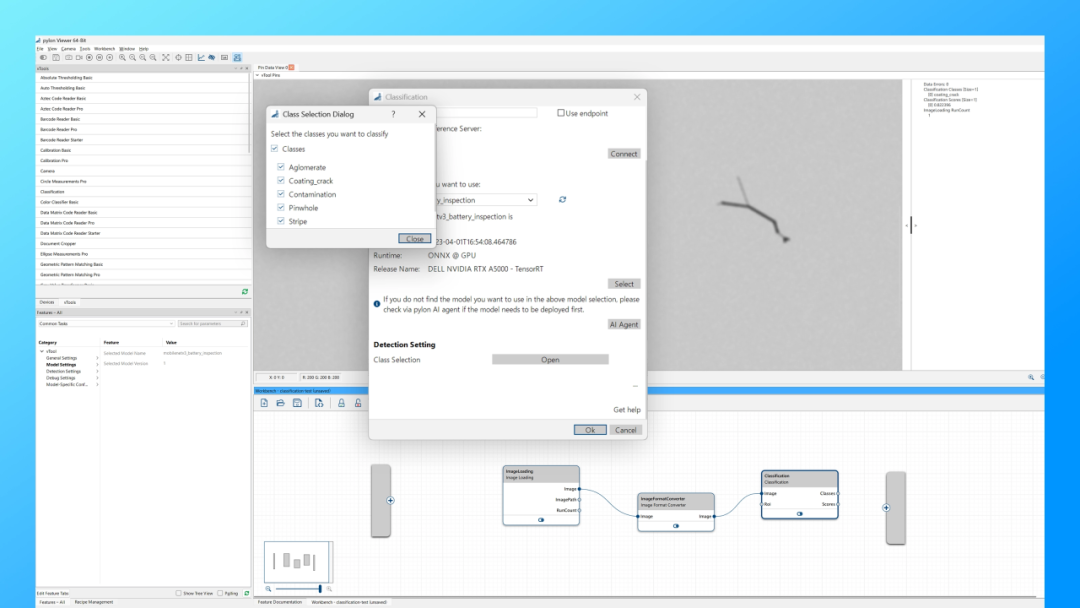
pylon vTools for classifying and measuring coating defects