RK3588-based GMSL, FPDLink, VByone, and MIPI Camera Modules for Automotive, Robotics & Industrial Image Recognition
Robotics & Industrial Cameras
For robotic vision and industrial inspection vision, Xinmai independently develops and produces various camera modules such as GMSL, FPDLink, VByone, and MIPI, offering multiple field-of-view angles and lenses for different application scenarios. With an experienced team of image algorithm and ISP experts, we are capable of software driver layer development, ISP algorithm development, FPGA algorithm integration, and ISP image tuning for various scenarios adapting to different SOC platforms, providing customers with the highest quality imaging products and services.
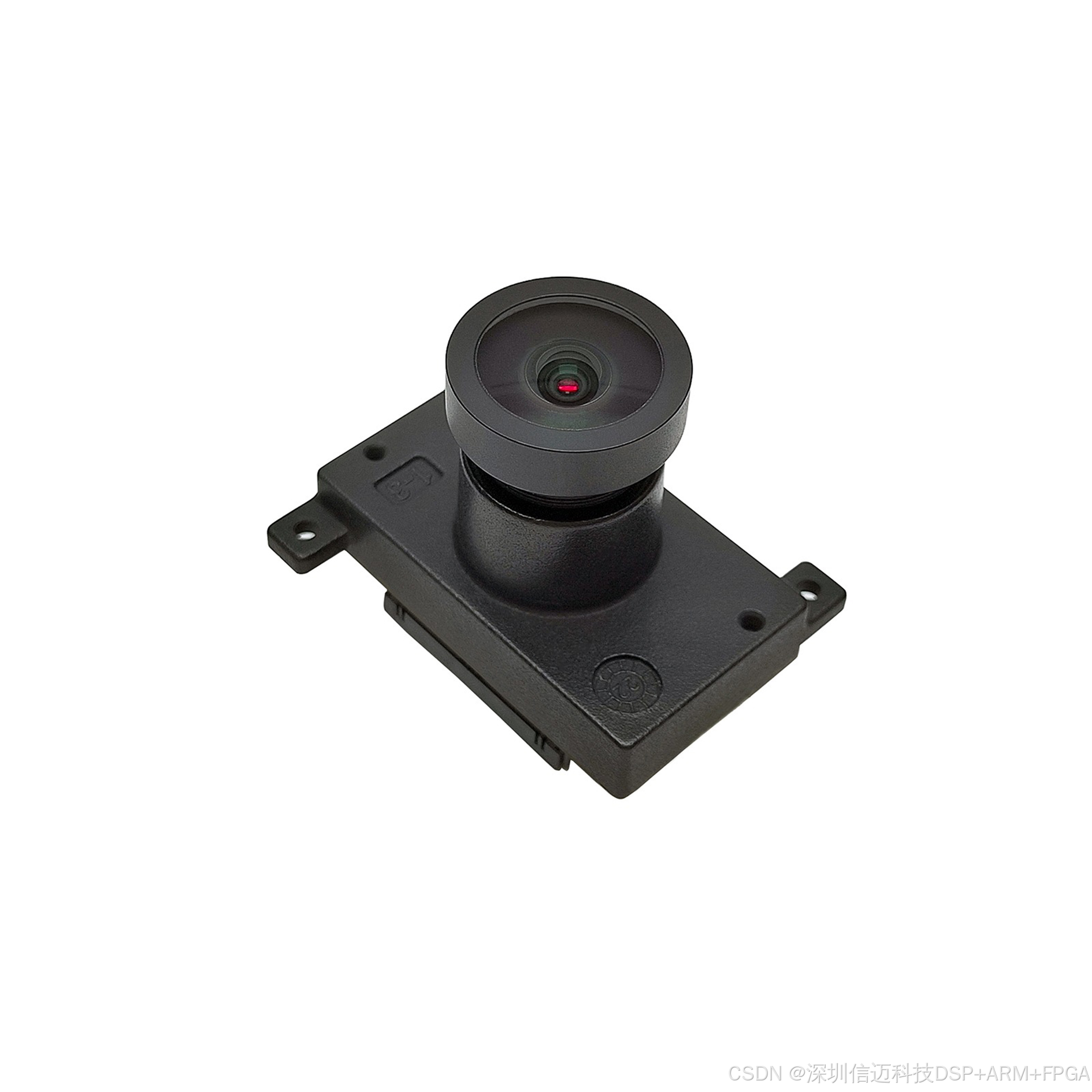
GMSL is a high-speed serial interface introduced by Maxim, suitable for transmitting video, audio, and control signals, with a range of 15m or more when using 50Ω coaxial cable or 100Ω shielded twisted pair (STP) cable. Maxim's solutions are divided into GMSL, GMSL2, and GMSL3. GMSL2 is compatible with GMSL (first generation), so in Maxim's Camera SerDes solution, transceivers can be freely mixed and matched. The new GMSL3 standard (12 Gbit/s) is ADI's third-generation Gigabit Multimedia Serial Link. With this interface, image sensors can operate under the full MIPI CSI-2/D-PHY v1.2 specification (4 lanes, 2.5 Gbps each), enabling vision systems to achieve uncompressed, smooth video streams of up to 15MP@36fps or 4K@60 fps, transmitted over a single coaxial cable (PoC), thereby enabling smooth and clear sensor fusion, real-time imaging, or stereo 3D imaging. Taking ADAS cameras as an example, this is also a primary application area for GMSL. Generally speaking, in addition to sending captured image data externally, cameras also send frame synchronization signals, line synchronization signals, pixel clock, and other information, as well as power supply, etc. It is a parallel bus composed of many signal lines, and parallel buses do not have an advantage in high-speed data transmission. Therefore, we need to combine these parallel signals into serial signals and then transmit them at higher frequencies.
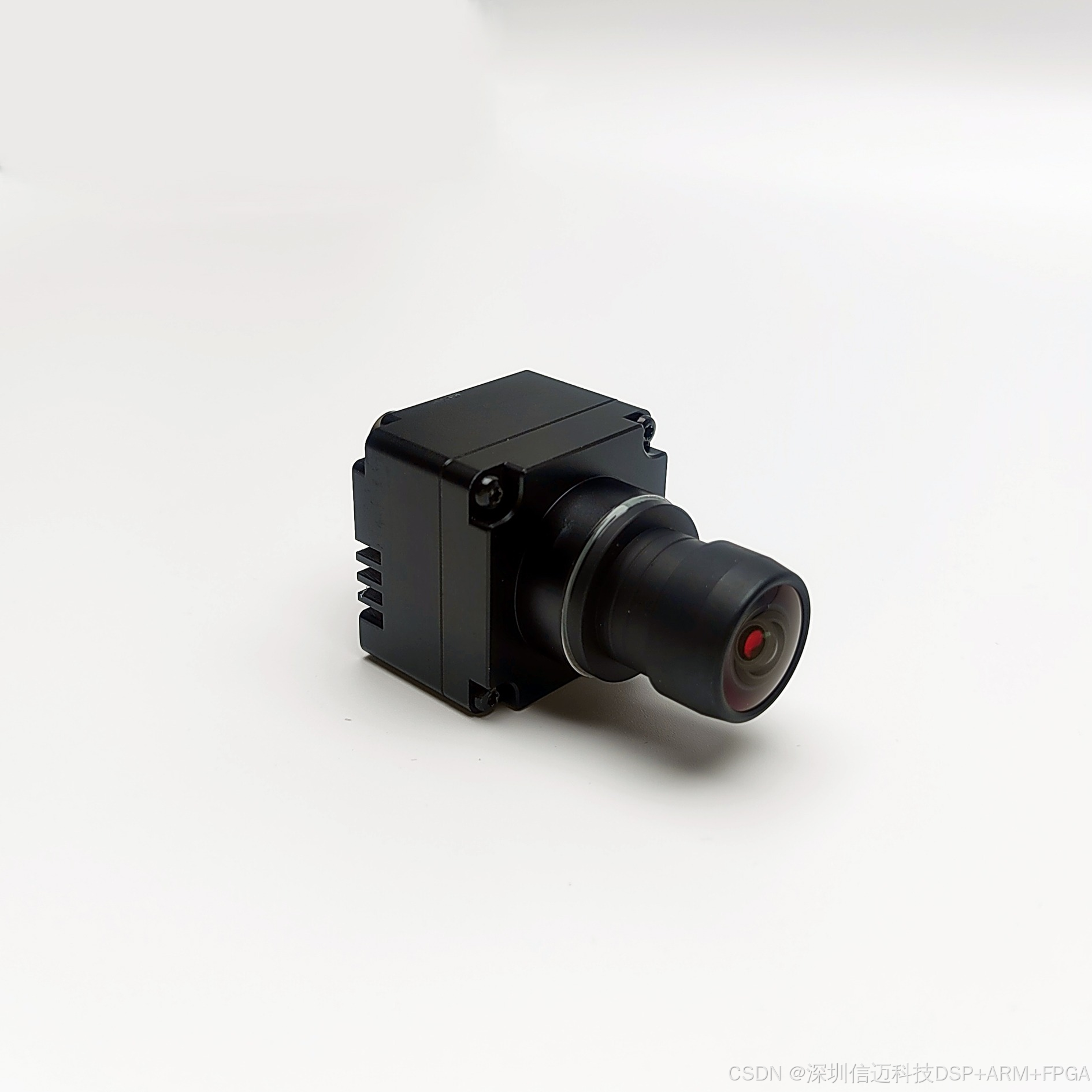
The camera module is developed and designed using an ONSEMI CMOS image sensor (AR0233), an image processor (GW5200), and a Maxim GMSL2 serializer (Max9295A). It complies with automotive-grade performance and features high-quality image effects after professional image tuning; equipped with an M12 automotive-grade lens, the module as a whole can achieve an IP67 protection rating.
Resolution 1920H*1080V Frame Rate 1920*1080@60fps Image Sensor ONSEMI 2.6MP AR0233 RGGB ISP GW5200 Connector Amphenol Fakra (Z Code) Output Data Format YUV422@8bit Serializer MAXIM MAX9295A Shutter Type Rolling Shutter Operating Temperature -40°C~+85°C Dimensions 30mm*30mm*22.5mm FOV HFOV 60°/100°/118.4°/196°
Smart Automotive Cameras
A series of small, automotive-grade camera products have been specifically designed and developed for the smart automotive industry, including DMS cameras, OMS cameras, CMS cameras, BEV cameras, and L2 ADAS cameras. This series of camera products can be applied to pre-installation in passenger cars, commercial vehicles, and rail transit, as well as assisted driving, autonomous driving solutions, and other scenarios. This camera product is compact, convenient, and easy to install, capable of meeting application requirements for various recognition distances and fields of view, ensuring driving safety in harsh environments such as night without light, strong light, hazy weather, rain, and snow.
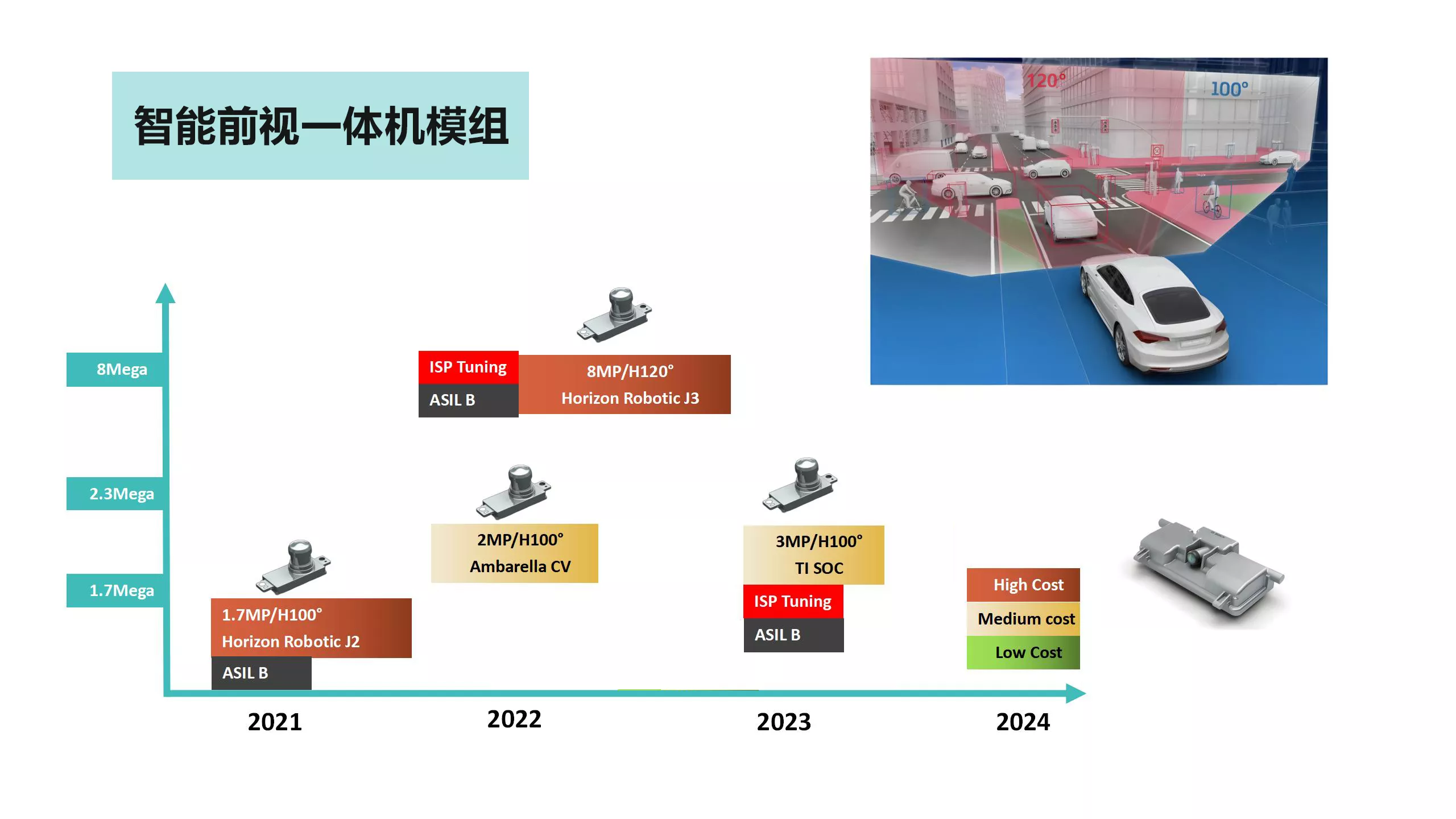
ADAS (Advanced Driver Assistance System), also known as Automated Driving Assistance System. As an important carrier for intelligent driving, the popularization of ADAS is a prerequisite for achieving future autonomous driving. Currently, ADAS is in a period of rapid development at the L2 level. Cameras are core sensors in the ADAS perception layer. Perception-based ADAS cameras are used for active safety, requiring accurate image capture. The front-view integrated module is independently developed and designed by Xinmai Smart, adopting high-dynamic automotive-grade image sensors, offering high reliability, and capable of providing high-quality images for vision applications in advanced autonomous driving assistance systems. This camera module has wide applicability and can adapt to different SOC platforms.