X86+FPGA, NXP+FPGA: The Rugged Choice for Industrial Control, Enabling New Transformations in Smart Rail Transit with CPCI/VPX
Industrial PCs face opportunities in the current era, but also many challenges. In the rail transit sector, industrial PCs must possess high reliability and stability, capable of long-term, fault-free operation in complex and harsh working environments. They need to meet stringent real-time and response performance requirements, ensuring quick and accurate processing of sensor signals and control commands.
Reality and Challenges
High-speed rail transit applications demand a higher-performance, more reliable computing platform. This platform must be able to withstand high-intensity vibration environments, be easily expandable, and have a shorter Mean Time To Repair (MTTR). Traditional IPCs cannot meet these demanding application environments.
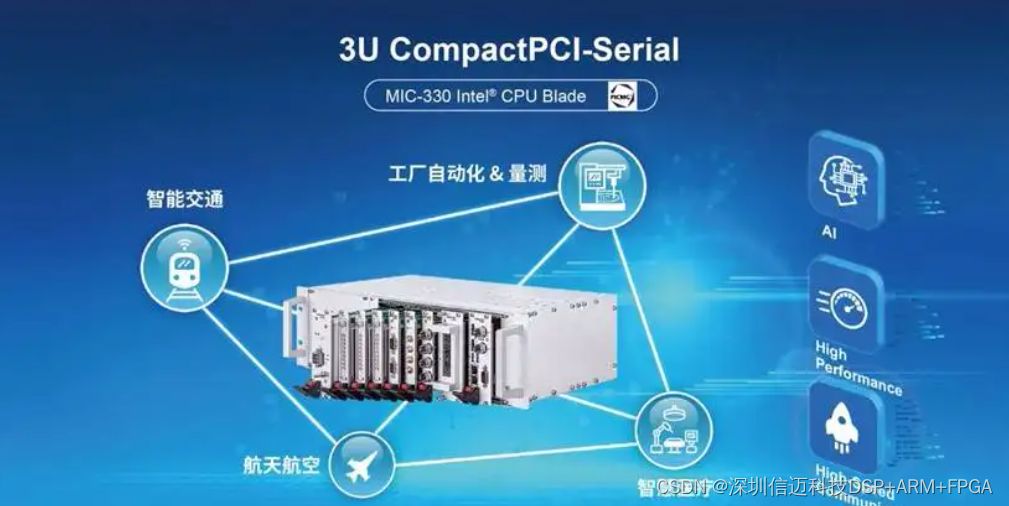
"Ultra-High Performance, Super Ruggedized"
The 3U CPCI-Serial product series encompasses blade motherboards, backplanes, power supplies, chassis, cooling systems, functional cards, and more. Its market positioning is very clear, primarily focusing on critical mission scenarios such as smart rail transit, factory automation, aerospace ruggedization, medical imaging, and high-end rugged modular equipment. In these fields, customers have extremely high demands for equipment stability, reliability, and performance. To meet these needs, 3U CPCI-Serial was developed.
Chen Jiaona, Product Manager of the Blade IPC (BIPC) Product Department, states that compared to similar products on the market, the 3U CPCI-Serial possesses two major characteristics: first, its ruggedized features, and second, its modular design.
First is the ruggedized characteristic: The 3U CPCI-Serial adopts a ruggedized design, offering excellent anti-vibration and anti-shock performance, enabling stable operation in harsh environments. This feature provides a significant advantage in critical application areas.
Specifically, blade IPCs are designed for specialized application industries and high-density computing environments. Each "blade" is essentially an independent IPC. Each "blade" runs its own system, serving specific, distinct user groups, with no interdependencies. All "blades" can also be interconnected to provide a high-speed network environment, sharing resources and serving the same user group. Blade IPCs occupy minimal space, making them highly suitable for space-constrained environments.
Chen Jiaona explains that in terms of card design, the 3U CPCI-Serial innovatively employs a unique motherboard-to-backplane connection method. For expansion, the motherboard directly interfaces with the backplane, eliminating the need for cables or "gold finger" connectors between them. The 3U CPCI-Serial introduces high-density connectors, designed like robust claws, firmly gripping the motherboard and backplane. This ensures stable connection in any vibration environment, completely eliminating the risk of loosening.

Second is the modular design. The modular design brings immense convenience to customers.
First, easy expandability. Whether customers need to expand functionality or streamline input/output (IO) interfaces, this can be achieved by adjusting the number and function of modules. Our products can be presented as palm-sized motherboard systems or rack-mounted chassis. Therefore, customers can flexibly choose the most suitable configuration solution based on their actual needs and application scenarios.
Second, easy compatibility. The 3U CPCI-Serial adheres to the CPCI-S series specification under the PICMG organization. This means that whether it's their own products or those from competitors, as long as they comply with this specification, customers can easily replace or upgrade without reconfiguring or debugging hardware and software. In contrast, when critical components like motherboards fail in traditional IPCs, customers are often forced to purchase replacement products from the original manufacturer due to structural and electrical incompatibilities, which undoubtedly increases customer costs and risks. The 3U CPCI-Serial breaks this limitation, offering customers more choices and flexibility.
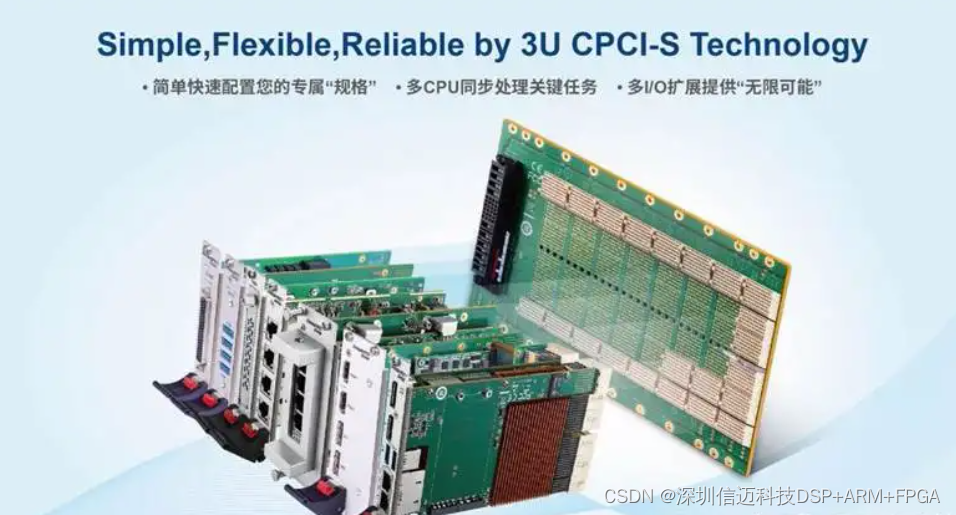
The Mean Time To Repair (MTTR) for the 3U CPCI-Serial series products can be controlled within 30 minutes. Taking a serial port card failure as an example, maintenance personnel can quickly identify and locate the issue. By loosening two external panel screws and pressing the ejector, the faulty serial port card can be instantly removed, and a new card inserted and secured, with the entire process completed within 30 minutes. This allows for rapid equipment repair without the need for specialized personnel, significantly improving equipment availability and maintenance efficiency.
User Experience and Market Demand as Primary Factors
How does the 3U CPCI-Serial account for user experience and market demand during its product design and R&D process?
In critical mission areas such as smart rail transit, factory automation, aerospace ruggedization, medical imaging, and high-end rugged modular equipment, safety and transmission stability are paramount. Product longevity is also crucial, as customers typically expect a product lifespan exceeding 10 years, rather than needing replacement every three to five years. Concurrently, with the rapid advancement of technology, continuous iteration and updates are necessary. However, this does not mean customers need to frequently replace the entire product; instead, technological iteration and performance upgrades can be achieved through module replacement. Furthermore, with the continuous application of AI technology, the demand for high-speed processing is growing, making computing power a critical factor. We always ensure that our solutions closely align with the core needs of our customers' industries.
In selecting technology platforms, we carefully choose to collaborate with major brands like Intel or NVIDIA, utilizing their low-power, high-performance, long-lifecycle embedded CPUs to extend product lifespan.
Before simulated mass production or customer delivery, rigorous verification is conducted, leveraging the R&D department's strong validation capabilities to ensure product reliability and stability. For instance: signal integrity testing, power measurement, thermal dissipation, DQA (functional testing, compatibility, performance testing, stability testing), environmental testing, electromagnetic compatibility (EMC) shielding and interference testing, etc. Thus, from thorough pre-design considerations to in-house testing after design completion, then to industry-standard inspections during mass production, and finally to rigorous pre-delivery verification, through multiple layers of quality control, we ensure that products perform excellently in various application scenarios.
"Specifically, as a standard product manufacturer, our product design not only meets but even surpasses international railway certifications such as EN50155 standards. Although the final certification is completed by the customer, when providing products, we ensure they comply with certification standards to avoid issues arising from core component problems during integration. Before delivery, test reports will be provided to prove that the product has passed critical tests," Chen Jiaona emphasized.
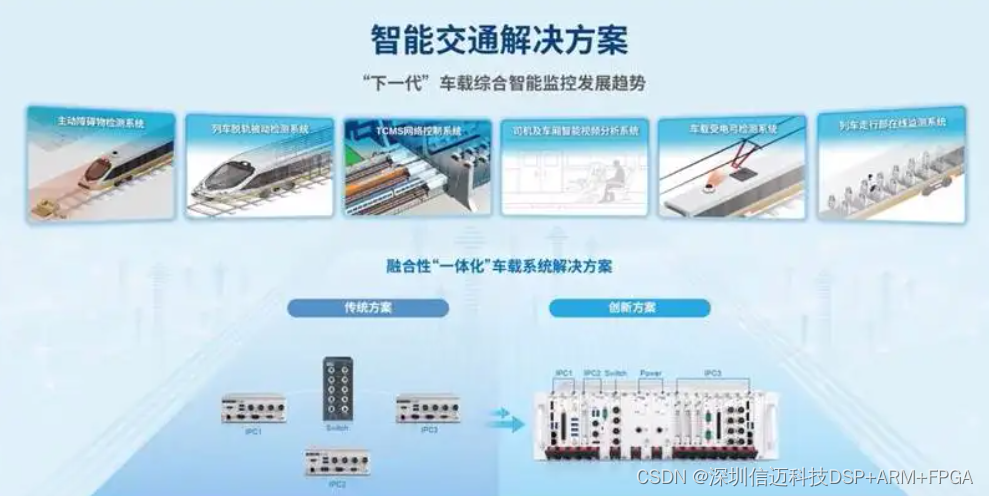
"Leader in Next-Generation Rail Transit Integrated Monitoring Systems"
The implementation of integrated monitoring in the rail transit sector is achieved by installing a large number of sensors and IPCs on rail vehicles to comprehensively monitor various states of the vehicles during operation. These sensors and industrial PCs are primarily responsible for monitoring the operational status of power supply systems, braking systems, air conditioning systems, etc., as well as detecting obstacles on the path ahead, to ensure the safety and smooth operation of rail transit.
In traditional monitoring methods, each application scenario typically uses one IPC. When users need to increase system density and require more flexible maintenance and hardware upgrade capabilities, traditional decentralized IPC architectures often struggle to meet these demands. Meanwhile, with the development of modern rail transit systems, the number of monitoring targets and precision requirements are continuously increasing. On the other hand, the installation location of IPCs has also become a major challenge. Due to limited space, these IPCs are often installed in various corners of the train's central equipment cabinet, the front or rear of the train, or even under passenger seats. When more devices need to be added to meet computing power demands, limited installation space and heat dissipation capabilities often become the biggest bottlenecks. To optimize integrated monitoring systems for rail transit, more efficient and integrated solutions must be sought.
"In integrated monitoring for rail transit, the 3U CPCI-Serial can be considered a leader in next-generation integrated monitoring systems. Traditional solutions require at least three IPCs and one switch to handle multiple scenarios, whereas the 3U CPCI-Serial only needs one CPCI basic system to encompass the functions of three IPCs and a switch, achieving system integration and optimization, thereby becoming a professional driver for cost reduction and efficiency improvement," Chen Jiaona stated.