【RK3588/Sophon/Nvidia Smart Box】AI-powered Oversight: Regulating Parking, Fire Hazards, and Charging Irregularities at EV Charging Stations
In recent years, China's new energy vehicle (NEV) industry has experienced rapid development, with its production ranking first globally for 8 consecutive years. According to data from the China Charging Alliance, as of June 2023, the number of NEVs in operation reached 16.2 million, and the cumulative number of charging infrastructure units nationwide was 6.652 million, with a vehicle-to-charger ratio of approximately 2.5:1.
While the imbalance between NEV and charging pile supply and demand is the fundamental reason for the "difficulty in finding a charger," what if, after finally finding a charger, we discover a gasoline vehicle occupying the spot, or even an EV parked across multiple spots, or an EV that has finished charging but is slow to leave? Wouldn't you be tempted to file a complaint?
Faced with the current situation of numerous complaints and low revenue at charging stations due to supply-demand imbalance and inadequate management, through in-depth on-site research and combining the core needs of charging station scenarios, we have leveraged our proprietary algorithms and platform capabilities to launch an "AI Smart Charging Station" Algorithm Solution. The algorithm covers the entire process from vehicle entry, charging, to vehicle departure, monitoring parking and charging regulations, environmental safety, and other aspects at NEV charging stations, thereby improving operational efficiency and the charging experience. It has currently been successfully deployed and is operational at a charging station in Zhuhai.
"AI Smart Charging Station" Algorithm Solution
△ "AI Smart Charging Station" Algorithm Solution Architecture
△ "AI Smart Charging Station" Series Algorithms
When a vehicle enters, the algorithm identifies vehicle data such as blue and green license plates (blue plates for gasoline vehicles, green plates for NEVs), brand, color, and model. In conjunction with the charging station's parking system, it automatically guides blue and green plate vehicles to their designated parking areas, and simultaneously starts timing.
Before charging, if a gasoline vehicle is detected, it triggers audible and visual alarms to remind of occupancy fees. If an NEV is detected, its license plate is automatically bound to the charging spot, and timing begins. The system determines if the spot is occupied without charging, if the vehicle is parked across multiple spots, or if a fully charged vehicle has not departed. After charging is complete, it identifies whether the charging gun is properly returned to its position, thereby improving charging pile utilization.
Upon departure, regardless of whether it's a blue or green plate vehicle, if the vehicle is detected occupying a spot without charging, an occupancy fee is charged. If, during its stay, the system detects a situation where the vehicle is fully charged but the gun is not unplugged, or the gun is unplugged but the vehicle does not leave within the stipulated time, an additional overtime occupancy fee is charged based on the charging status. After payment is completed, the barrier opens for departure.
Additionally, the algorithm can monitor the environmental safety around the charging station. When incidents such as water accumulation, smoke, flames, vandalism, entrance/exit congestion, crowd gathering, or person falls occur, it triggers real-time alarm messages, prompting management personnel to handle them promptly.
The AI Smart Charging Station Algorithm System can seamlessly integrate with various backend software systems of charging stations, as well as hardware devices such as smart ground locks and audible/visual alarms. Standard video stream interfaces support connection to various cameras/NVRs. Deployment can be chosen based on requirements, either via edge computing boxes or central computing servers, offering strong scalability, openness, and flexibility.
Deployment Case: A Charging Station in Zhuhai
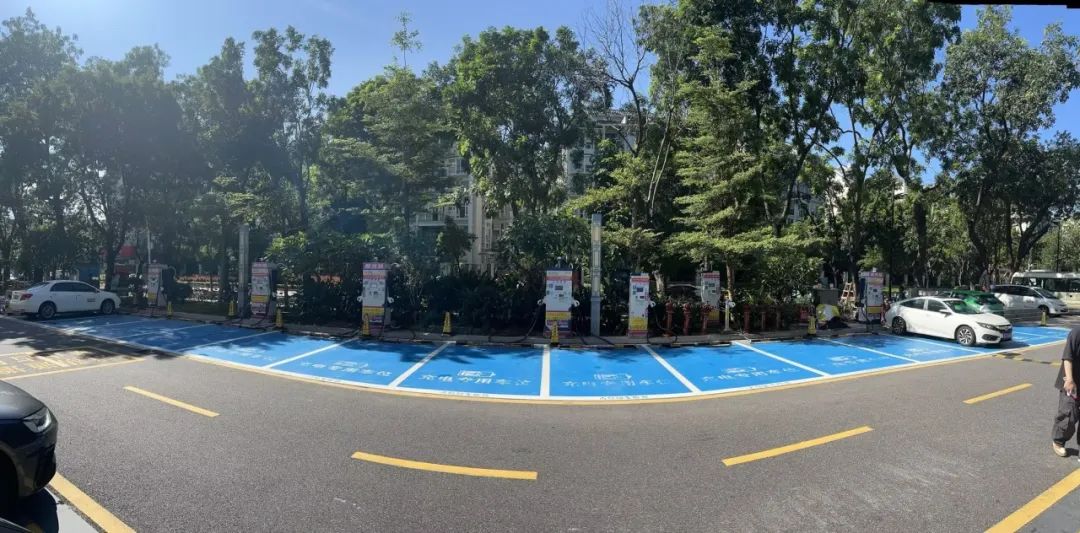

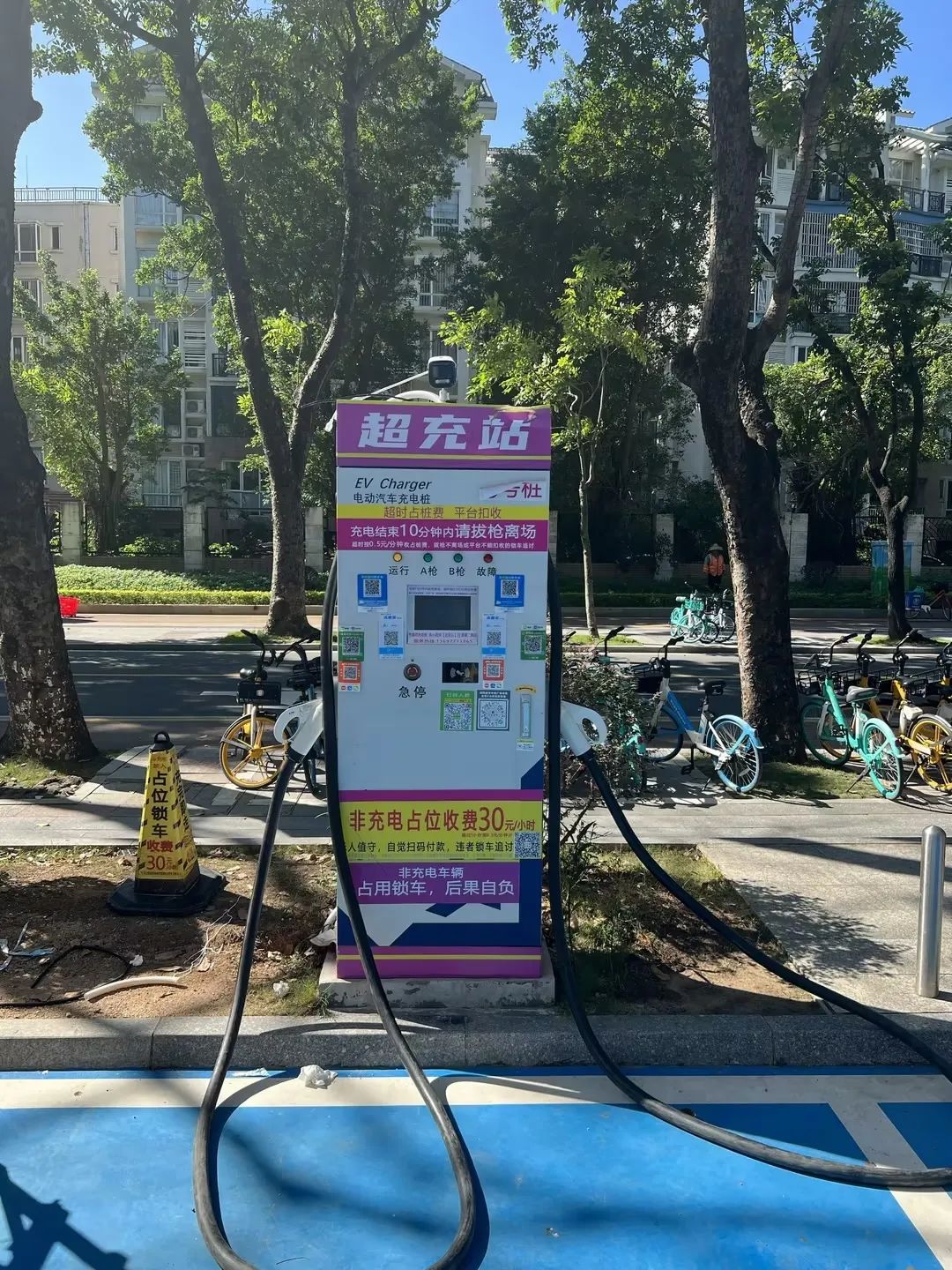
△ Deployment site at a charging station in Zhuhai
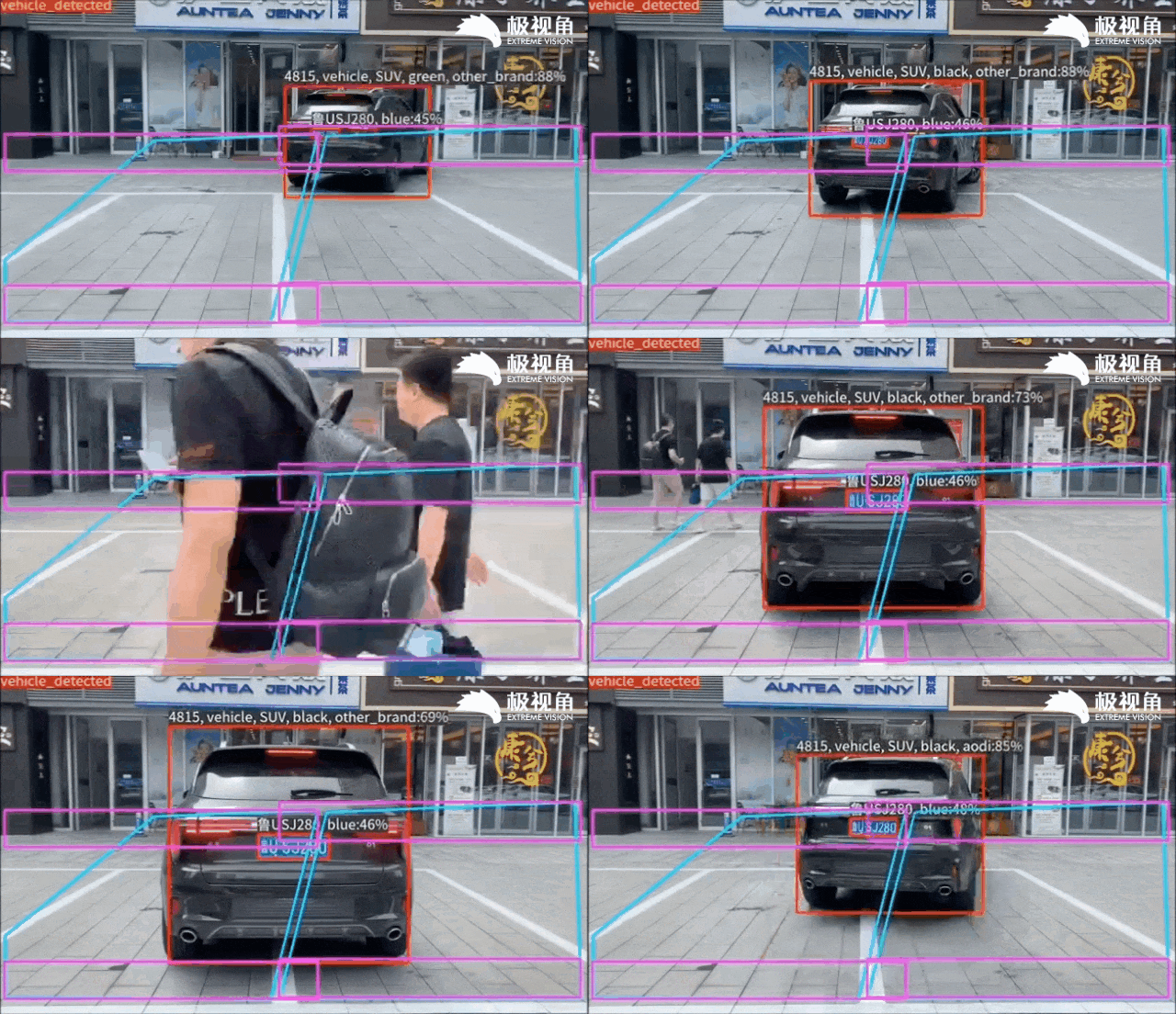
△ Vehicle Information Recognition & Cross-Spot Parking Recognition Algorithm Effect
At a charging station in Zhuhai, additional pole-mounted cameras and charger-top cameras were installed. Algorithms for charging station vehicle entry/exit recognition and cross-spot parking recognition were deployed using Aurora edge computing boxes. The recognition results are reported to the charging station's intelligent management platform and simultaneously pushed to the station manager's mobile phone. Outdoor audible and visual alarms were also added to remind non-charging vehicles that occupying a spot will incur fees. After deploying the algorithm, the workload for manual patrols was significantly reduced, operational efficiency is expected to increase by over 30%, and revenue for the charging station is boosted.
Relying on the AI Smart Charging Station Algorithm Solution, it will establish standardized management of charging stations as its foundation, empower efficient operations, enhance the charging experience, and propel the NEV charging station industry to a new level of digital and intelligent development.