Nvidia/Sophon + FPGA + High AI Compute Edge Computing Box: AI Smart Monitoring for Beach Rescue
A team in Israel has made a splash with its achievements in the field of artificial intelligence.
Their achievements today stem from an idea conceived many years ago. Netanel Eliav and Adam Bismut, old friends from their campus days, wanted to solve a problem that could change the world. The idea came to Bismut when, while floating in the Dead Sea, he realized the lack of lifeguard technological support there, with outdated binoculars being used to scan the sea.
These two aspiring entrepreneurs, who recently graduated with MBAs from Ben-Gurion University in southern Israel, saw this as a problem they could solve with artificial intelligence.
“As a father of two daughters, I deeply understand the feelings parents have when their children play near the water,” said Eliav, the company’s CEO.
In 2018, they co-founded Sightbit with Gadi Kovler and Minna Shezaf, classmates from their time at Ben-Gurion University, to help lifeguards observe dangerous situations and prevent drownings.
Cactus Capital, their alma mater's venture capital arm, provided seed funding for the startup.
Sightbit is currently undergoing pilot testing at Palmahim Beach. Located in the Palmahim Kibbutz area on the Mediterranean coast south of Tel Aviv, Palmahim Beach is a popular destination for sunbathers and surfers. This dune-lined destination, with its inviting, warm, aquamarine waters, attracts thousands of visitors daily during the summer.
However, it is also known for its deadly rip currents.
Danger Detector
Sightbit has developed image detection technology to help identify dangers and assist lifeguards. The Beersheba-based startup partnered with the Israel Nature and Parks Authority to install three cameras on a lifeguard tower at Palmahim Beach. The collected data is transmitted to a dedicated NVIDIA Jetson AGX, and NVIDIA Metropolis is deployed for video analytics.
This danger detection system can flag potential safety hazards within the scanned area, allowing lifeguards to monitor the entire beach simply by continuously observing a computer display.
Sightbit developed models based on convolutional neural networks and image detection to help lifeguards identify potential dangers. As the company's CTO, Kovler has trained tens of thousands of images using NVIDIA GPUs deployed in the cloud.
Shezaf, the company's CMO, added that the image training process was not easy due to factors such as sunlight reflection on the ocean, weather conditions, crowded areas, and people engaged in normal activities in the sea (with parts of their bodies submerged).
However, Sightbit's deep learning and proprietary algorithms enable it to individually identify children and crowds. This allows the system to flag children who are separated from their groups.
Rip Current Identification
The system also utilizes optical flow algorithms to detect dangerous rip currents in the ocean, helping lifeguards guide visitors away from these areas. These algorithms calculate the acceleration vector for each voxel in an image using partial differential equations, thereby identifying the velocity of each object in the image.
Lifeguards receive up-to-date ocean conditions, giving them an overall understanding of potential dangers for the day when they begin their shifts.
“We’ve spoken with many lifeguards, and they are striving to prevent the next accident. Many people get caught in rip currents after swimming too far out and can't escape,” said Eliav.
The cameras on the lifeguard tower run on a small supercomputer, the Jetson Xavier, and access to Metropolis provides instantaneous inference results for alerts, tracking, statistics, and real-time risk analysis.
According to Sightbit, the Israel Nature and Parks Authority is planning to construct a building on the beach to install more automated security cameras.
-
- Product Overview
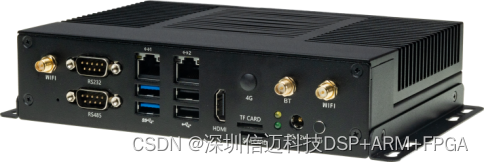
The XM-AIBOX-32 Smart Edge Analysis All-in-One Machine is a high-performance, low-power edge computing product. Equipped with the BM1684X main chip, it delivers up to 32 TOPS of INT8 computing power, 16 TFLOPS of FP16/BF16 computing power, and 2 TFLOPS of FP32 computing power. It can simultaneously process 32 channels of high-definition video, supporting hardware decoding for 32 channels of 1080P HD video and encoding for 12 channels.
This product highly integrates high-precision AI intelligent algorithms based on computer vision and deep learning networks, along with a comprehensive video intelligent management platform. The AI intelligent algorithms cover various scenarios such as parks, communities, construction sites, and campuses, and can be combined and configured as needed for specific scenarios. The video intelligent management platform supports front-end device management, real-time video preview, alarm push, forensic snapshot, online algorithm loading and optimization, and data situational analysis large-screen display. The device is easy to operate, plug-and-play, and also features rich northbound API interfaces to empower upper-layer business application platforms.
-
- Product Features
Ultra-High Performance Computing and Encoding/Decoding Capabilities
- Supports up to 32 TOPS of INT8 peak computing power;
- Supports up to 16 TFLOPS of FP16/BF16 half-precision computing power;
- Supports 2 TFLOPS of FP32 high-precision computing power;
- Supports hardware decoding for up to 32 channels of H.264/H.265 1080P@25FPS video;
- Supports hardware encoding for up to 12 channels of H.264/H.265 1080P@25FPS video.
Rich Built-in AI Algorithms
- Built-in with 30+ AI algorithms, supporting free combination and custom configurations;
(Supports algorithms such as: Personnel Structuring / Facial Recognition / Vehicle Structuring / License Plate Recognition / Flame Detection / Smoke Detection / Smoking Detection / Phone Call Detection / Mobile Phone Play Detection / Mask Non-compliance Detection / Personnel Absenteeism Detection / Personnel Sleeping on Duty Detection / Personnel Fall Detection / Personnel Static Elimination / Area People Counting / Area Under-capacity / Area Over-capacity / Area Abnormal Headcount / Area Intrusion Detection / Work Uniform Detection / Safety Helmet Detection / Reflective Vest Detection / E-bike Detection / Standard Parking (Illegal Parking) / Entrance/Exit Flow Statistics / Perimeter Crossing Intrusion / Personnel Boundary Crossing Detection / Area Loitering Detection / Fire Lane Occupancy / Fire Escape Lane Occupancy / Littering Detection / Full Trash Can Detection / Trash Disposal Reminder / Camera Abnormal Displacement Detection, etc.)
- Each video channel supports up to 3 AI analysis tasks running simultaneously;
- Supports up to 32 video AI analysis tasks running simultaneously; if exceeding 32 AI analysis tasks, polling analysis is available.
Rich Interfaces, Flexible Deployment
- Supports rich interfaces: 1000M Ethernet port, USB3.0/USB2.0, HDMI, RS-485, RS-232;
- Supports wide operating temperature environment from -20℃ to +60℃;
- Supports IP30 protection rating, supports fanless cooling (subject to specific model);
- Adapts to support SATA storage, supports 2TB storage capacity (subject to specific model);
- Optional support for LTE wireless backhaul function (subject to specific model);
- Northbound interfaces: Supports HTTP protocol, MQTT protocol, GB28281
- Southbound interfaces: Supports GB28281, Onvif, RTSP
High Reliability, Encryption Protection
- Supports high-capacity eMMC with development support for primary and backup partitions;
- Supports abnormal fault alarm and protection handling mechanisms;
- Supports programmable encryption chip for privacy information protection.
Easy-to-Use Toolchain, Flexible Development
- One-stop deep learning development toolkit Sophon SDK;
- Supports mainstream deep learning frameworks such as Caffe/DarkNet/TensorFlow/PyTorch/MXNet/ONNX/PaddlePaddle;
- Supports mainstream network models for classification and detection, supports custom operator development;
Supports Docker containerization for rapid deployment of algorithm applications.
-
- Technical Specifications
Specifications
XM-AIBOX-32
Technical Specifications
Chip
SOC
BM1684X
CPU
AI Compute Power
INT8
32 TOPS
BF16/FP16
16 TFLOPS
FP32
2 TFLOPS
Video/Image Encoding and Decoding
Video Decoding Capability
H.264/H.265: 1080P @800fps
Video Decoding Resolution
8K / 4K / 1080P / 720P / D1 / CIF
Video Encoding Capability
H.264/H.265: 1080P @300fps
Video Encoding Resolution
4K / 1080P / 720P / D1 / CIF
Image Encoding/Decoding Capability
600 images/second (JPEG)
Max Image Decoding Resolution
32768 * 32768
Memory and Storage
Memory
16 GB
eMMC
64 GB
External Interfaces
Ethernet Port
10/100/1000Mbps Adaptive *2
USB
USB3.0 *2, USB2.0 *2
Storage
MicroSD *1
Display
HDMI *1
Serial Port
RS232 *1 / RS485 *1
Expandable Storage
SSD (Optional)
M.2 SSD
Wireless Functionality
4G/5G Wireless Module (Optional)
Mini-PCIe 4G Module / M.2 5G Module
Antenna
SMA Female *1 (LTE)
SMA Female *4 (5G), requires motherboard replacement
SMA Female *2 (Wi-Fi)
SMA Female *1 (BT)
SIM
Standard SIM Card Slot
Wi-Fi/BT
Wi-Fi supports 802.11a/b/g/n/ac
BT5.0
Physical Specifications
Dimensions
LengthWidthHeight
210 mm * 130 mm * 44.5 mm
Power Supply and Consumption
Power Supply
DC 12V
Typical Power Consumption
≤20W
Note: HDD, 4G/5G functions are optional and not standard product configurations. Typical power consumption does not include HDD or wireless module power consumption.