Nvidia Jetson/Orin +FPGA+AI High-Performance Edge Computing Box: Intelligent Finance for Banking Service Systems
Industrial and Commercial Bank of China (ICBC) - Established on January 1, 1984. Its head office is located at No. 55 Fuxingmen Inner Street, Beijing. It is a state-owned large commercial bank and a national sub-ministerial level institution. ICBC's fundamental mission is to raise social funds through domestic and international financing activities, strengthen credit fund management, support enterprise production and technological transformation, and serve China's economic construction, all in accordance with national laws and regulations. After the Third Plenary Session of the Eleventh Central Committee of the Communist Party of China was held in December 1978, the pace of financial system reform in China accelerated. With the restoration and establishment of various financial institutions and the diversification of financial service demands, to resolve the contradiction where the People's Bank of China (PBOC) simultaneously performed monetary policy formulation and financial regulatory functions while also engaging in specific business operations, the State Council officially decided in September 1983 that the PBOC would exclusively exercise central bank functions. Separately, ICBC was established to take over the industrial and commercial credit and savings businesses previously handled by the PBOC. After intensive preparations, ICBC was officially established on January 1, 1984, marking the final establishment of China's national specialized banking system. Before the reform and opening-up, China primarily implemented a highly centralized planned economic system. Correspondingly, the social investment and financing system was treasury-led and bank-assisted, with social funds allocated vertically. As for the financial system, it was essentially dominated by the People's Bank of China. In December 1978, the Third Plenary Session of the Eleventh Central Committee of the Communist Party of China was held, and China began to establish its reform and opening-up policy.
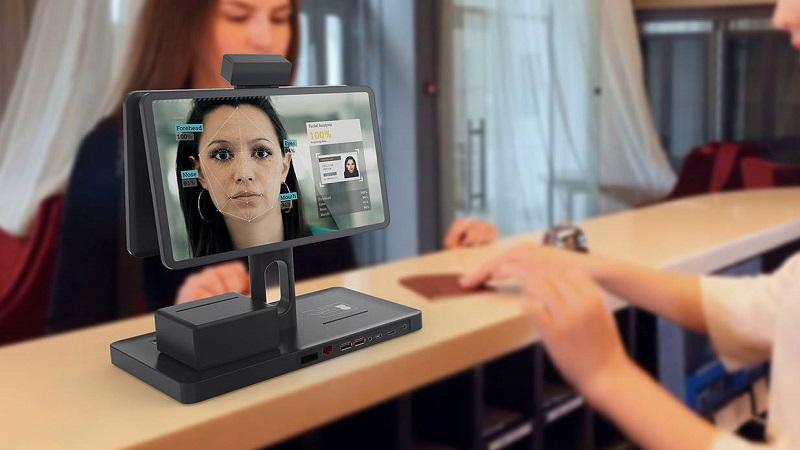
Facing challenges such as demands for faster response times in financial services and increasingly stringent industry risk supervision, edge computing is becoming a key capability to support the high-quality development of financial businesses in the new era, meeting the real-time business and privacy protection needs of the financial industry's digital transformation.
-
Edge computing is a proactive choice for the digitalization of branch operation management. Through edge intelligence, real-time analysis of people, objects, and events can be performed, perceiving real-time dynamics of branch operations. This enables coordinated dispatch of personnel, smart terminals, and other branch service resources to proactively provide services, achieving digital service capability supply and refined management. It promotes the gradual transformation of branch operation models towards customer-centric, data-driven services, enhancing the comprehensive competitiveness and operational vitality of branches.
-
Edge computing is a necessary means for the digitalization of transaction risk management. By integrating technologies such as edge computing and intelligent video analysis, behavioral capabilities like "perception, understanding, execution, linkage, and iteration" are built. This enables full-time, full-chain, and comprehensive effective supervision of the safety, compliance, and standardization of critical links in bank-customer transactions or important operational areas. It provides risk warnings and intervention for business transactions with potential risks, enhancing business operation risk control capabilities.
-
Edge computing is a core guarantee for the digitalization of bank-to-customer services. Edge computing can fully leverage the value of massive unstructured data, such as audio and video, accumulated by banks, unleashing vast data space and potential. It enriches various personalized customer tags, deeply portrays customer profiles from multiple perspectives, and accurately innovates new financial products and services tailored to users based on customer transaction preferences, providing customers with a warm service experience and enhancing banks' customer service capabilities.
ICBC deepens its understanding of digital transformation and seizes the opportunity to build an edge computing system. It integrates digital technologies such as Artificial Intelligence and Big Data, delivering them from the cloud to the edge closer to customers. This provides real-time, secure, and reliable edge intelligent solutions, helping to expand the boundaries of banking financial services and innovate financial service models.
-
- Product Overview
The XM-AIBOX-32 Smart Edge Analysis All-in-One Machine is a high-performance, low-power edge computing product. Equipped with the BM1684X main chip, it boasts an INT8 computing power of up to 32 TOPS, FP16/BF16 computing power of up to 16 TFLOPS, and FP32 computing power of up to 2 TFLOPS. It can simultaneously process 32 channels of high-definition video, supporting hardware decoding for 32 channels of 1080P HD video and encoding for 12 channels.
This product highly integrates high-precision AI intelligent algorithms based on computer vision and deep learning networks, as well as an intelligent video comprehensive management platform. The AI intelligent algorithms cover various scenarios such as industrial parks, communities, construction sites, and campuses, and can be combined and configured on demand according to the scenario. The intelligent video comprehensive management platform supports front-end device management, real-time video preview, alarm push, forensic snapshot, online algorithm loading and optimization, and large-screen display of data trend analysis. The device is easy to operate, plug-and-play, and also features rich northbound API interfaces, enabling large-scale upper-layer business application platforms.
-
- Product Features
Ultra-High Performance Computing and Codec Capabilities
- Supports peak INT8 computing power of up to 32 TOPS;
- Supports FP16/BF16 half-precision computing power of up to 16 TFLOPS;
- Supports FP32 high-precision computing power of 2 TFLOPS;
- Supports hardware decoding for up to 32 channels of H.264/H.265 1080P@25FPS video;
- Supports hardware encoding for up to 12 channels of H.264/H.265 1080P@25FPS video.
Rich Built-in AI Algorithms
- Built-in with over 30 AI algorithms, supporting free matching and custom combinations;
(Supports Person Structuring / Face Recognition / Vehicle Structuring / License Plate Recognition / Flame Detection / Smoke Detection / Smoking Detection / Phone Call Detection / Mobile Phone Usage Detection / Mask Non-compliance Detection / Personnel Absence Detection / Personnel Sleeping on Duty Detection / Person Fall Detection / Personnel Static Discharge Detection / Area Occupancy Counting / Insufficient Area Occupancy / Area Over-occupancy Detection / Abnormal Area Occupancy Detection / Area Intrusion Detection / Work Uniform Detection / Safety Helmet Detection / Reflective Vest Detection / Electric Bicycle Detection / Regulated Parking (Illegal Vehicle Parking) / Entrance/Exit Pedestrian Flow Counting / Perimeter Crossing Intrusion / Personnel Boundary Crossing Detection / Loitering Detection in Area / Fire Lane Occupancy / Fire Escape Route Occupancy / Waste Not in Bin Detection / Overflowing Trash Can Detection / Waste Disposal Reminder / Camera Abnormal Displacement Detection and other algorithms)
- Each video channel supports up to 3 AI analysis tasks running simultaneously;
- Supports up to 32 video AI analysis tasks running simultaneously; when exceeding 32 AI analysis tasks, polling analysis is available.
Rich Interfaces, Flexible Deployment
- Supports rich interfaces: 1000M Ethernet port, USB3.0/USB2.0, HDMI, RS-485, RS-232;
- Supports wide operating temperature range from -20℃ to +60℃;
- Supports IP30 protection level, fanless cooling (subject to specific model);
- Adapts to support SATA storage, supports 2TB storage capacity (subject to specific model);
- Optional support for LTE wireless backhaul function (subject to specific model);
- Northbound interfaces: Supports HTTP protocol, MQTT protocol, GB28281
- Southbound interfaces: Supports GB28281, Onvif, RTSP
High Reliability, Encryption Protection
- High-capacity eMMC supports development of primary/secondary partitions;
- Supports abnormal fault alarm and protection handling mechanisms;
- Supports programmable encryption chip for privacy information protection.
User-Friendly Toolchain, Flexible Development
- One-stop deep learning development toolkit Sophon SDK;
- Supports mainstream deep learning frameworks such as Caffe/DarkNet/TensorFlow/PyTorch/MXNet/ONNX/PaddlePaddle;
- Supports mainstream network models for classification and detection, supports custom operator development;
Supports Docker containerization for rapid deployment of algorithm applications.
-
- Technical Specifications
Specifications
XM-AIBOX-32
Technical Specifications
Chip
SOC
BM1684X
CPU
AI Computing Power
INT8
32 TOPS
BF16/FP16
16 TFLOPS
FP32
2 TFLOPS
Video/Image Codec
Video Decoding Capability
H.264/H.265: 1080P @800fps
Video Decoding Resolution
8K / 4K / 1080P / 720P / D1 / CIF
Video Encoding Capability
H.264/H.265: 1080P @300fps
Video Encoding Resolution
4K / 1080P / 720P / D1 / CIF
Image Encoding/Decoding Capability
600 frames/sec (JPEG)
Max Image Decoding Resolution
32768 * 32768
Memory and Storage
Memory
16 GB
eMMC
64 GB
External Interfaces
Ethernet Port
10/100/1000Mbps adaptive *2
USB
USB3.0 *2, USB2.0 *2
Storage
MicroSD *1
Display
HDMI *1
Serial Port
RS232 *1/RS485 *1
Expansion Storage
SSD (Optional)
M.2 SSD
Wireless Functionality
4G/5G Wireless Module