Application of AI Boxes in Smart Gas Stations
Background
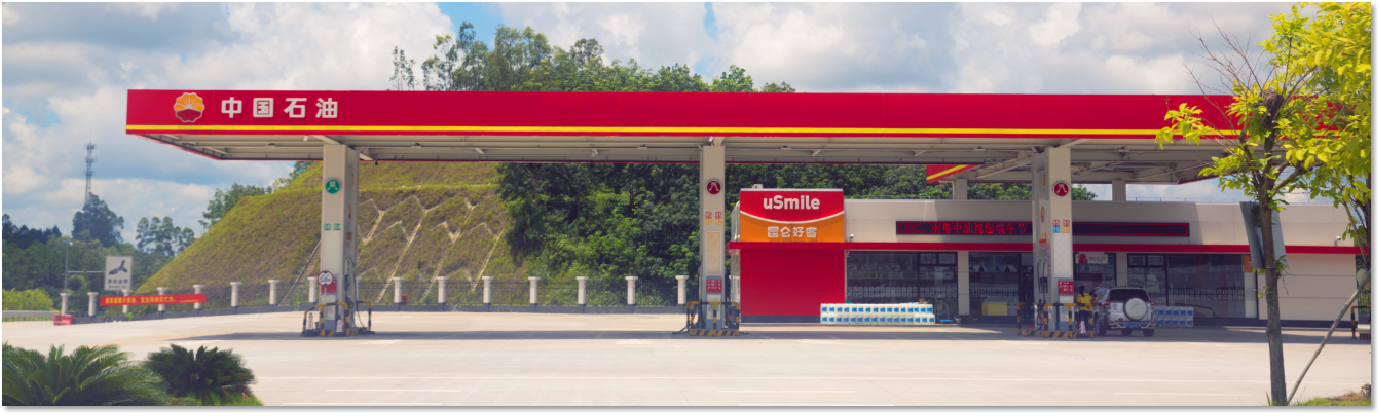
To standardize gas station operations and ensure public safety, Article 5 of the "Safety Regulations for Gas Station Operations" (AQ 3010-2007) specifies basic requirements for fuel unloading operations, including protection against static electricity and lightning, fire prevention, personnel supervision, and prohibiting unauthorized vehicles and non-staff from entering the unloading area.
Pain Points
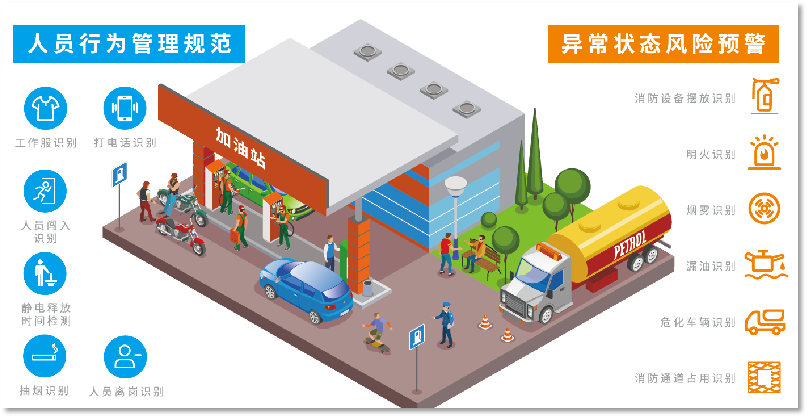
Currently, numerous safety hazards exist during fueling and unloading processes. These include difficulties in manual identification, challenges in post-incident evidence collection, lack of early warnings, poor management timeliness, non-compliant operations, significant safety risks, and high labor costs.
Solution Overview
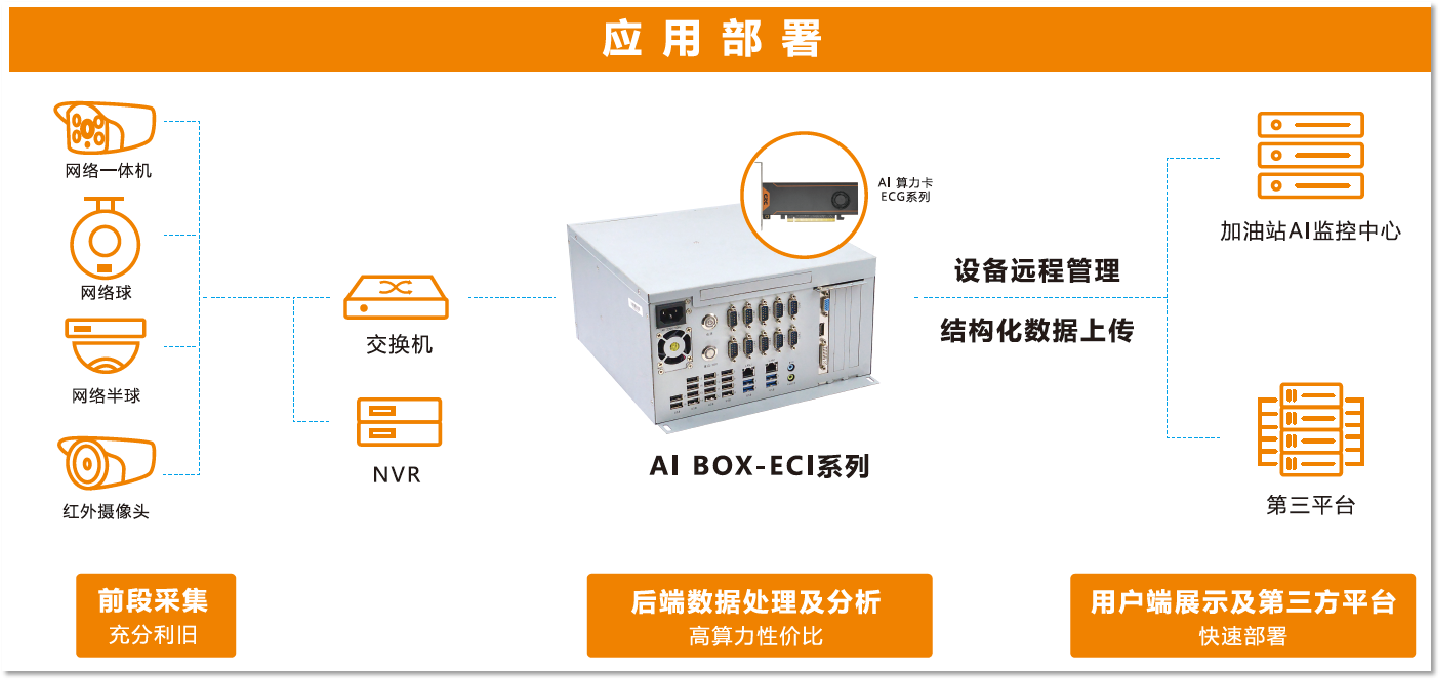
To address safety incidents at gas stations, Zhishuan offers an integrated computing and algorithm platform—Smart Gas Station Solution. Leveraging intelligent video surveillance technology, the system automatically detects, alerts, and records violations such as smoking or phone use by personnel in fueling and unloading zones, abnormal conditions like open flames or smoke, and non-compliant behaviors during unloading operations—including staff absence, improper fire extinguisher placement, and insufficient static discharge time. The smart gas station system enables proactive detection and automatic alerts, with alarm data supporting precise decision-making by regulatory authorities and ensuring safe, stable station operations.
Solution Benefits
- Intelligent Infrastructure Development
Multi-dimensional analysis of alarm records helps build emergency response mechanisms, with relevant image data automatically archived. This improves the efficiency of safety management personnel and meets regulatory requirements for intelligent infrastructure.
- Reduced Risk of Accidents
The AI-powered video analytics platform enables visual safety monitoring of critical areas such as fueling and unloading zones, significantly reducing the risk of accidents caused by human factors.
- Cost Efficiency Through Existing Infrastructure Utilization
By leveraging existing cameras and deploying integrated AI software and hardware solutions, this approach maximizes the use of current equipment, reduces costs, avoids resource waste, eliminates safety hazards, and enhances intelligent operational management of the facility.