[Cognex Domestic Case Study] AI Vision Camera Innovation Accelerates Digital and Intelligent Transformation in Retail Logistics
Chain supermarkets and retail stores are facing challenges brought about by changing consumer shopping habits, driving demand for digital transformation in logistics systems fueled by emerging technologies. The deep integration of the logistics industry with AI-powered machine vision addresses pain points of traditional machine vision—such as slow recognition speed, high environmental requirements, and time-consuming customized deployment—significantly improving efficiency and accuracy across the logistics supply chain.
This article focuses on optimizing internal logistics handling within supermarket and retail supply chains, offering insights and inspiration for similar application scenarios.
Cognex’s In-Sight 2800 Detector, equipped with edge learning technology, meets the specific needs of logistics systems in retail environments. With easy-to-use AI tools, it enables multi-functional applications such as package presence detection, item sorting, and process anomaly detection. The system supports flexible out-of-the-box configuration, effectively helping traditional retail businesses achieve automation and intelligent transformation.
Customer Requirements
Transfer containers are commonly used in storage and sorting processes at chain supermarkets and retail stores. During routine circulation, it is essential to detect whether foreign objects or debris exist inside the containers, while ignoring small residual plastic packaging fragments from delivered parcels, as well as surface scratches and wear on the container itself. Otherwise, staff would need to frequently clean the containers, increasing labor workload.
Three Key Functional Advantages and Solutions
Inspiring Broader Logistics Applications
1
Package Presence Detection
The powerful edge learning technology embedded in the In-Sight 2800 Detector enables fast and accurate image processing. Using a high-resolution color camera, it captures fine details of small components, allowing rapid identification of obvious foreign objects while filtering out tiny, non-critical impurities. Surface scratches, dirt, and wear on the container itself do not affect detection accuracy.
2
Package Classification with Background Interference Suppression
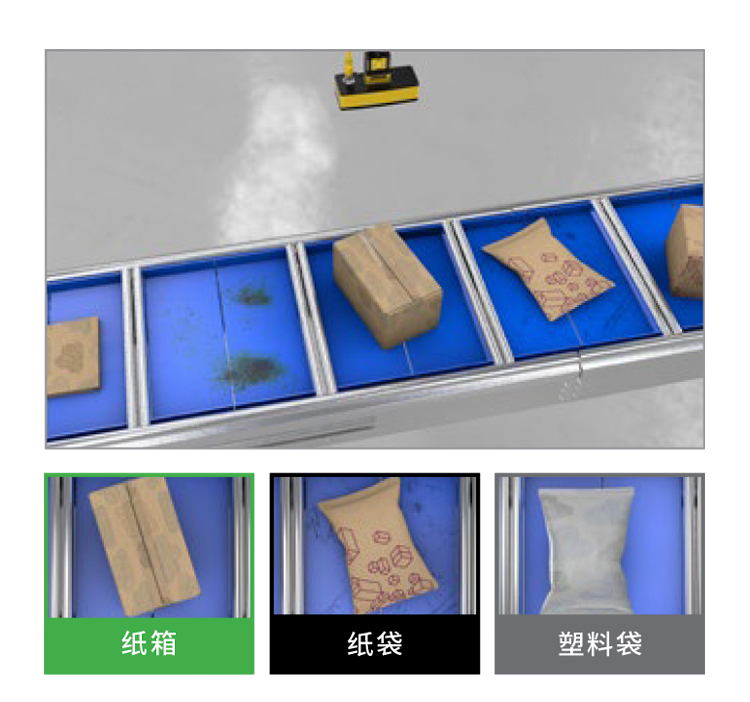
The machine vision system of the In-Sight 2800 Detector captures images and uses the ViDi EL Classify tool to analyze foreign object characteristics. It classifies images into different categories based on features, quickly and accurately distinguishing between foreign objects, small packaging fragments, and internal container scratches or wear. Results are reported to support sorting and removal of problematic items, ensuring cleaning efforts are effective and reducing unnecessary manual cleaning cycles.
3
Conveyor Belt Appearance and Process Anomaly Detection
In retail sorting operations, a dirty conveyor belt affects package appearance, and foreign objects may disrupt normal operation—potentially causing jams or unplanned downtime. Customers require timely detection of such anomalies to minimize risks and damage. The In-Sight 2800 Detector’s vision system continuously monitors the conveyor belt, promptly detecting issues such as tray contamination, belt jams, or label adhesion, and reporting them in real time to ensure stable equipment operation.
20 Minutes for Device Configuration
2 Hours to Achieve Stable System Operation
Thanks to edge learning technology and optical accessories optimized specifically for logistics applications, the In-Sight 2800 Detector is easier to deploy than traditional vision systems and requires no expert intervention. Anyone can complete setup quickly—making it highly flexible and user-friendly.
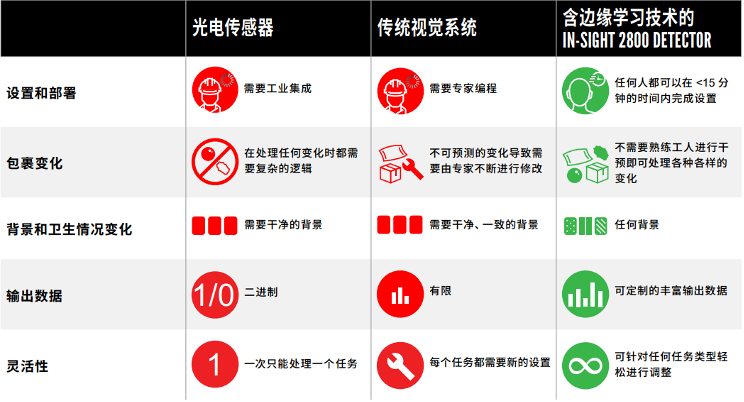
In this real-world customer deployment, the entire In-Sight 2800 Detector system was configured within 20 minutes, with all testing and commissioning completed in just two hours. This setup process required no external hardware or advanced programming skills, achieving full functionality in a lightweight, streamlined manner.
Currently, the system is operating stably and reliably, significantly improving operational efficiency in retail stores while substantially reducing labor costs in logistics handling processes.