Integrated Highway Toll Station Solution Based on Fully Domesticated Phytium D2000: Station Data Server, Station AI Server, Toll Collection System, Monitoring System
Integrated Highway Toll Station Solution
Industry
Transportation engineering and roadside facilities, as an important component of highways, are of great significance for urban connectivity and urban development. Therefore, the design and construction of dedicated toll stations around highways will effectively promote the connection between hub distribution systems and highways, significantly enhance the city's high-speed distribution capacity, and are of great importance for traffic travel efficiency and digital management and control.
As an important component of highways, the highway toll station system's overall design goal is to achieve safe, environmentally friendly, and sustainable development in highway construction and operation management, improve management and service levels, and realize the design concept of "safety, environmental protection, comfort, and harmony." As localization requirements continue to increase, Phytium core processors, with their excellent performance, have met the demands of the overall road network, toll collection, trackside, and station server-side applications. The highway toll station system based on Phytium CPUs focuses on information collection, integration, processing, decision-making, and dissemination, effectively improving road guidance and control capabilities, and providing a unified networked management, automated monitoring, and overall regulation management platform for road operation management.
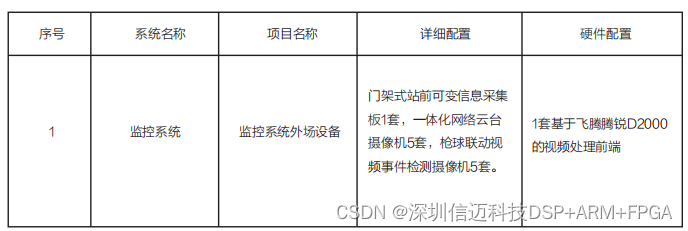
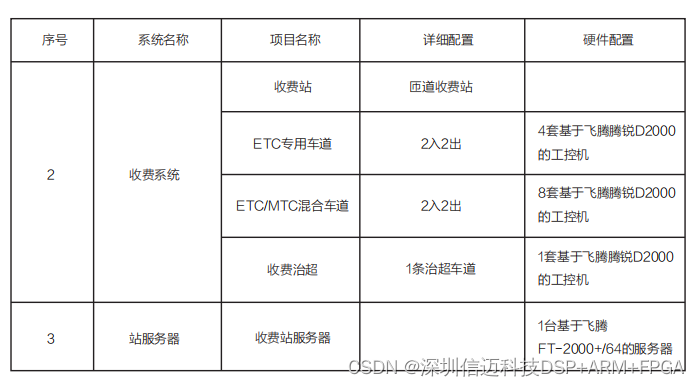
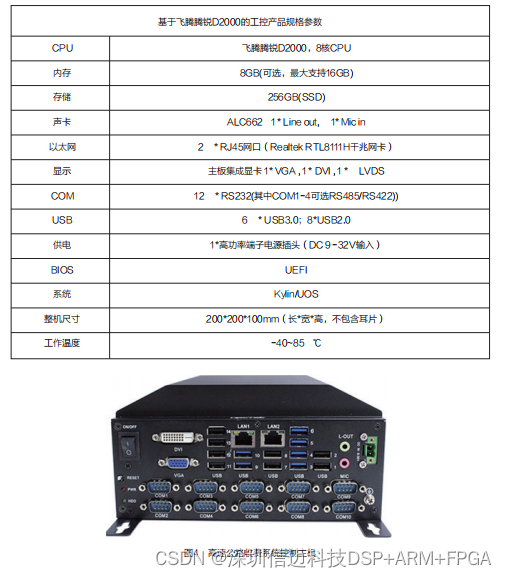
This solution is designed and built around monitoring systems, toll collection systems, network security, etc. The front-end processing of the monitoring system and the toll collection system adopt Phytium Tengrui D2000, providing video acquisition and performing control and network information interaction for trackside and toll collection terminals.
Highway toll stations draw upon domestic and international experience and advanced software, hardware, and system construction expertise, flexibly applying technical standards and indicators. They fully consider the functional and performance characteristics of Phytium core processors and have been designed with technical feasibility, reliability, economic viability, and scalability in mind. According to the "Technical Standards for Highway Engineering," the monitoring facilities for this project are rated A-class. The entire line is equipped with domestically produced monitoring, toll collection, communication, lighting, power distribution, and management and maintenance facilities. It collects and disseminates real-time traffic information promptly, quickly adopting corresponding measures to manage traffic and ensure driving safety, thereby optimizing the overall composition of transportation engineering facilities.
Station Data Server
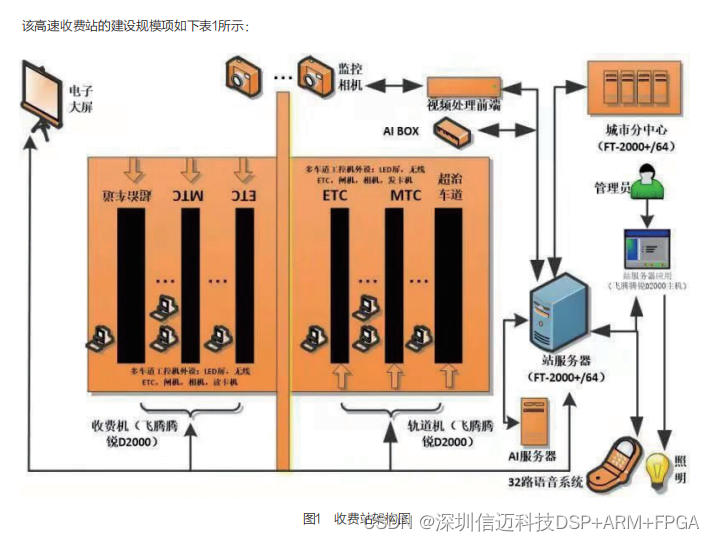
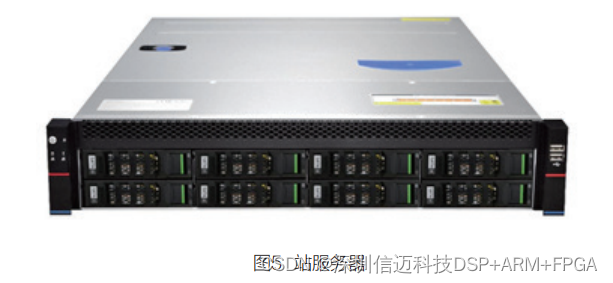
The station server primarily stores locally the toll data, toll images, station vehicle videos, and vehicle passage information from the station's toll collection system. It uploads this data directly to the city sub-center via the station communication system. The sub-center then uploads the data to the provincial control center when necessary. The station server uploads data to the corresponding servers via two Layer 2 Gigabit switches (for data and images) and two layer switches. Station plaza data is uniformly managed by the station system monitoring and can be used for site viewing. Data is saved on a rolling 90-day basis using a first-in, first-out (FIFO) principle. Figure 5 below shows the physical station server.
Servers developed based on Phytium FT-2000+/64 feature independent control, excellent performance, and high reliability. Specific configuration is as follows: CPU: FT-2000+/64 core @ 2.2GHz Memory: 256GB DDR4 ECC RDIMM Storage: 2TB Data Center-grade SSD Network: 4*Gigabit Ethernet Power Supply: 550W 1+1 Platinum Power Supply
Station AI Server
All station AI servers utilize high-performance servers developed based on Phytium FT-2000+/64, equipped with domestically produced AI computing cards to provide high-performance AI computing capabilities. Key software and hardware components such as processors, AI computing cards, memory, hard drives, firmware, and operating systems are all independently developed/controlled. They adopt a standard 19-inch rack-mount design, suitable for various AI applications such as image and video processing, speech recognition, financial analysis, and intelligent customer service, providing powerful computing support to accelerate application innovation.
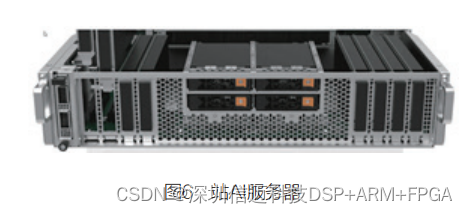
For station security management, multiple innovative technologies are employed, such as video recognition technology, embedded system technology, storage technology, and network technology. These provide intelligent analysis, storage, and other services for specific high-speed toll collection scenarios. They can operate independently locally or be networked with sub-centers to form a powerful security and traffic prevention network. Additionally, AI algorithms have been added to the video servers to enable: area intrusion detection, object placement/removal, violent motion detection, tailgating, falling, sudden sound intensity changes, abnormal faces, multiple faces, faces with sunglasses, faces on the phone, etc. Figure 6 below shows the physical station AI server.
AI BOX
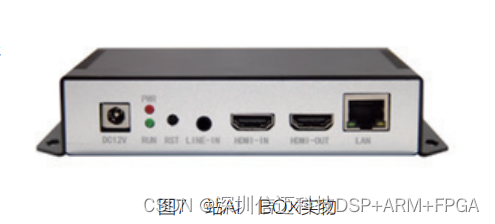
The AI BOX can be deployed at the front end of station video processing. It is implemented using a Phytium CPU + AI processing acceleration card approach. Combined with industry standards, it performs AI object detection and recognition, etc., which can well meet the application requirements of the transportation industry. Front-end collected data is directly transmitted to the intelligent AI BOX for analysis, achieving "zero delay and low false positives." In case of an incident, it can promptly alert the station. Furthermore, records of historical events can be precisely viewed by filtering, reducing the problem of lengthy search times, for example, for in-station collisions or blacklisted vehicles. The intelligent AI BOX enables diversified terminals and can perform local and server-side data output, ensuring timely acquisition of toll station and toll information. Moreover, as an upper-level sub-center and provincial/municipal level center, it can achieve real-time information synchronization and global management and control. Figure 7 below shows the physical AI BOX.