Rugged Industrial PCs in Smart Terminal Gate, OCR (Container Number Recognition), and Container Truck Onboard Computer Industry Applications
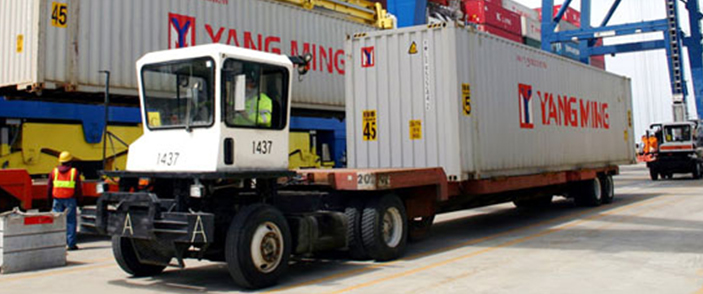
Container Truck Onboard Computer Applications
Background Introduction For the dispatch and operation of container trucks at terminals, various platforms of onboard computers (VT series) and onboard LED displays (VLD series) have been designed in conjunction with the terminal's TOS system. We also provide various mounting brackets to secure the onboard computers in confined cabins; additionally, a range of antenna options (stick, ceiling-mount, or fiberglass), wide-voltage waterproof power supplies, and waterproof external keyboards are offered, effectively enhancing customer stability and convenience.
Solution Requirements ● Small to medium-sized touch display all-in-one onboard computer ● Onboard LED display ● Mounting brackets ● Wide-voltage waterproof power supply, etc.
Solution The onboard computers (VT series) offer 7-inch to 10.4-inch touch displays, run Windows/Android operating systems, and have built-in WiFi, 4G LTE communication modules, and GPS positioning modules, facilitating user-friendly human-machine interaction with the TOS system and real-time transmission of operational dispatch instructions. The onboard LED displays (VLD series) are installed in front of the windshield of container truck cabins and communicate with the onboard computer via a serial port. After receiving information, the VLD displays it to staff outside the truck, indicating the type of container twistlock or the truck's destination, thereby improving terminal work efficiency. Additionally, the TMT series integrates the external LED display and the onboard computer; one side facing outwards is an LED display, and the side facing the driver has a screen and function keys. This integrated design makes installation and removal more convenient for customers.
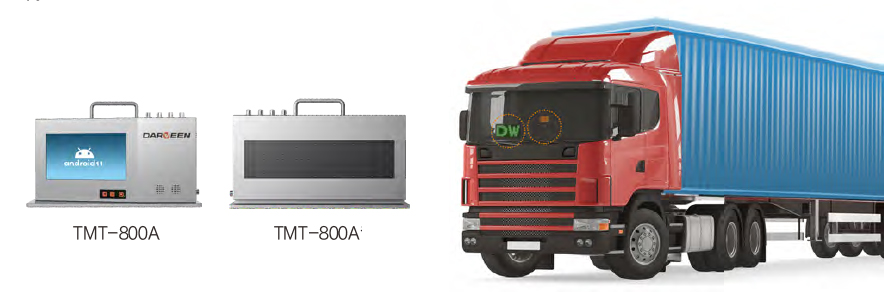
Solution Advantages ● Reliable product quality, meeting customers' 24/7 uninterrupted operation requirements. ● Automotive-grade wide-voltage power input, suitable for various types of terminal container truck applications. ● Multiple screen sizes from 7 to 10.4 inches, with Windows and Android platforms available. ● Full aluminum alloy casing, fanless design, meeting dustproof, waterproof, and salt spray resistance standards for terminal environments. ● Multiple installation methods, suitable for various models of container trucks, making efficient use of limited space.
Industry Applications ● Container terminal yards
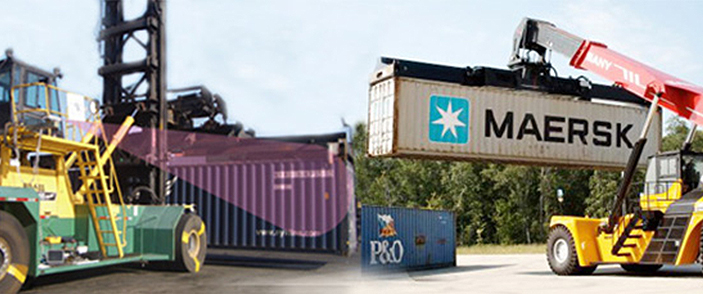
OCR (Container Number Recognition) Industry Applications
Background Introduction Every container has its own unique number generated according to specific rules. The container number is the sole identifier for containers worldwide, thus becoming one of the most fundamental bases for customs, terminals, port areas, freight, and logistics management. Traditional container management systems rely on manual identification and input of container numbers, resulting in slow operation and prone to errors, oversights, and various issues arising from human intervention. With the growth of freight volume and the demand for modern management, accurate and reliable automatic container number recognition technology has become an essential part of container management systems. Achieving automatic container number recognition, where container numbers are automatically entered into the information management system without manual input, is of great significance for improving the automation level of customs, logistics, and port area management, reducing time consumption, and enhancing supervision. Automatic container number recognition, or simply container number recognition, is a practical technology developed from OCR (Optical Character Recognition) technology in image recognition. It can capture container images in real-time and recognize container numbers and container type codes (ISO numbers).
Solution Requirements ● Small to medium-sized touch display all-in-one onboard computer ● High-definition industrial camera ● Mounting brackets ● Wide-voltage waterproof power supply, etc.
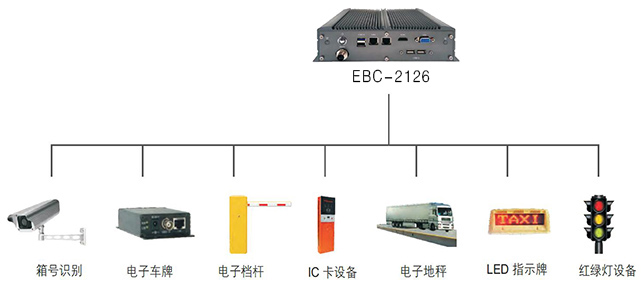
Solution Onboard computers (VT) or fanless embedded industrial PCs (EBC) products, combined with industrial digital cameras, form an OCR container number recognition system. Infrared sensors detect the container's position and control the digital camera to photograph the container number section. The image data generated by the camera is collected in real-time and processed by the industrial PC, where the optical image recognition module identifies the container number and container type code for local entry. The generated container number and container type code can also be called by other management systems. The entire process can be completed automatically 24/7 without human intervention. Clear images, high resolution, combined with instantaneous supplementary lighting, enable a container number recognition rate of over 95%, adaptable to high-speed container trucks.
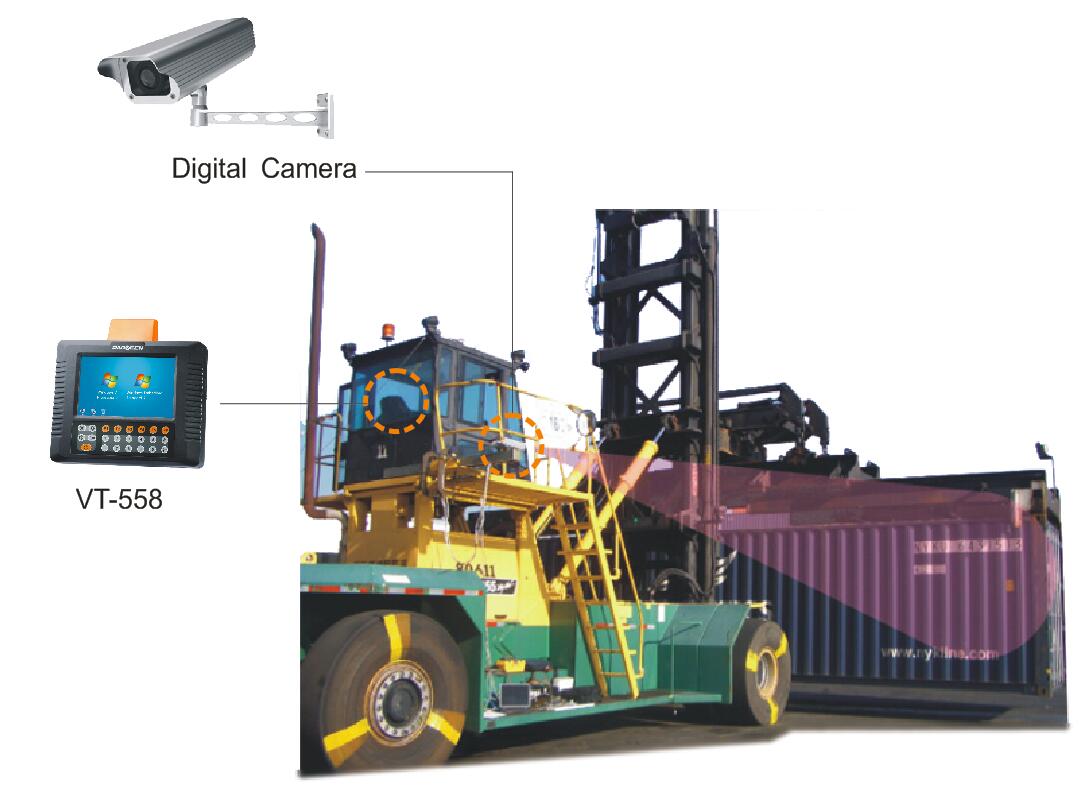
Solution Advantages ● Fanless embedded design, compact size, easy to install in confined spaces. ● Rich I/O interfaces, providing up to 8 serial ports, multiple video input interfaces, 2-9 Gigabit Ethernet ports, and multiple DIOs, etc. ● Reliable product quality, meeting customers' 24/7 uninterrupted operation requirements.
Industry Applications ● Container terminals
Smart Terminal Gate Industry Applications
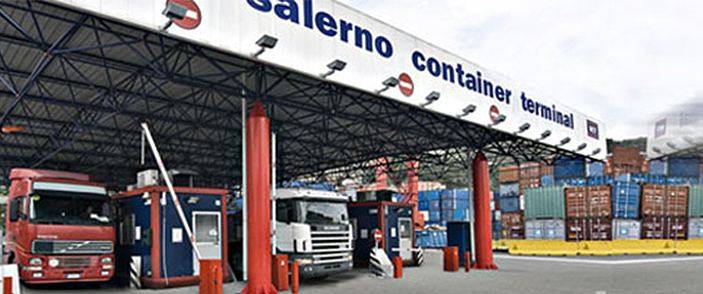
Background Introduction The throughput speed of container terminal gates directly affects the efficiency of container handling and the overall operational efficiency of the terminal. It is also the convergence point for equipment and information exchange with external entities such as customs, container depots, and freight forwarders. Terminals are committed to adopting various advanced technologies to improve gate throughput capacity, making the gate a hub of high technology and a window into the terminal's capabilities. The speed at which container numbers and license plate numbers are obtained largely determines the gate's throughput capacity. Container information such as container number, type, dimensions, weight, destination port, and discharge port usually reaches the terminal's TOS system from various channels before entering the gate. Upon entry, once the container number is obtained, other information is automatically retrieved and assigned to the container for an appropriate yard location. The gate also needs to obtain the license plate number. Since container numbers are too small for drivers to easily identify, drivers first refer to the license plate number for loading and unloading containers. Therefore, when a container enters the gate, the license plate number and container number need to be bound for entry.
Solution Requirements ● Embedded fanless onboard computer ● Industrial camera ● RFID reader/writer ● Wide-voltage waterproof power supply, etc.
Solution The method of acquiring container numbers and truck license plate numbers is crucial for gate entry. Currently, technologies for obtaining container numbers and license plate numbers include Optical Character Recognition (OCR), IC cards, and Radio Frequency Identification (RFID). With the use of these high technologies and improved accuracy, terminals are moving towards unmanned gates. ● OCR is mainly used for container number recognition; it only requires deploying OCR equipment at the gate, without needing to coordinate external factors such as trucks. ● Contactless IC card reading success rate is close to 100%, but in addition to the terminal needing to invest in IC card reading equipment, local vehicle management departments also need to take the lead in ensuring that every truck entering the gate obtains an IC card and reads information at designated locations. ● Contactless radio frequency identification (RFID) technology is a replacement for IC cards, where drivers do not need to stop to swipe a card. RFID is a very mature technology.
Solution Advantages ● Fanless embedded design, compact size, easy to install in confined spaces. ● Rich I/O interfaces, providing up to 8 serial ports, multiple video input interfaces, 2-9 Gigabit Ethernet ports, and multiple DIOs, etc. ● Reliable product quality, meeting customers' 24/7 uninterrupted operation requirements.
Industry Applications ● Container terminals