Fleet Management Solutions with Telematics for Construction, Logistics, and Firefighting Vehicles
Transportation is crucial to the global economy, with long-haul trucks, in particular, playing a vital role in today's supply chains. Currently, freight logistics faces many challenges, including rising fuel prices and emission pollution. Due to the large size and carrying capacity of heavy-duty trucks, they generate a larger carbon footprint. Domestically, medium and heavy-duty trucks account for only 5% of the total vehicles on the road but contribute to 20% of carbon emissions. Therefore, vehicle telematics technology is applied to fleet management to help fleets make better decisions, improve operational and logistics planning efficiency, and achieve fleet management sustainability.
Vehicle Telematics-Based Fleet Management Solutions
How does vehicle telematics play a role in fleet management, leveraging modern technologies such as wireless networks (Wi-Fi, 4G/5G), IoT, edge computing, and smart sensors?
First, it collects data through sensors such as GPS, accelerometers, engine sensors, and fuel consumption sensors to monitor vehicle location, speed, fuel consumption, engine status, and operating conditions. Then, the data is transmitted via the CAN Bus channel to the in-vehicle computer, and subsequently shared with a remote monitoring center or cloud platform through wireless network connectivity. The processed data can generate reports and analyses, such as driving behavior assessment, route planning, fuel consumption analysis, and vehicle health diagnostics, providing real-time information to help fleet managers, fleet operators, and drivers make informed and rapid decisions.
Therefore, nowadays, whether it's long-haul trucks, heavy-duty fleets, buses, vans, or other commercial or special vehicles, these fleets can benefit from powerful connectivity and real-time data processing and analysis through versatile and rugged in-vehicle computers. This not only enhances driver experience and safety but also enables optimized management of the entire company fleet.
 Customer Requirements
Highly Flexible for Installation in Limited Spaces
In-vehicle computers often need to be installed in confined spaces, requiring careful consideration of computer size and mounting methods. Users can choose between in-vehicle computers with interactive touchscreens or embedded in-vehicle industrial PCs, depending on their needs. The latter focuses on data processing, connectivity, and control functions, as well as transmitting output to external displays.
Supports Wide Voltage Input and IGN to Prevent System and Data Damage
In automotive, truck, and bus applications, different voltage power supplies are provided, and surge high voltages that may occur during startup must also be considered. This requires in-vehicle computers to support wide input voltage, overvoltage, and overcurrent protection. Additionally, an IGN function is needed to ensure the device powers on only when the voltage is stable, or to delay shutdown to prevent damage caused by sudden power loss.
Supports Wireless Real-time Connectivity and Positioning
In-vehicle computers require various wireless connectivity options, including Wi-Fi, GNSS, 4G/5G, and Bluetooth, for real-time communication, network connection, positioning, and information transmission.
Rich I/O Interfaces for Connecting Various Sensors and Peripherals
In-vehicle computers must support various I/O interfaces, such as USB, LAN, COM, and GPIO, to connect to various external devices. Furthermore, they need a CAN Bus interface to connect to the vehicle's control modules, thereby acquiring real-time vehicle information for monitoring and analysis.
Ruggedness in Extreme Environments
Whether in harsh winters or scorching summers, commercial vehicles must perform transportation tasks without interruption. This requires in-vehicle computers to be not only durable but also possess excellent anti-vibration characteristics to ensure stable operation on various complex road conditions.
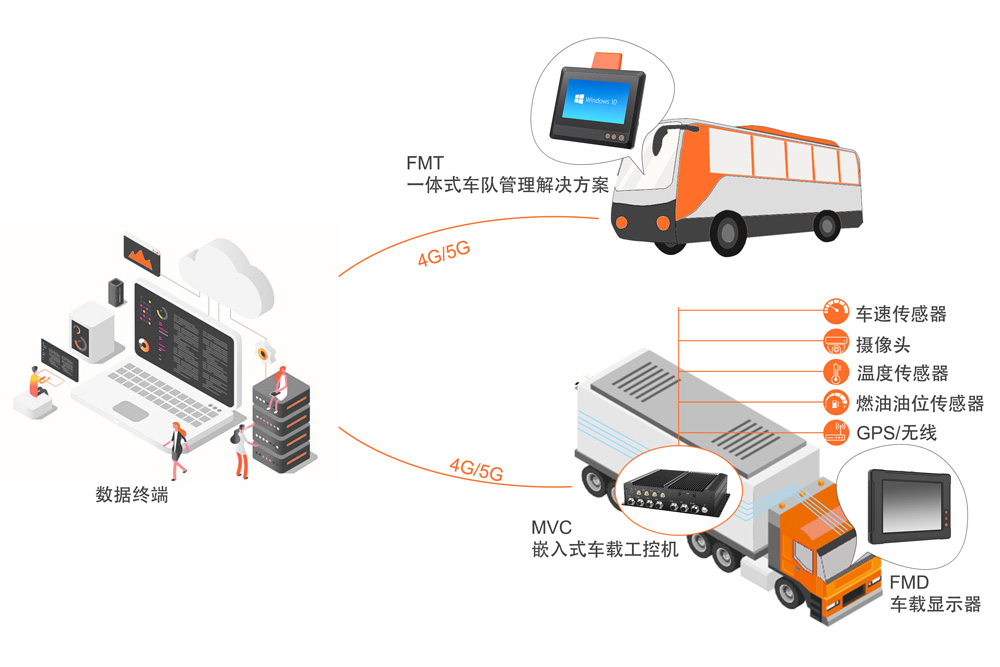
Solutions
All-in-One and Embedded Solutions
Two types of in-vehicle computer solutions are provided to meet different application scenarios. One is the all-in-one in-vehicle computer, which offers a human-machine interface. Customers can choose in-vehicle computers with 7 to 12.1-inch touchscreens, namely the VT, MVT, and FMT series. The other is the embedded in-vehicle industrial PC, designed for data collection and control, namely the VC and MVC series. This series requires an external display or remote control via a mobile phone.
4G/5G Wireless Communication for Real-time Fleet Communication
Efficient information processing and fleet management depend on reliable 4G/5G communication technology. Through 4G/5G SIM cards and WLAN wireless communication, Xinmai in-vehicle computers can help monitoring centers quickly read critical data.
Enhanced GPS Navigation and Tracking
Real-time location information is fundamental for fleet and individual truck management. Xinmai in-vehicle computers support positioning functions such as GPS, GLONASS, Galileo, and Beidou, allowing for real-time tracking of every vehicle in the fleet.
Wide Voltage Input and Power Ignition
Both Xinmai's all-in-one in-vehicle computers and embedded in-vehicle industrial PCs offer standard 8-36V wide voltage input and power ignition delay on/off power management to protect the computer and its data during vehicle startup or sudden shutdown. The VT series also offers an optional 18-72V DC power adapter to meet the wide voltage input requirements of different vehicles.
Industrial-Grade I/O Interfaces
Xinmai in-vehicle computers are equipped with all necessary interfaces for connecting internal and external vehicle devices, including USB, COM, GPIO, and CAN bus interfaces. They also offer M12 connectors with a higher protection rating to ensure water resistance, shock resistance, dust resistance, and durability.
Rugged and Durable for Harsh Environments
Both Xinmai in-vehicle computers and embedded in-vehicle industrial PCs support MIL-STD-810G vibration and shock resistance tests (U.S. military equipment inspection standard) and can operate within a wide temperature range, demonstrating their excellent durability in extreme conditions.
Recommended Products
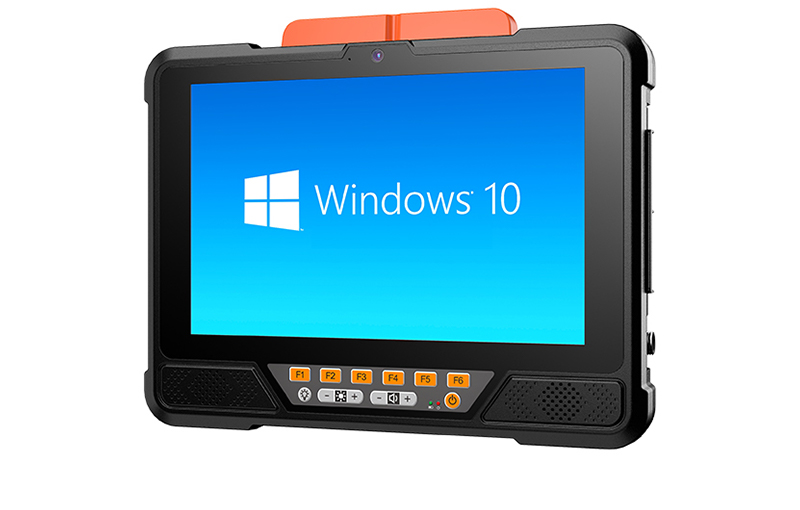
Optional 7 – 12.1 inch LCD Capacitive/Resistive Touchscreen ● Powered by Intel Celeron/Core-i Processor ● Compatible with Windows, Linux Operating Systems ● Supports WiFi, Bluetooth, LTE, 5G, GPS, CAN, and other functions
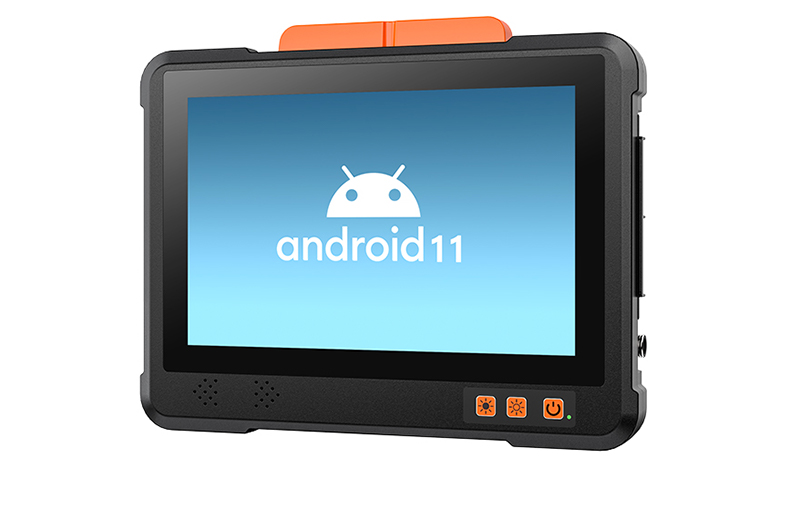
Optional 7- 12.1 inch LCD Capacitive/Resistive Touchscreen ● Powered by ARM RK3288/3399 Processor ● Compatible with Android 9.0-11 Operating Systems ● Supports WiFi, Bluetooth, LTE, 5G, GPS, CAN, and other functions
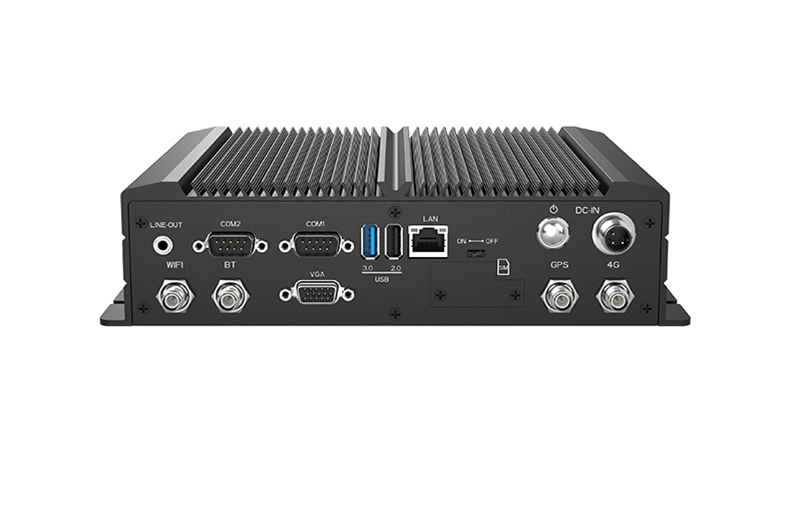
Features Intel J1900 Processor ● Supports 8~36V Wide Voltage Power Input, ACC Function ● Optional Built-in Lithium Battery with UPS Function ● Supports WiFi, Bluetooth, LTE/5G, GPS, CAN, and other functions
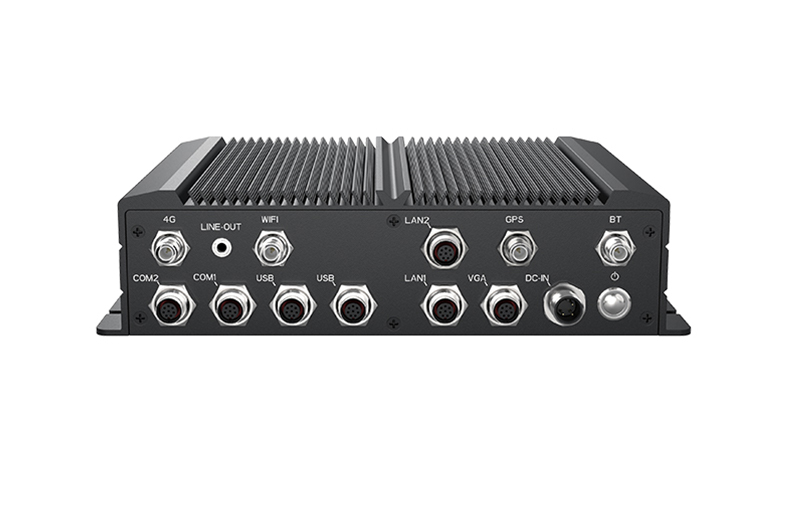
Features Intel J1900/Core-i Processor ● Built-in M12 Aviation Plug I/O Interfaces ● 8~36V Wide Voltage Power Input ● Supports WiFi, Bluetooth, LTE/5G, GPS, CAN, and other functions
Introduction to Firefighting Vehicle Background As society's demands for fire safety continue to increase, the application of electronic equipment in firefighting is becoming more widespread. Firefighters or members of emergency response teams install devices on fire trucks to quickly grasp information, promptly handle incidents, and avoid any potential dangers. Installed in the fire truck's cab with a dedicated in-vehicle bracket, and operating with 4G/Wi-Fi to run a fire dispatch software system, it quickly provides real-time information, ensures data security, and performs emergency fire dispatch operations.
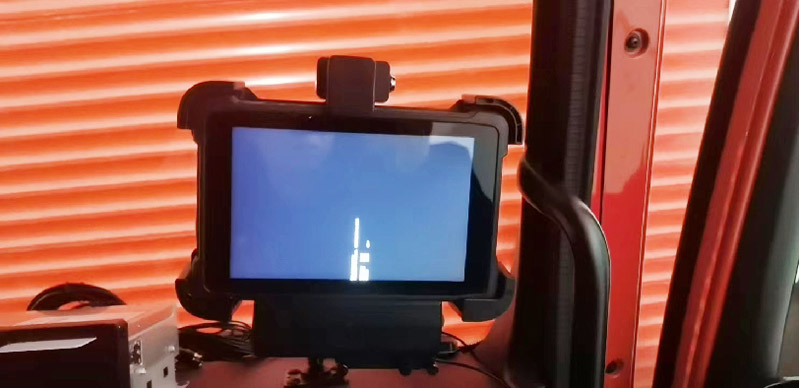
Solution Install the newly launched RTC-M81 rugged tablet PC in the fire truck's cab with a dedicated in-vehicle bracket. This product supports powerful communication and precise navigation via Wi-Fi, LTE, GPS, etc. A full HD high-brightness LCD screen enhances operational speed. Its high protection rating of IP67, U