FPGA-based OMEGA Tokyo Olympics Timer

As of 2019, 31 Olympic Games have been held. Of these, OMEGA (Ω) has provided the timing equipment for 27 editions. This year's Tokyo Olympics will be the 28th.
Swiss Timing has developed the ultra-high precision handheld device PowerTime 3, based on the Mars ZX2 core board. This device is designed for timing large-scale sporting events like the Olympics and will be used for timing at the Tokyo Olympics.
While Swiss Timing might not be a familiar name to everyone, its parent company, Swatch Group, is widely known. Swatch Group owns 18 watch brands, including Swatch, Tissot, Longines, and OMEGA, all of which are very common brands domestically.

The PowerTime 3 baseboard integrates a large number of specialized components, including a precision clock & GPS, trigger inputs, USB, Ethernet port, battery charging circuit, and more.
When connected to other devices, PowerTime 3 can function as either a host or a slave. It performs time synchronization with other devices via GPS and Point-to-Point Tunneling Protocol (PPTP). It contains an internal battery, providing 12 hours of battery life at -10°C and 18 hours at room temperature. To conserve energy, the Ethernet PHY on the core board is disabled by default after system startup.
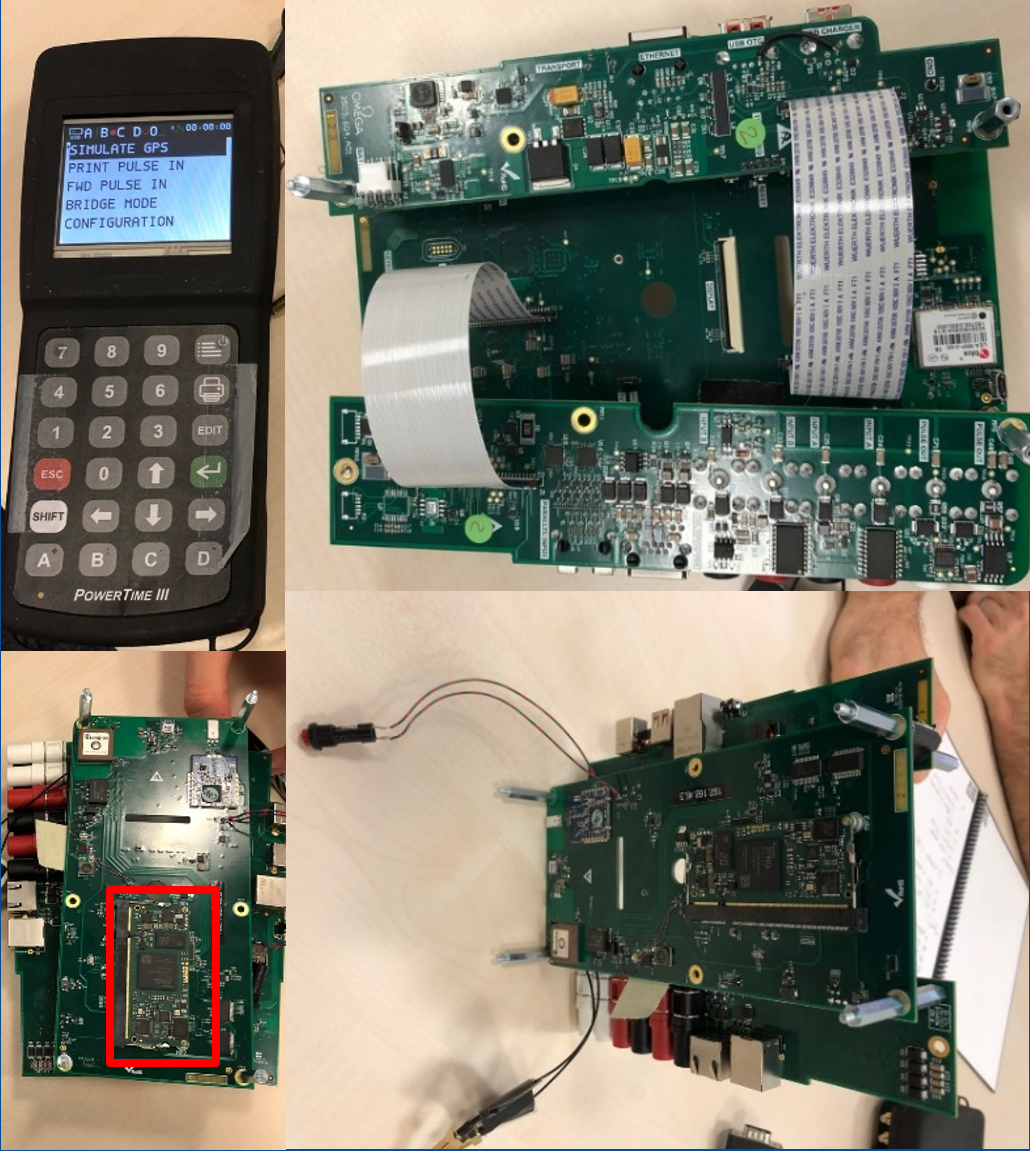
This is a small-batch project, so the client has high requirements for production flexibility. The Mars ZX2 core board module uses an industry-standard SO-DIMM 200-pin pluggable connector. No soldering is required during production, making product upgrades, replacements, or inspection and maintenance very convenient.
The Mars core board module measures only 67.6*30mm, belonging to a compact, cost-effective series. Mars ZX2 is based on the Xilinx Zynq-7000 SoC. The Mars XU3 in the same series is based on the Zynq Ultrascale+ MPSoC XCZU2CG/2EG/3EG. It offers higher performance and a longer lifecycle, providing great convenience for future product upgrades for users, and shortening project cycles, reducing project costs and risks.