Intelligent Data Acquisition and Analysis Solution Based on RK3588 + FPGA + AD + AI
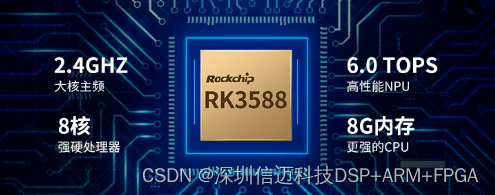
RK3588 is Rockchip's latest flagship high-end processor, featuring high computing power, low power consumption, powerful multimedia capabilities, and rich data interfaces. It integrates an octa-core CPU (quad-core A76 + quad-core A55), an ARM G610MP4 GPU, and an NPU with built-in 6.0 TOPs computing capacity.
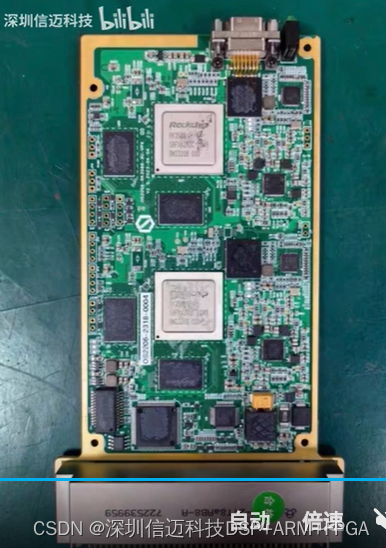
RK3588 + Fudan Micro FPGA Solution
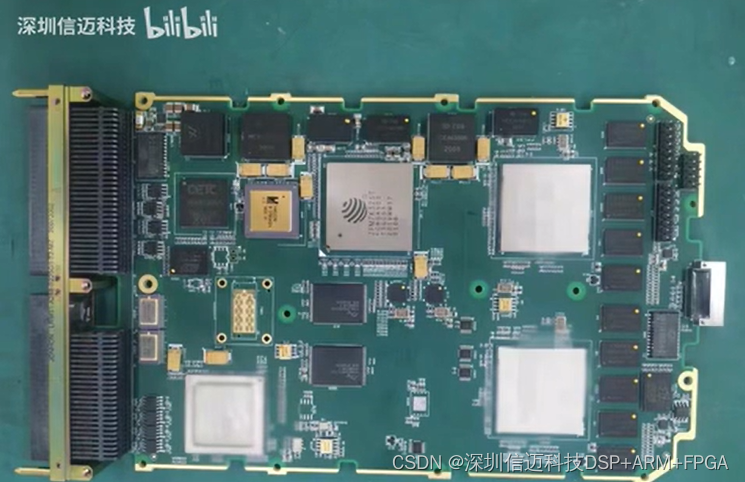
Five Key Technical Advantages:
-
Integrated with multiple powerful embedded hardware engines, supporting 8K@60fps H.265 and VP9 decoders, 8K@30fps H.264 decoder, and 4K@60fps AV1 decoder; also supports 8K30fps H.264 and H.265 encoders, high-quality JPEG encoder/decoder, dedicated image pre-processors and post-processors.
-
Built-in 3D GPU compatible with OpenGL ES1.1/2.0/3.2, OpenCL 2.2, and Vulkan 1.2. A dedicated 2D hardware engine with MMU maximizes display performance and ensures smooth user experience.
-
Integrated Rockchip self-developed 48MP ISP (Image Signal Processor), supporting various algorithm accelerators such as HDR, 3A, LSC, 3DNR, 2DNR, sharpening, dehazing, fisheye correction, gamma correction, etc.
-
High-performance NPU supports mixed operations of INT4/INT8/INT16/FP16. Its strong compatibility enables seamless conversion of network models based on frameworks such as TensorFlow, MXNet, PyTorch, and Caffe.
-
Features a high-performance 4-channel external memory interface (LPDDR4/LPDDR4X/LPDDR5), capable of supporting demanding memory bandwidth requirements.
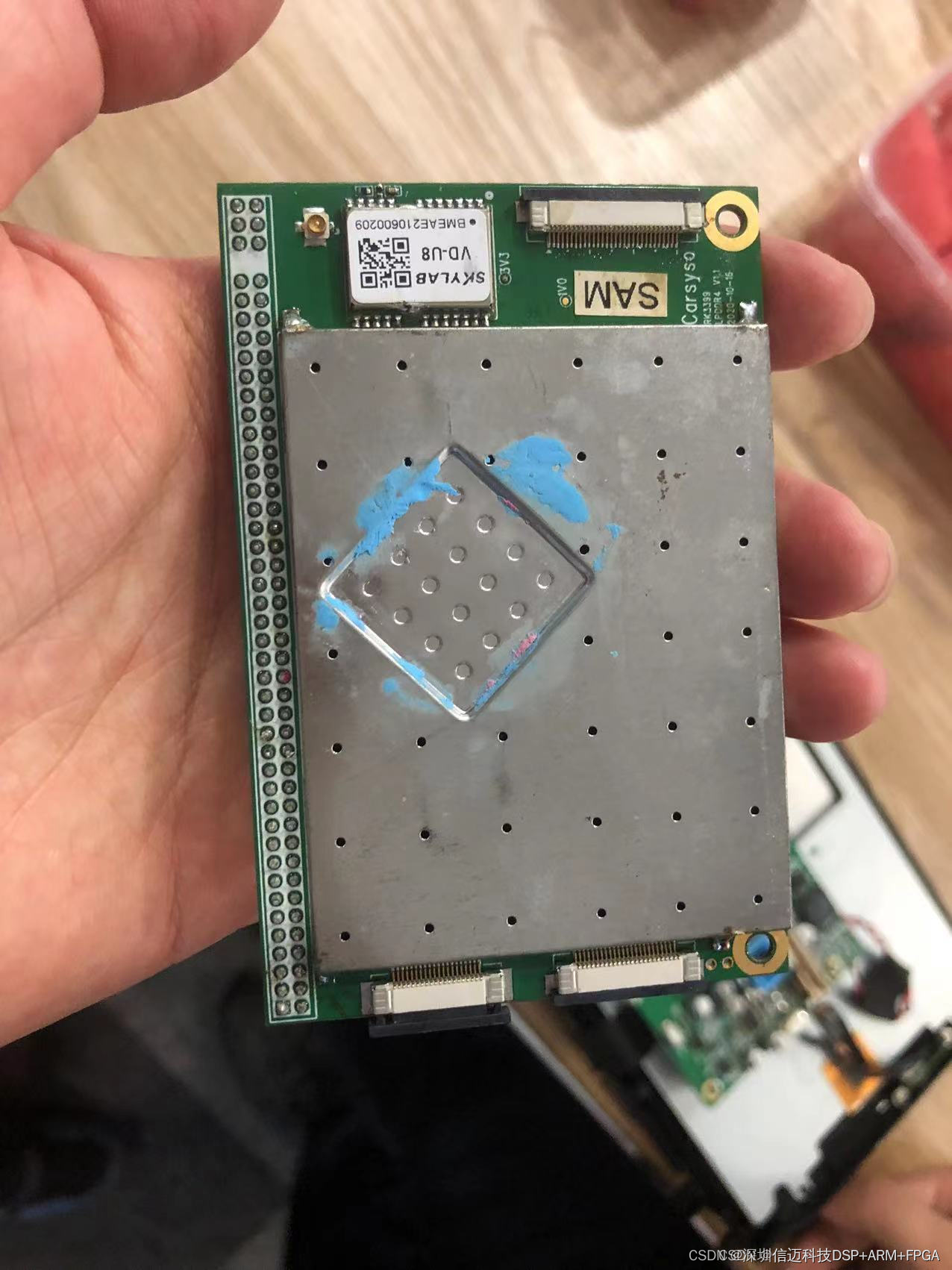
Rockchip RK3399/RK3588 + FPGA hardware acceleration design solution. RK3399/RK3588 connects to FPGA via PCIe. Xinming Technology offers mature solutions.
FPGA supports ZYNQ, A7, K7, as well as domestic alternatives including Anlogic, Gowin, and Fudan Micro.
Superior Computing Power with Perfect Balance of Performance and Power Efficiency
On the CPU side, RK3588 adopts a typical big.LITTLE architecture with four Cortex-A76 cores and four Cortex-A55 cores. The big cores run at up to 2.4GHz, while the little cores operate at 1.8GHz, achieving optimal balance between performance and power consumption. With 1MB L2 Cache and 3MB L3 Cache, it delivers enhanced CPU computing performance.
For GPU, RK3588 integrates ARM Mali-G610, supporting at least dual 4K UI outputs, enabling smooth execution of complex graphics processing and gaming applications.
Regarding NPU, RK3588 features Rockchip’s fourth-generation AI computing engine with full independent intellectual property rights. It improves MAC unit utilization and reduces bandwidth consumption by 30%. With 6.0 TOPs of NPU computing power, it enables diverse AI scenarios, including local offline AI computing and complex video stream analysis.
Superior Multimedia Imaging for Ultimate User Experience
The multi-core architecture of RK3588's core multimedia imaging IP provides exceptional processing power, delivering an outstanding visual experience for developers and end users. This multi-core design not only meets current application demands but also allows easy upgrades to support future high-performance expansions.
First, RK3588 employs Rockchip's latest fourth-generation codec technology, enabling true 8K simultaneous encoding and decoding with clearer images and richer details. It can decode more than 40 streams of 1080P HD video simultaneously. In addition to common H.265/H.264 formats, support for 8K VP9 and AV1 decoding ensures excellent compatibility with overseas video content. Enhanced encoding technologies such as AI-aware encoding, multi-ROI, low-latency encoding, and intelligent bitrate control provide optimized performance for specific applications like security surveillance.
Second, RK3588 uses Rockchip's third-generation imaging and vision processing technology, integrating a 48MP security-grade ISP, 3F HDR 20-bit, 3D noise reduction, distortion correction, wide dynamic contrast enhancement, and other features. It supports multi-camera input and six-camera surround-view systems, delivering stunning visual experiences.
Additionally, RK3588 adopts Rockchip's fifth-generation display post-processing technology, supporting arbitrary overlay of over 20 layers, enabling true 8K or dual 4K120Hz display output. It also supports 7-screen independent display of 1080P HD content, achieving true multi-screen independent display with ultra-high resolution, high frame rates, and mixed resolutions.
Rich Integrated Interfaces Enable Greater Product Design Flexibility
RK3588’s rich interface options provide broad possibilities for product design. Image interfaces include 2×HDMI TX / 2×DP TX / 2×eDP TX / 2×MIPI DSI TX / 1×HDMI IN / 6×MIPI CSI RX. Data interfaces include 4×PCIe 3.0 / 3×PCIe 2.0 / 3×SATA 3.0 / 3×USB 3.1 / 4×USB 2.0 / 2×Type-C / 2×GMAC. These interfaces meet the high-speed transmission requirements of various applications, especially for computing platforms that continuously evolve to meet big data and AI demands. For memory, RK3588 supports industry-leading LPDDR5. Beyond the variety and quantity of interfaces, it also supports advanced specifications and high performance, such as LPDDR5 at 5500Mbps, MIPI CSI DPHY at 4.5Gbps, 2.5Gops MIPI CSI CPHY, 4K60fps HDMI IN, and 8K60fps HDMI 2.1.
Wide Range of Application Scenarios
The solution is widely applicable in edge computing, artificial intelligence, industrial control, 8K large displays, big data analytics, video capture, dynamic environment monitoring, and other fields. It supports over thirty algorithms including face recognition, behavior analysis (e.g., intrusion detection, crowd gathering,逆行, unauthorized lingering, absence from duty, smoking, phone calls, hard hat detection, vehicle detection, fall detection, human attributes), and can be customized according to customer requirements.
It provides DC MIPS Al video analysis system support, based on Al image intelligent recognition technology and digital, networked video surveillance. The system identifies people or vehicles within designated areas and determines whether their behaviors comply with user-defined rules, triggering automatic alerts upon detecting anomalies.