X86-Based Edge Computing Empowers Intelligent Shipboard Monitoring Systems
The integrated shipboard monitoring system combines radar, AIS, CCTV, GPS, and other sensing technologies with highly fused real-time situational awareness and cognitive technologies. It enables effective monitoring of the vessel itself and surrounding ships, extends the surveillance range of shore-based control centers, ensures navigation safety, and provides maritime safety authorities with multiple technical means for shore-controlled data communication and dynamic data acquisition.
PART/1
Customer Application Requirements
The shipboard remote data acquisition controller serves as an MEC (Multi-access Edge Computing) device that enables communication control between ship and shore, and collects vessel navigation data, engine room status, marine weather, and AIS data. It is a critical device for maritime safety authorities to achieve shore-based controllable data communication and dynamic data collection.

Remote real-time monitoring interface
A major domestic land-sea equipment company approached us, seeking reliable hardware support. As an MEC device, the following specific requirements were defined:
▴ Adopt an AIoT architecture (general-purpose CPU + AI computing GPU), with an open system platform capable of managing and controlling multiple tasks including device connectivity, data acquisition, parallel computing, network communication, alert output, display interaction, and storage.
▴ Comprehensive I/O interfaces to support integration of multiple sensors (cameras and radar) and serial data acquisition modules.
▴ Dual redundant GPRS/3G/4G wireless network interfaces to ensure reliable remote communication between ship-to-shore and ship-to-ship.
▴ All internal electronic components and PCBs must be coated with a conformal coating (three-proof coating) to withstand high humidity and corrosive marine environments.
▴ Ruggedized enclosure with moderate dimensions and easy installation, suitable for shipboard deployment.
▴ The shipboard MEC must comply with the IEC-60945 international standard for marine navigation electronic equipment.
▴ Wide-range DC power input to adapt to the complex and variable power supply conditions onboard ships.
PART/2
Product Solution
BRAV
Xinmiao is committed to delivering hardware solutions precisely tailored to customer needs. After evaluating the application scenario, we selected the BRAV series as the ideal shipboard MEC solution.
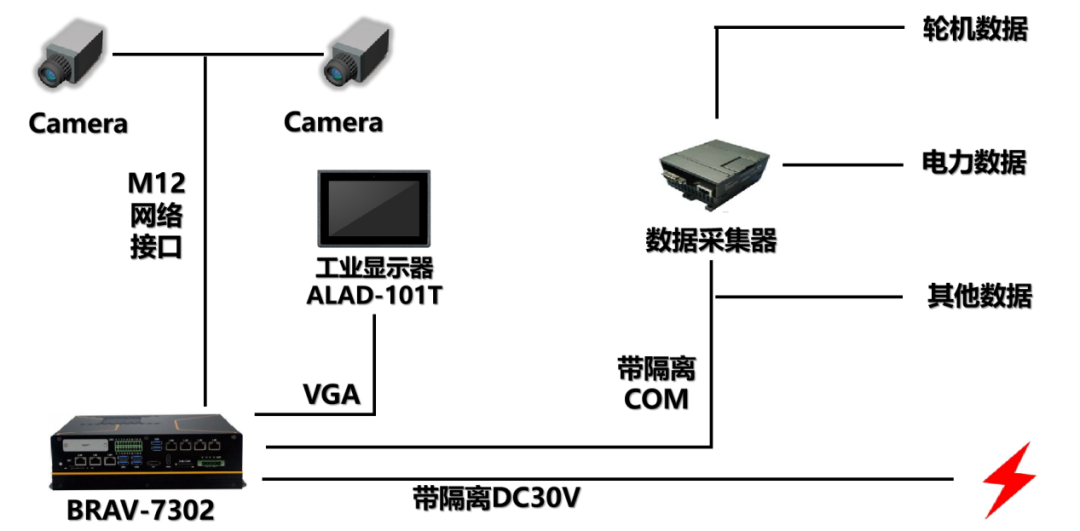
The BRAV is a high-performance edge computing system equipped with Intel® Skylake-S/Kabylake-S series processors and an independent NVIDIA or AMD MXM3.1 GPU module. It also supports MXM AI acceleration modules from vendors such as Cambricon and登临科技 (Denglin), enabling fused data computation and AI inference. With CPU-driven triple display and GPU-driven quad display outputs, it can connect to multiple marine navigation displays. It features abundant I/O interfaces, including 3 or 7 LAN ports and 4 COM ports, enabling simultaneous connection to multiple sensors and data collectors. The system includes 2×Mini PCIe and 1×M.2 expansion slots, supporting dual GPRS/3G/4G wireless communication and high-precision GPS/BDS positioning.
The entire system adopts a floating ground design, capable of passing EMC Level 4 testing. It features a DC 6–48V power supply with short-circuit, over-voltage, over-current, and under-voltage protection. The full-panel PCB and all electronic components are treated with a three-proof conformal coating. The CPU and GPU have independent, efficient airflow cooling paths. The robust chassis is constructed from aluminum alloy and SGCC steel, offering moderate size and flexible mounting options—ideal for mobile shipboard and harsh marine environments.
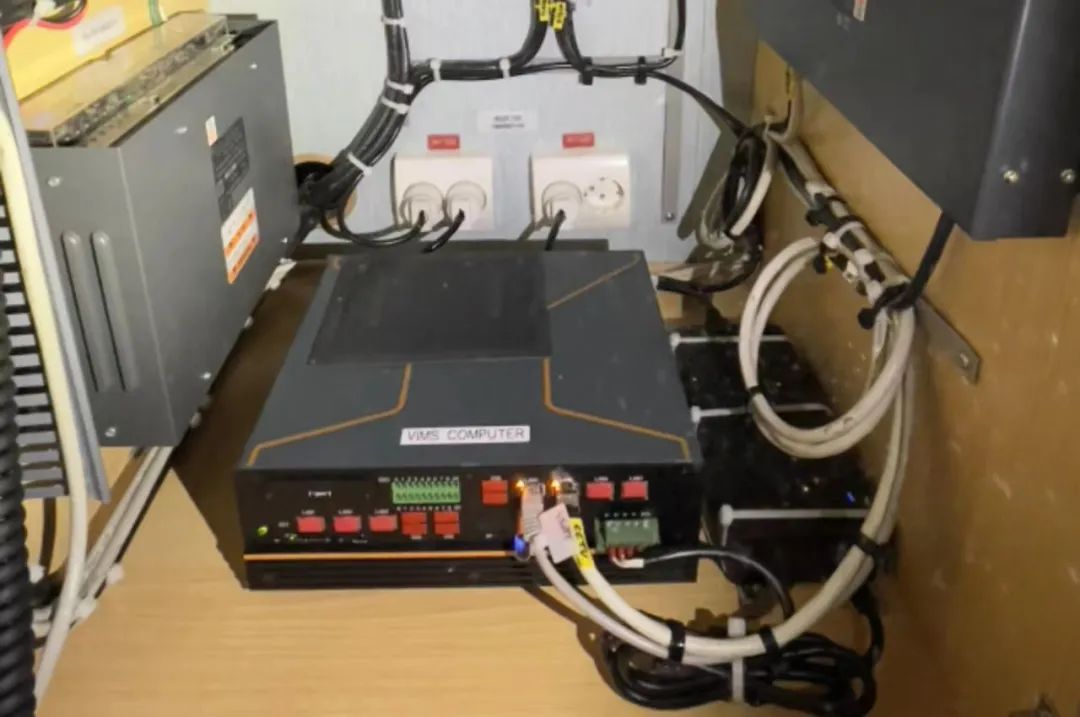
Real-world application image

PART/3
About XMMV-03
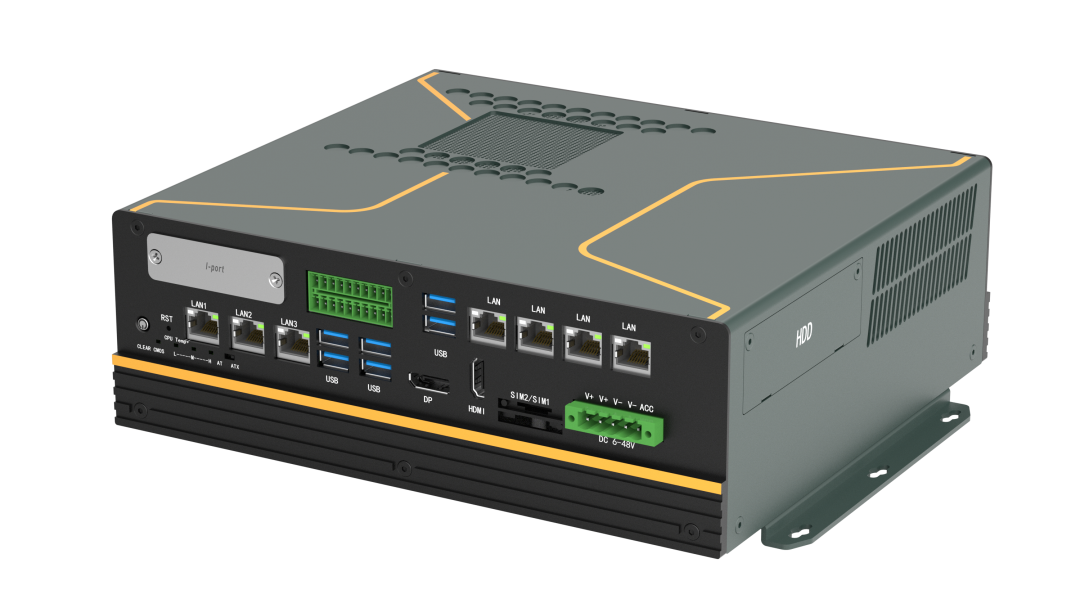
▴ Independent cooling airflow design for CPU and GPU
▴ Intel Kabylake-S/Skylake-S Core i3/i5/i7 CPU
▴ 2×DDR4 2400/2133MHz SODIMM memory, up to 32GB
▴ MXM3.1 NVIDIA/AMD GPU module
▴ Triple display output via 1×DP, 1×HDMI, and 1×VGA; Quad independent display via 3×DP and 1×HDMI
▴ 3 or 7×LAN, 4 or 6×USB 3.0, 3×USB 2.0
▴ 4×COM, 16×DIO, Audio
▴ 2×Mini PCIe (PCIe + USB), 1×M.2 2242 B-Key
▴ 1×mSATA, 1 or 2×2.5" SATA3 drive bays, supporting RAID 0 and 1
▴ Supports Intel vPro technology, optional TPM 2.0 security encryption
▴ Wide-range DC 6–48V power input with short-circuit, over-voltage, over-current, and under-voltage protection