Customer Case Study: Unmanned Surface Vessel Codesys Controller Solution
With the widespread application of AI and IoT technologies in the transportation industry, related technologies for unmanned transport systems have developed rapidly. As a primary transport tool in the shipping industry, Unmanned Surface Vessels (USVs) have an intelligence level that largely determines the economic efficiency and safety of waterborne transportation. Therefore, motion control problems have been extensively studied in recent decades. However, increasingly complex environments and diverse tasks pose new requirements for vessel intelligence, and simple intelligent control can no longer meet these demands. Consequently, an Unmanned Surface Vessel solution based on a fanless industrial PC has been proposed, which will reshape the landscape of global ocean shipping.
Shenzhen XX Shipbuilding Co., Ltd. plans to launch an Unmanned Surface Vessel capable of carrying various detection instruments. Its requirements for the control computer are as follows:
High-performance host computer, multiple in-vehicle communication interfaces, fanless, in-vehicle, shock-resistant design, support for multiple external cameras, multi-functional video and image acquisition, wide temperature range design, multiple Ethernet communication modules, and an AI computing power graphics card.
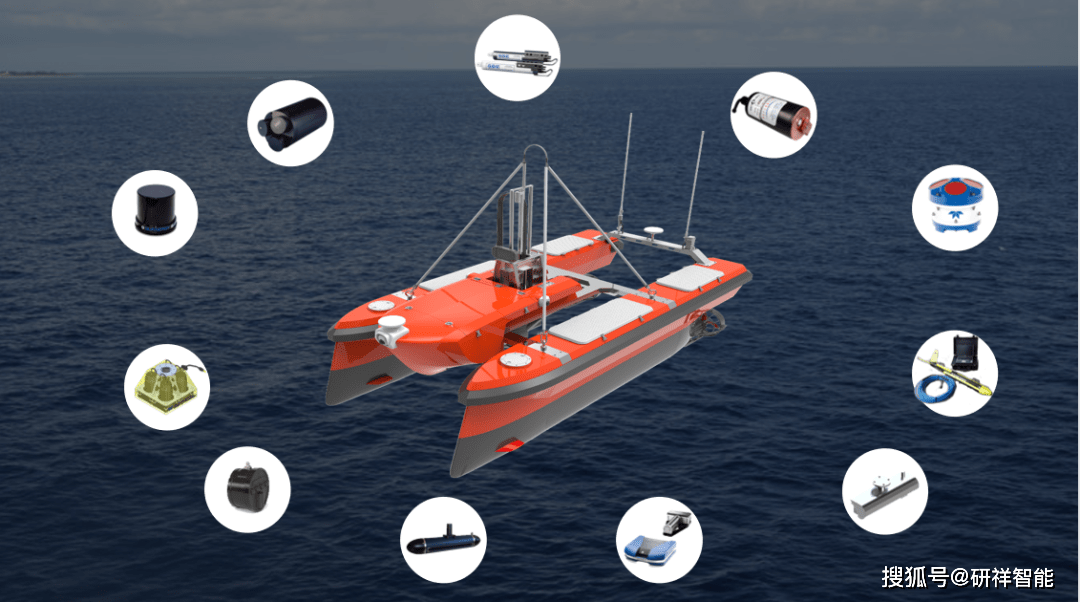
After thoroughly understanding the USV industry and the client's requirements, we recommended the MGP-800 Intel ® W480E Embedded GPU Computing Platform Industrial PC. This model offers the following features:
-
Equipped with Intel Core 10th/11th generation CPUs, significantly boosting performance, providing powerful computing and overclocking capabilities, and easily handling multi-tasking challenges.
-
Meets application requirements for machine vision, deep learning, AI artificial intelligence and edge computing, vehicle-road collaboration, and assisted driving.
-
Flexible expansion with rich I/O interfaces: 2 × RJ45, 4 × USB3.2 (GEN2), 4 × USB3.2 (GEN1), 2 × serial ports (RS-232/422/485 adjustable), 4 × built-in RS-232 (optional), 1 set of audio (1 × line out, 1 × mic in), VGA, HDMI (with optional built-in DVI expansion).
-
Safe and stable, having undergone rigorous testing. Balanced thermal design, distributing heat-generating components across large heat sinks. The machine can operate normally within a temperature range of -20℃ to 60℃, calmly handling the complex environments faced by USVs.
-
User-customizable interfaces (e.g., optional expansion for multiple PoE network ports) to meet diverse application requirements; primarily applied in fields such as machine vision, deep learning, AI artificial intelligence and edge computing, vehicle-road collaboration, and assisted driving.
-
USV technology, empowered by fanless industrial PCs, can be applied in areas such as intelligent recognition for USVs, smart salvage, underwater detection and measurement, and water quality monitoring. According to industry insiders, various dangerous or repetitive and tedious tasks in rivers and oceans will be replaced by USVs in the future.