Experimental Study on Dynamic Characteristics of Nuclear Reactor Core Components
u Overview of Nuclear Reactor Testing
Reactors are one of the core components of the nuclear power industry. In-core components, such as reactor core fuel assemblies, can experience severe vibration induced by coolant flow impact, leading to unstable flow channels for test specimens within the reactor core. To ensure the safe operation of reactors, and in accordance with national nuclear safety regulations, it is necessary to conduct vibration characteristic tests on in-core components subjected to coolant impact. These tests aim to determine if there is a critical flow velocity within a certain flow rate range that could lead to component instability for the system and its parts.
Due to the complexity of reactor core components and flow fields, it is currently very difficult to reliably calculate flow field distribution and pressure drop theoretically, and to solve for pulsating pressure loads acting on in-core components. This makes it impossible to study their actual effects. Therefore, model tests under simulated operating conditions are required for verification. These tests aim to verify the fatigue characteristics and structural integrity caused by flow-induced vibration of structural components, identify weak points in reactor vessel structural design, and provide data support for improving and ensuring the safe operation of reactors.
According to relevant standards for flow-induced vibration in XXX-type reactors, the main experiments related to the study of dynamic characteristics of in-core components include:
-
Vibration Characteristic Tests: Research tests on modal dynamic parameters in air and still water;
-
Flow-Induced Vibration Tests: Tests on vibration and strain response characteristics of structures under different flow velocity conditions;
-
Vibration Endurance Tests: Tests on characteristic changes of structures due to flow-induced vibration under rated operating conditions;
-
Strength Tests: Drop impact, anti-vibration tests, etc., for components such as reactor core tube bundles;
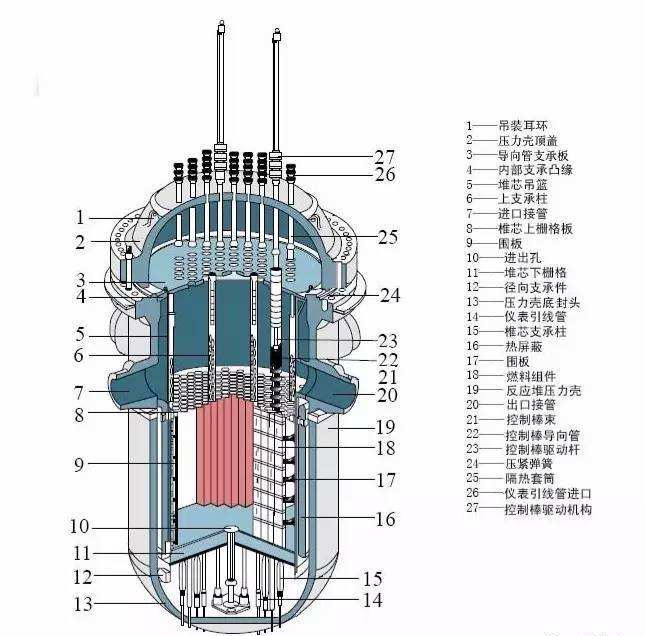
Figure 1 Schematic diagram of reactor core structure (Image above from the internet)
u Technical Challenges
-
The reactor vessel structure is massive, reactor core components are complex, and parameter characteristics are severely coupled.
-
The reactor core has fluid-structure interaction boundary constraints, significant structural damping, and obvious nonlinear characteristics.
-
Reactor core components have complex structures with numerous thin-walled tube bundles, confined space, and complex load testing.
-
Flow-induced vibration excitation deformation of reactor core components is small, flow field distribution is complex, there are numerous interference sources, making testing difficult.
-
There is limited research on engineering testing technology in the nuclear power industry, involving numerous component structures, ultra-large damping, and complex structural parameters.
u Engineering Value
This engineering experimental project was commissioned by XXX research institution to conduct dynamic experimental research on reactor core structures. It yielded experimental results of significant engineering value and successfully completed the task. The specific engineering significance is as follows:
-
Through research on reactor core structural engineering testing technology, load test data including modal dynamic parameters, flow-induced vibration, vibration endurance tests, and impact for the entire set of component structures were obtained, providing a basis for research on the structural stability of reactor core systems.
-
Improved experimental models through research on reactor core component structural testing technology, promoting dynamic design and structural optimization, verifying dynamic load strength, and providing data support for studying the dynamic performance of typical structures.
-
By designing typical flow-induced excitation conditions in a simulated environment, the flow-induced vibration characteristics of structures at typical flow velocities were studied, the critical state of component instability was deeply analyzed, and the occurrence of resonance was prevented.
-
By designing a component drop environment, the damage and failure characteristics of impact loads on system structural components were simulated, providing data for structural strength verification and optimization.
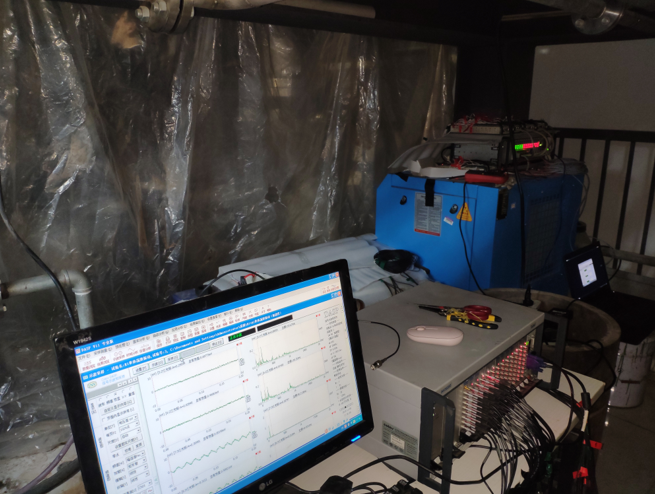
Figure 2 Reactor core structure flow-induced vibration test site