Key Considerations for Custom Industrial Motherboard Selection
Industrial motherboards are the core components of industrial PCs (IPCs). IPCs integrate various components like CPUs and external devices through the industrial motherboard to form a complete system. Therefore, the overall operating speed and stability of an IPC largely depend on the performance of the industrial motherboard. Industrial motherboards are widely used in complex environments, leading to high user demands for their functionality, compatibility, and reliability. The key considerations for industrial motherboard customization are as follows:
I. Size Specifications
Industrial motherboards come in various form factors, including 3.5-inch, 5.25-inch, ATX, Micro-ATX, half-size cards, full-size cards, and other specifications. Classified by chip type: X86 architecture, ARM architecture, etc. These can meet the requirements of various operating environments and performance demands.
II. Components
Industrial motherboard components differ from commercial-grade materials; they must withstand high temperatures, humidity, and other industrial environment demands. The selection of industrial motherboard materials requires long-term, high-standard validation of components to ensure high product reliability under complex conditions.
III. Interface Design
When designing interfaces for industrial motherboards, customization or stacking of standard interfaces is required to accommodate external devices, depending on the application. Common interfaces include COM ports, USB ports, VGA ports, HDMI ports, LPT ports, etc. In addition to supporting PCI slots, they can also support PCIE, Mini PCIE, MSATA, and other slots. Embedded GPIO buses can implement GPI and GPO functions. Industrial half-size and full-size cards can work with backplanes to support multiple PCI, PCIE, and Mini PCIE expansions, offering greater expandability. Furthermore, due to the complex environments in which industrial motherboards are used, designs for surge protection and anti-static are required.
IV. Lifecycle
Industrial applications prioritize stability, requiring industrial motherboard manufacturers to provide long-term stable supply cycles to ensure the stability of the overall equipment or system.

V. Protection Features
Through special design, industrial motherboards can implement watchdog automatic restarts in case of abnormal situations like system crashes, ensuring high system stability in harsh environments.
Key considerations for industrial motherboard selection are as follows:
I. Manufacturing Process
When selecting an industrial motherboard, the first thing to observe is its manufacturing process. To inspect the manufacturing process of an industrial motherboard, first, check if the workmanship is meticulous, such as whether the circuit board has multiple layers (preferably 6 layers or more), whether the solder joints and wave solder points are neat and clean, and whether the traces are simple and clear. Second, examine the motherboard components. Third, check if the design structure meets future upgrade and installation needs, if the layout is reasonable, and if it facilitates the installation of other accessories and cooling solutions. Fourth, check if the motherboard has passed relevant safety standard tests. Finally, examine the motherboard product packaging and related accessories to ensure all connection cables, driver disks, warranty cards, etc., are complete.
II. Quality Inspection
Industrial motherboard quality inspection methods include: checking the motherboard battery for rust or leakage. Checking the chip's production date; the motherboard's speed depends not only on the CPU's speed but also on the performance of the motherboard chipset. Software speed testing can be used to understand the industrial motherboard's performance; good speed testing software includes the SPEED series and SST series.
III. Upgrade and Expansion
When selecting an industrial motherboard, it's important to consider the future upgrade and expansion capabilities of the IPC and motherboard, such as the ability to expand memory, add expansion cards, or upgrade the CPU. The more slots a motherboard has, the better its expansion capability, but also the relatively higher its price.
As the core of an IPC, the stability, reliability, and quality of the industrial motherboard are crucial to the success of an entire project. Therefore, choosing an appropriate industrial motherboard solution is a very important consideration.
The rapid development of industrial automation, IoT, and smart manufacturing has stimulated enormous demand for product solutions across various industries. While design firms possess advantages in system integration, platform construction, and application layers, they face significant challenges with diverse terminal devices due to a lack of specialized technical expertise and experience, especially in an environment where product development cycles are increasingly shortened. To address this, Xinmai Technology has launched client-oriented hardware design services and EMC value-added services, aiming to precisely address customer product development pain points, assist with product design and certification, shorten customer R&D cycles, and accelerate product market entry.
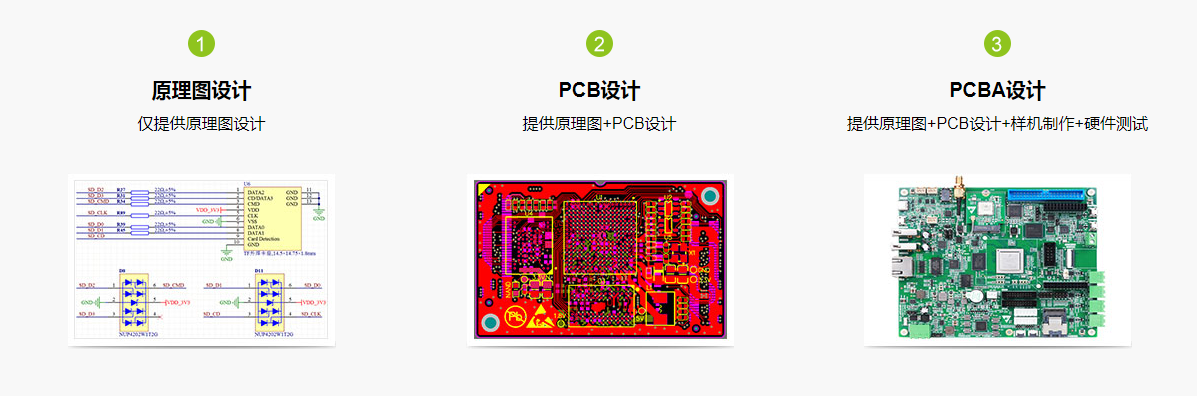
Deliverables Showcase
Showcase of Three Advanced Service Deliverables

Pre-testing Capabilities
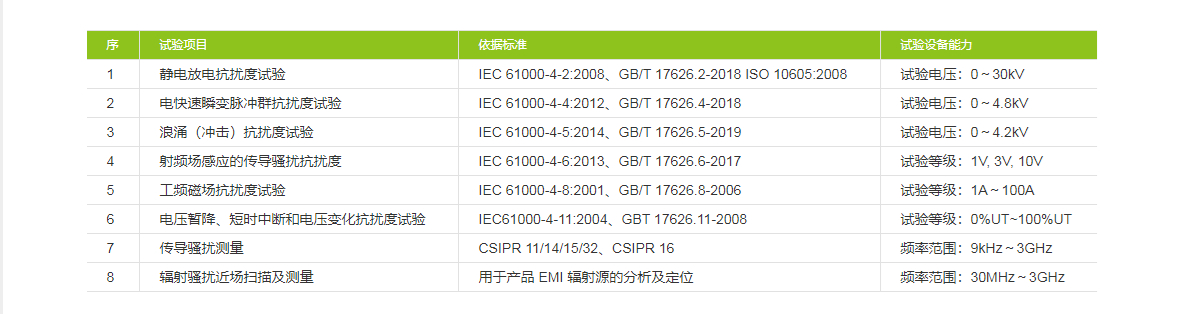
EMC Value-added Services
-
Provided by the Client
• 3 sets of products (1 for rectification, 1 for verification, 1 spare), ensuring complete hardware and software consistency across all 3 sets;
• Schematics and PCB layouts in Altium Designer format;
• Target EMC goals for the product, and details of current non-compliant items;
• Qualified site and facilities for EMC rectification and verification.
-
Provided by the Service Provider
• At least 1 product verified to meet the target EMC goals;
• Product EMC analysis and rectification report, including EMC problem analysis, localization, and rectification methodologies.
-
Characteristics of Rectification Services
• Identifying product EMC issues by combining schematics, PCBs, structure, cables, software, and measured data;
• Collaborating with clients on-site during testing (e.g., at third-party testing and certification bodies) for analysis and rectification; implementing rectification solutions on the current product as much as possible, and verifying with 2-3 identical versions of the product;
• Rectification solutions aim for speed, efficiency, low cost, and mass production, while also considering safety regulations; an EMC rectification report can be issued, detailing problem localization and rectification methodologies;
• If necessary, assisting clients with EMC review of revised design drawings after rectification; confidentiality agreements can be signed to ensure the information security of client prototypes and related drawings.