Glass Polishing Bus Control Solution Design
2.5D glass is widely used in products such as mobile phone covers, in-car displays, and smart watch displays. During its processing, a CNC polishing machine is typically used to polish its surrounding vertical surfaces to improve transparency and texture.

Xinmai closely monitors various technical challenges in glass processing. The bus control solution for mobile phone glass polishing machines, launched for the polishing equipment industry, has won the favor of numerous customers due to its economical and efficient features.
For multi-axis applications in polishing machines, bus-based motion control coupled with the QXE bus servo system not only improves the positioning accuracy and stability of the entire machine but also fully leverages advantages in efficiency and flexibility.
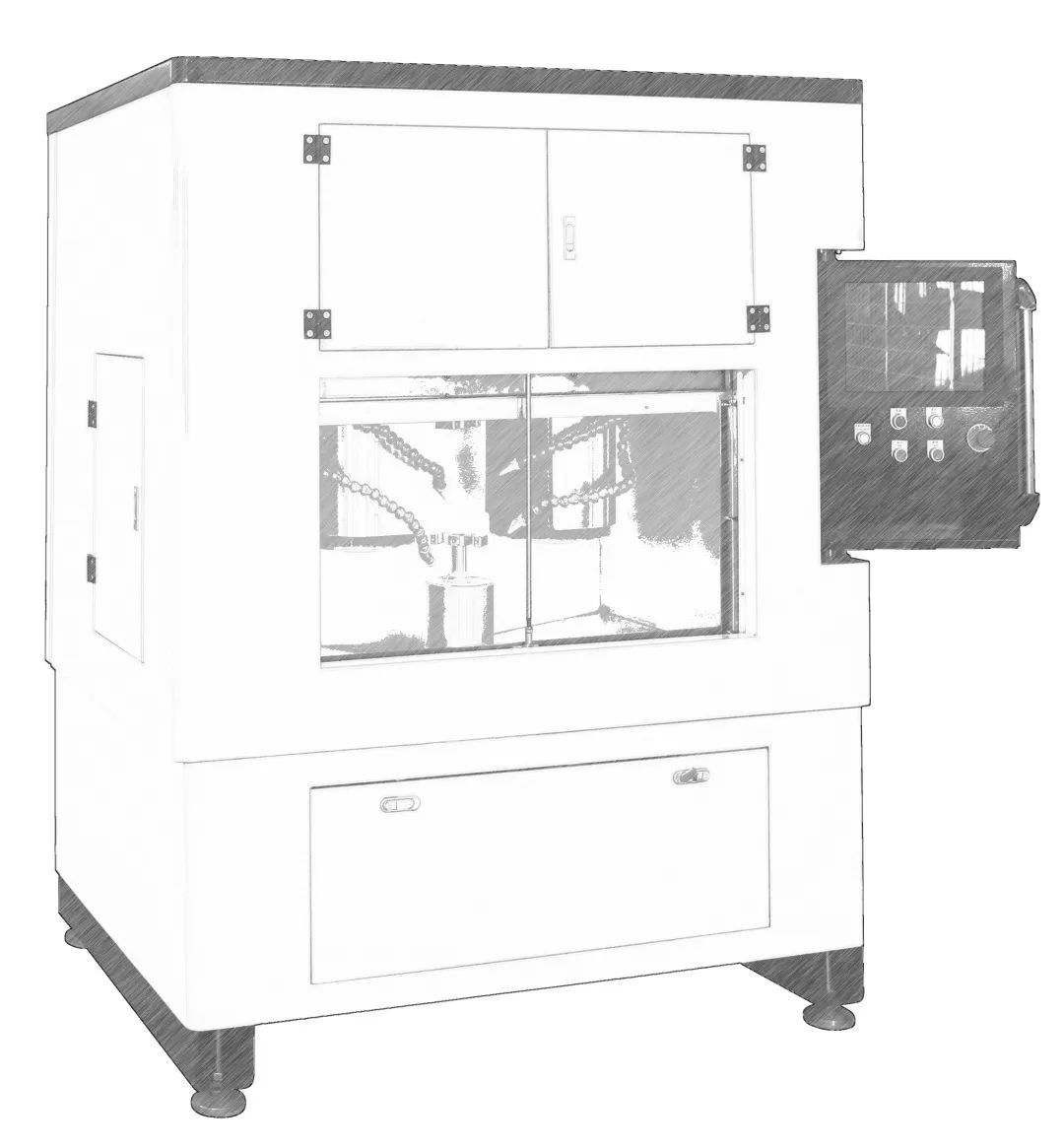
The seven-axis 2.5D polishing machines on the market can be divided into two main structural parts. One part involves clamping the workpiece with a pneumatic clamping cylinder, with a servo driving the workpiece's rotation. The other part consists of two polishing brush wheels (left and right), driven by servo motors to perform contouring feed motion along the workpiece's edge according to the program, while also capable of vertical and rotational movements.
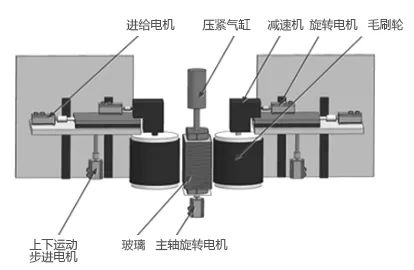
The polishing trajectory is generated by the enveloping motion of the brush and the workpiece's rotation axis, and the contour curve is adjusted through real-time torque compensation.
Electrical Configuration Diagram
The solution utilizes the EtherCAT system bus-based motion controller AMC1600E and QXE bus servo drives.

Solution Features
-
Segmented Adjustable Speed The workpiece is conceptually divided into several segments, with adjustable speed for each segment. By controlling the spindle speed, the linear speed of the contact area between the workpiece and the brush is adjusted, thereby achieving constant linear speed polishing. This greatly improves polishing quality and reduces the difficulty of polishing glass corners and curved surfaces.
-
Real-time Torque Compensation Utilizing the electronic cam function of the AMC1600E, the polishing trajectory is generated by the enveloping motion of the brush and the central workpiece rotation axis. Through real-time torque compensation, the electronic cam contour curve is adjusted, thereby ensuring uniform material removal during polishing and high contour consistency.
-
DXF File Import Support In glass polishing applications, there are often high requirements for the machining contour curves. Therefore, many machining trajectory curves are typically designed using CAD software, with DXF being a standard format. This application fully supports DXF file import.
Implementation Results
The overall machine accuracy can reach ±0.01mm. This control system adopts the AMC1600E's electronic cam plus torque compensation method, requiring only one controller. This not only meets the requirements for high-precision machining but also achieves controllable hardware costs, offering significant advantages compared to traditional CNC control or PLC + vision control solutions.
Xinmai's polishing machine control solution is highly mature and is currently widely applied in the polishing industry.