Design of a Controller for Semiconductor Wafer Inspection Motion Stages
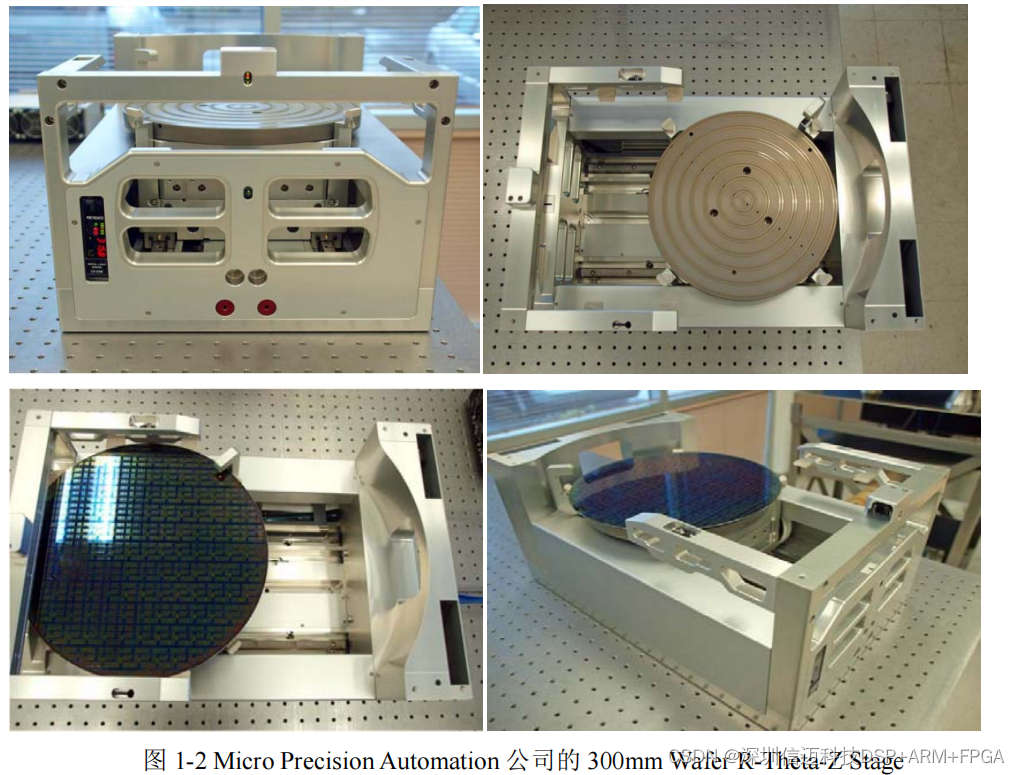
Multi-degree-of-freedom precision motion stages are a crucial issue in wafer manufacturing and inspection processes within the semiconductor industry. Compared to traditional motion stages driven by ball screws and rotary motors, precision motion stages employing advanced drive methods such as linear motors and voice coil motors offer numerous advantages, including high precision, fast response, long lifespan, maintenance-free operation, and simple structure. Their advantages are highly significant, and thus they are increasingly valued by the production and research fields of high-precision motion stages.
To adapt to the rapidly advancing IC technology's demand for front-end wafer manufacturing technology, developed countries attach great importance to developing advanced silicon wafer manufacturing technologies and equipment. Currently, 200mm wafer processing technology is widespread abroad, and 300mm diameter wafers are becoming widespread. According to historical patterns, the upgrade cycle for increasing wafer size is approximately 11 years [1].
The first 200mm production line was put into operation in 1900, and the first 300mm production line was put into operation in 2001, with an interval of approximately 11 years. Therefore, it can be inferred that the global semiconductor industry will gradually enter the 450mm wafer era starting in 2012, and it is expected that the global semiconductor industry will be in the 450mm wafer era by 2016 [1]. This creates an urgent demand for the research and manufacturing of precision mechanical systems for 45-22nm process large-size wafer manufacturing and inspection equipment. At the same time, IC manufacturing equipment is a typical application area for high-precision positioning systems. It is a fundamental and strategic industry related to national interests and security, playing an important role in national economic development. It is highly valued by the United States, Japan, Europe, and emerging IC manufacturing forces in Asia, including Taiwan, Singapore, and Malaysia, all of whom have formulated national strategies to provide strong support [2].
Modern Advanced Drive Technologies
With the continuous development of contemporary science and technology, current drive technologies are also constantly evolving. Compared to traditional electromagnetic rotary servos, modern advanced drive technologies can be divided into two main categories [6]: one is electromagnetic; the other is non-electromagnetic. Some of these advanced drive technologies have evolved further from traditional drive technologies, while others are often new developmental drive technologies based on original innovative principles or concepts. Understanding modern advanced drive technologies helps us make correct choices in drive control technology, which can reduce the difficulty of project development and even improve system accuracy and performance.
Overall Mechanical Structure Design
Motion Control Design