High-Speed High-Precision Semiconductor Motion Stage Design (Part 1)
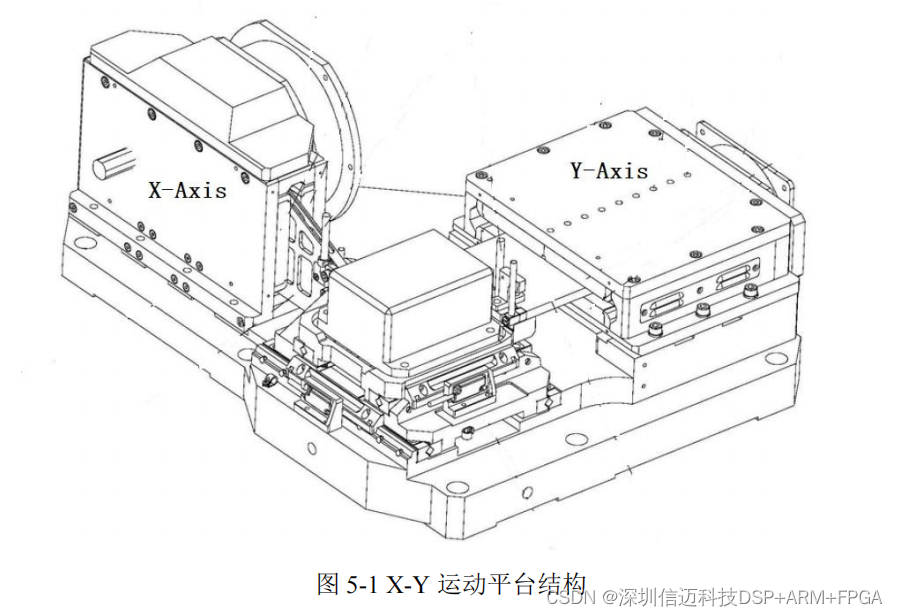
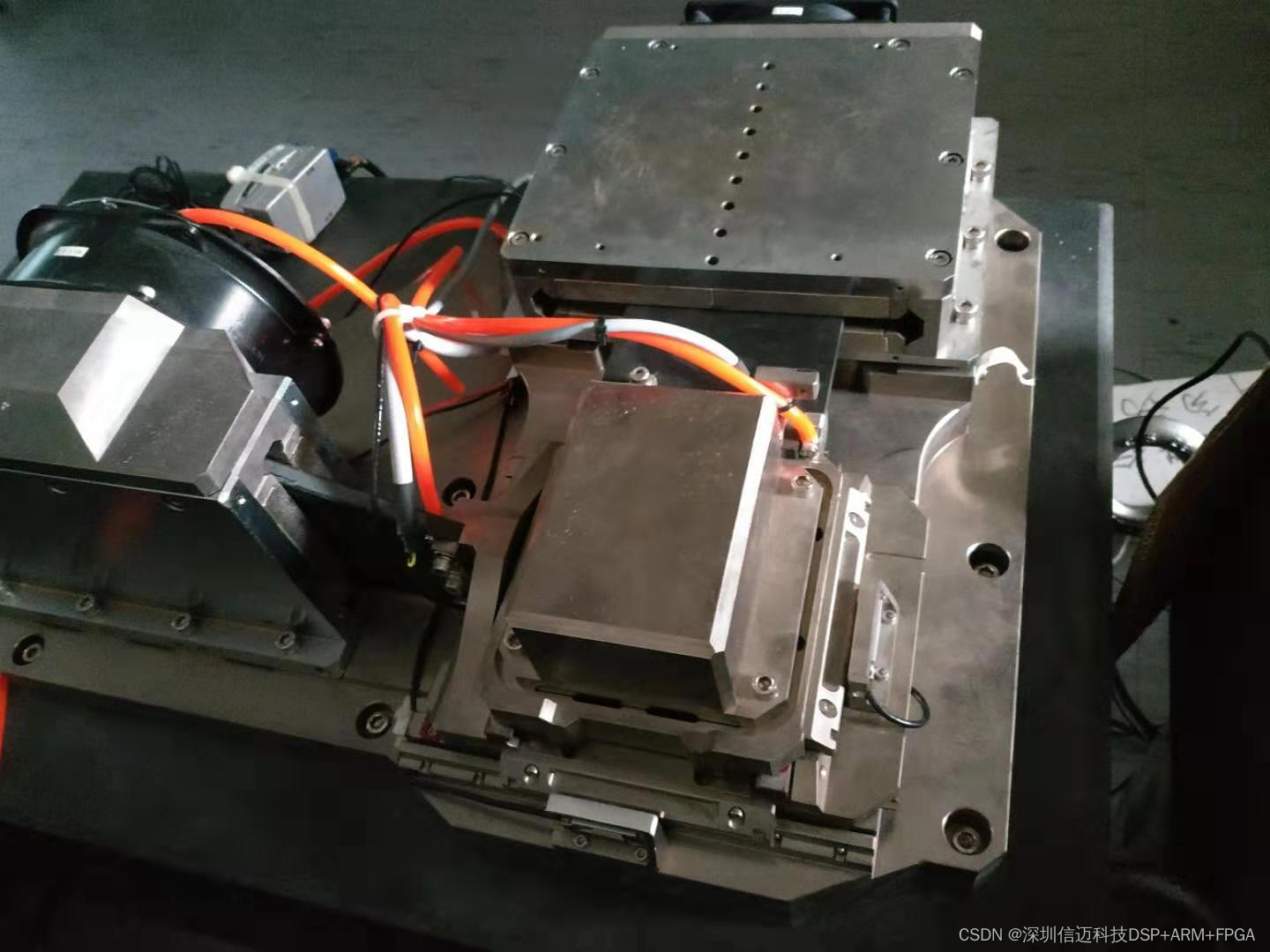
Whether it's wafer manufacturing equipment like lithography machines and etching machines, or semiconductor back-end packaging equipment such as die bonders and wire bonders, the XY motion stage is a core component of these devices. The performance of the motion stage dictates the overall performance of the equipment.
The main characteristics of high-speed high-precision motion stages are high speed, high acceleration, and high precision. High speed and high acceleration can improve equipment production efficiency, while high precision significantly impacts product quality. In different application fields, precision can be categorized into high positioning accuracy and high contouring accuracy. For instance, in high-end CNC machining, where contour error requirements are stringent, the focus is on high contouring accuracy. In semiconductor packaging equipment, which involves point-to-point motion, the emphasis is on high positioning accuracy. Currently, the technical level of high-speed high-precision motion stages in packaging equipment can achieve speeds of 1 m/s, accelerations of 20g, and positioning accuracy of 1 µm.
Current Development Status of Drive Methods
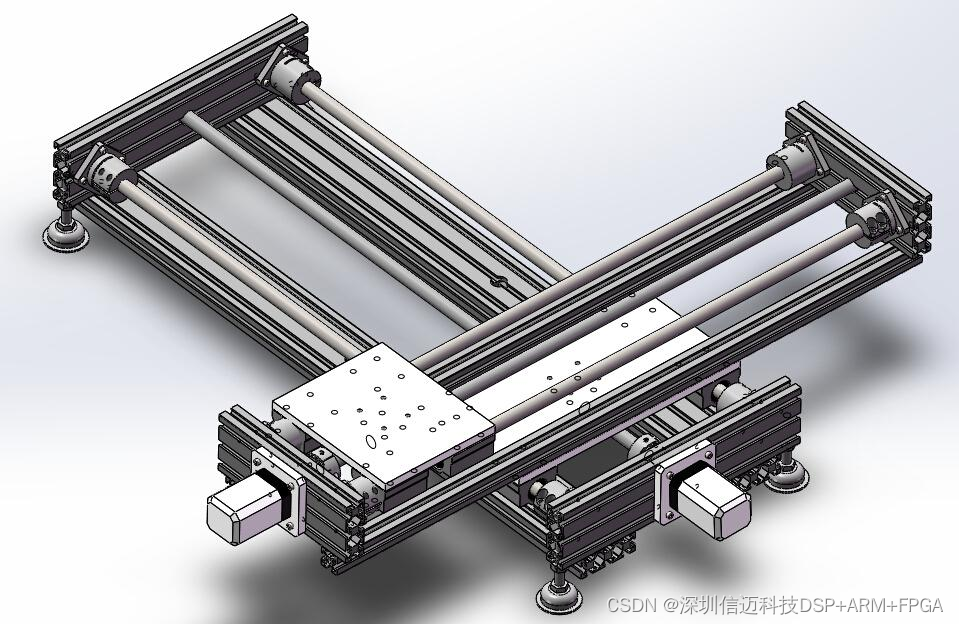
Traditional XY motion stages are built upon AC servo motors and ball screws. The ball screw converts the rotary motion of the servo motor into the linear motion of the motion stage. The specific structure is shown in Figure 1-2.
With the development of motor and drive technologies, XY motion stages often adopt direct drive methods using linear motors, as shown in Figure 1-3. Linear motors directly generate thrust force from electrical energy, eliminating the need for mechanical transmission links, frictional resistance, and transmission backlash. They offer advantages such as simple structure, high stiffness, fast response, and a wide speed regulation range. Compared to traditional ball screw driven XY motion stages, those using linear motors can achieve greater response speeds and higher positioning accuracy. Therefore, in high-speed high-precision motion stages, linear motors have gradually replaced rotary motors. Adopting linear motors not only results in a simpler, more stable, and reliable structure but also enables faster motion speeds, higher positioning accuracy, and repeatability, significantly enhancing the performance of the motion stage.
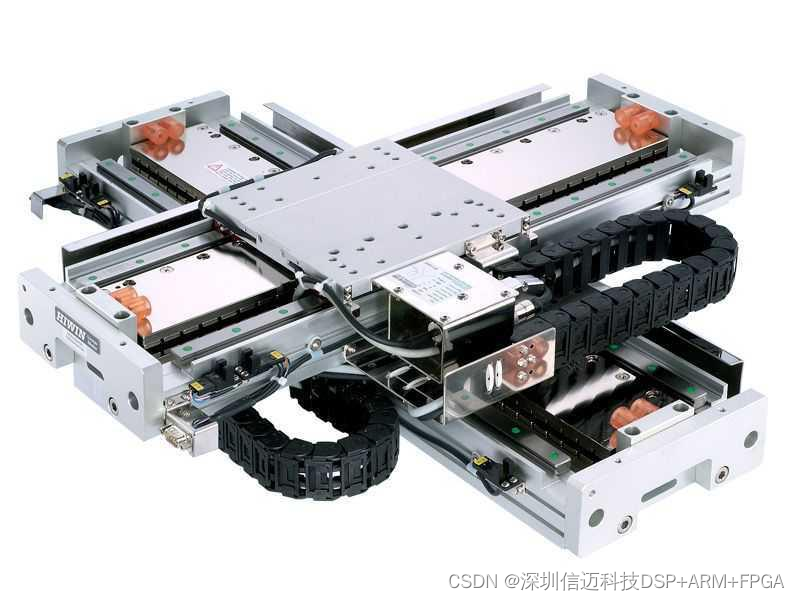
Linear Motor Direct Drive Method
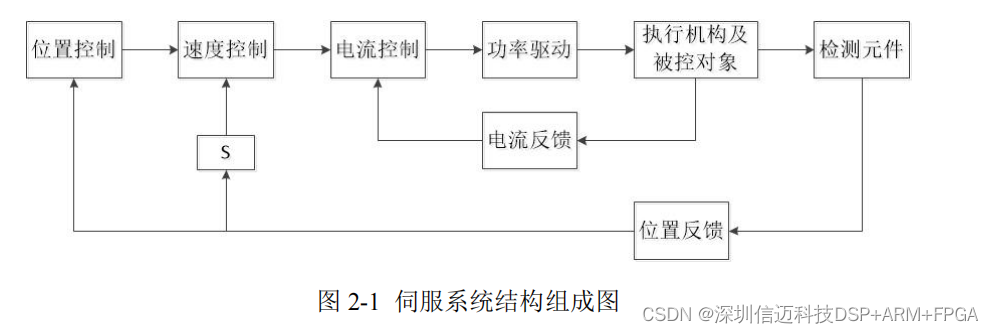
Introduction to Servo Systems
A servo system is an important component of industrial automation and a necessary means for equipment in the automation industry to achieve precise positioning and accurate motion. The actuator strictly follows control signals: when a control signal is received, the actuator acts as required; when the control signal disappears, the actuator stops on its own. It is precisely because of this characteristic that it is called a servo system [18]. Therefore, the performance of a servo system is determined by the actuator's ability to accurately execute control signals. If the actuator acts strictly and precisely according to the control signals, the system performance is good; otherwise, it is poor.
Since its inception, PID control has been widely applied in industrial fields due to its simple control structure, easy-to-implement algorithm, and other characteristics. PID controllers have few parameters, and each parameter has a specific physical meaning, making them easy to tune. Most importantly, PID controllers do not rely on a system model, allowing them to achieve good control performance even for control objects where an accurate mathematical model cannot be obtained.