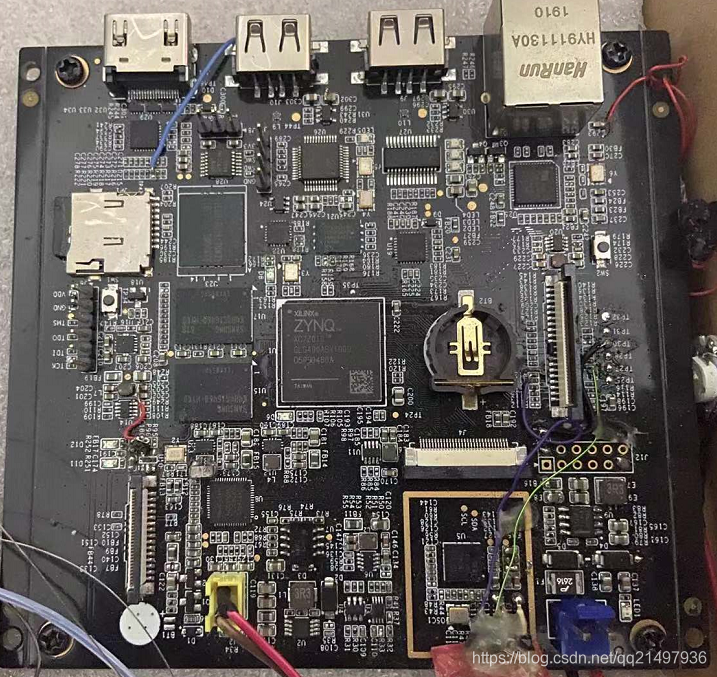
ARM+FPGA Medical Image Processing Solution
The rapid development of image processing technology has led to increasingly widespread application of image acquisition and processing systems in enhancing the automation level of agricultural production. Current image acquisition systems are sometimes based on CCD cameras, image acquisition cards, and computers; others are based on CCD cameras, decoders, FPGA, and DSP; and some are based on CMOS image sensor chips, FPGA, and DSP. Each of these approaches has its own advantages and disadvantages in terms of real-time performance, flexibility, and maintainability. In agricultural production, systems based on CCD cameras, image acquisition cards, and computers are more common. This paper, considering the needs for front-end image processing and image data transmission in actual systems, fully leverages the flexibility of ARM and the parallelism of FPGA to design an ARM+FPGA-based rapid image acquisition and transmission system. The chosen ARM (Ad-vanced RISC Machines) architecture is a 32-bit embedded RISC microprocessor structure, which features a rich instruction set and flexible programming. FPGA (Field Programmable Gate Array), on the other hand, offers significant advantages in terms of speed and parallel processing, making it suitable for the real-time requirements of image processing.
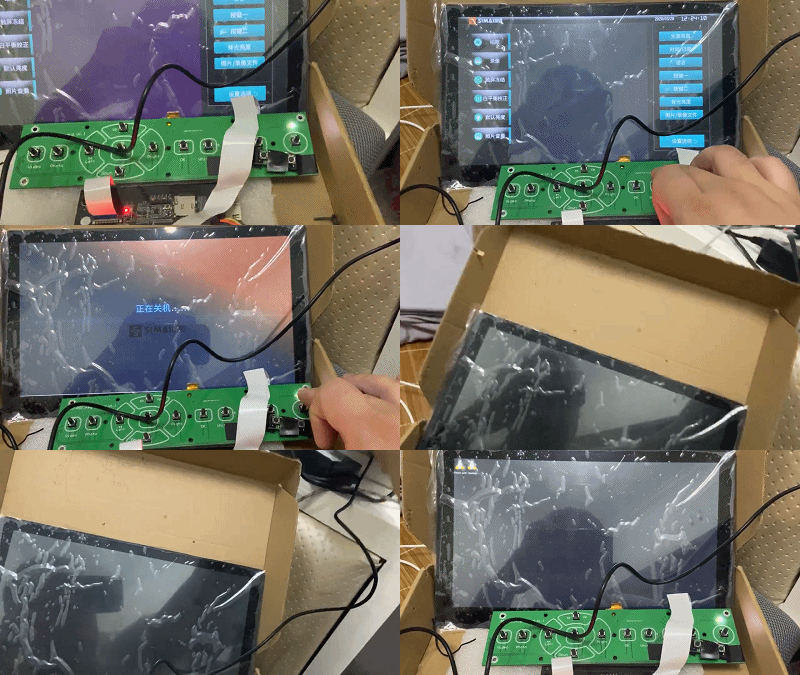
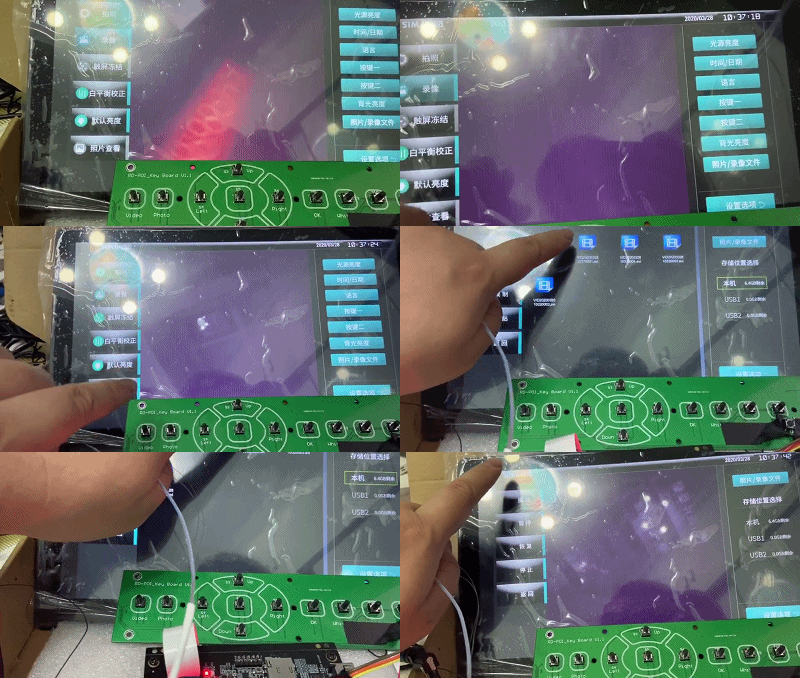
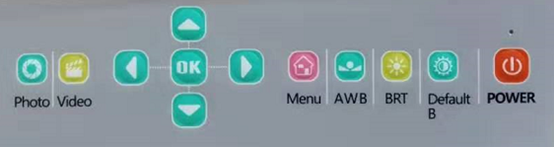
Requirements 1. Screen resolution 1920 x 1080; 2. Functions such as white balance, freeze, auto backlight, auto light source;’ 2. Photo capture function, with configurable save path (USB drive, SD card, built-in storage); 3. Video recording function, with configurable save path (USB drive, SD card, built-in storage); 4. Brightness adjustment, camera light source brightness adjustment; 5. Physical buttons, including photo capture, video recording, up/down/left/right, menu, default brightness, select, etc.; 6. Customizable boot interface; 7. Photo and video grid view control; 8. Photo browser; 9. Video player; 10. Ability to view photos and videos, with support for button operations on both; 11. Resource browser control for storage, with support for copy, paste, delete, and other operations; 12. Set time and date, with Apple-like sliding effect; 13. Various other custom controls;
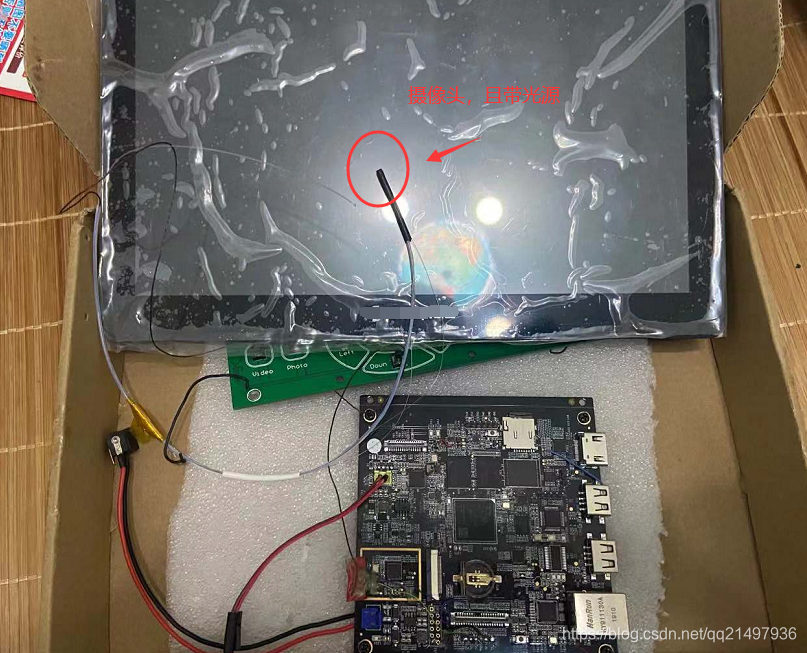
Note Limited by cost (overall solution cost is lower than industry peers), the continuous cost compression led to a critical challenge for this product: the performance of the ARM-emulating chip running Linux on the FPGA is equivalent to ARM's level in 2011, necessitating code and memory optimization across FPGA, ARM, and Qt.’