Metal Hardmask Physical Vapor Deposition System
Hardmask technology involves using selected images, patterns, or objects to mask all or part of the image being processed, thereby controlling the area or process of image treatment. It is widely used in both Front-End-Of-Line (FEOL) and Back-End-Of-Line (BEOL) processes in IC manufacturing. As the IC industry advanced to process nodes below 32nm, the use of Ultra Low-k (ULK) dielectric materials (k<2.5) became necessary to address parasitic capacitance effects caused by increasingly close metal interconnects. To overcome the weaknesses of Ultra Low-K dielectric materials, such as low mechanical strength and poor corrosion resistance, Metal Hardmask process technology emerged. The exiTin H630 TiN Metal Hardmask Physical Vapor Deposition (PVD) system, independently designed and manufactured by Naura Microelectronics, is specifically developed for 55-28nm process nodes and 12-inch metal hardmask applications.
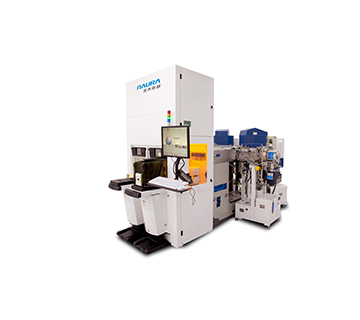
The exiTin H630 TiN Metal Hardmask Physical Vapor Deposition system primarily consists of an atmospheric platform, a multi-station vacuum transfer platform, configurable numbers of degas chambers, and process chambers (TiN). It features an intelligent software operating system that can interface with factory automation systems to achieve automated production. The R&D and mass production of the exiTin H630 TiN Metal Hardmask Physical Vapor Deposition system represent a breakthrough and technological leap for China in high-end integrated circuit PVD equipment. The core technology and process parameters of this equipment are consistent with the performance of international competitors at customer sites, and some important parameters (such as THK U, Rs U, WAT) even surpass those of competitors. The exiTin series TiN metal hardmask tools have become standard process tools for 28nm Back-End-Of-Line (BEOL) metal wiring hardmasks, entering the international supply chain and achieving stable mass production.
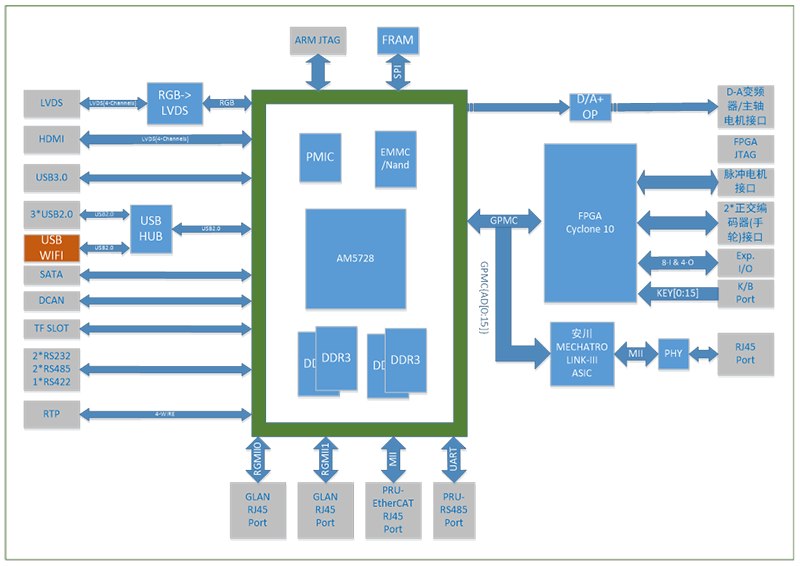
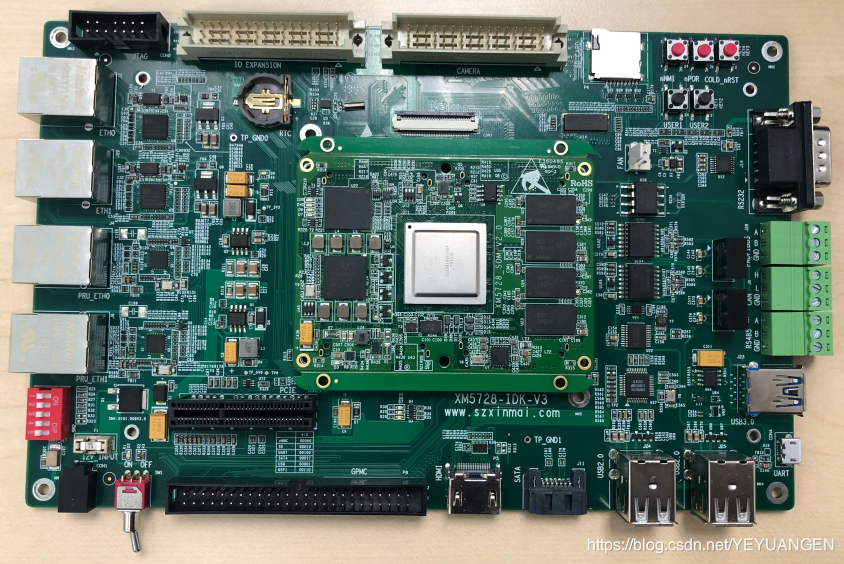
The Xinmai XM5728-IDK-V3 development board communicates with Artix-7/Kintex-7 development boards via a PCIe interface, realizing a DSP+ARM+FPGA tri-core communication architecture.
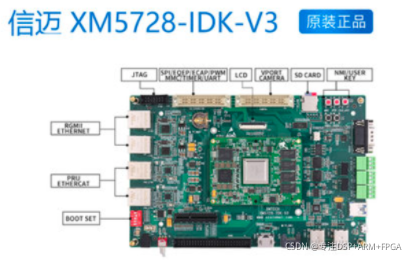
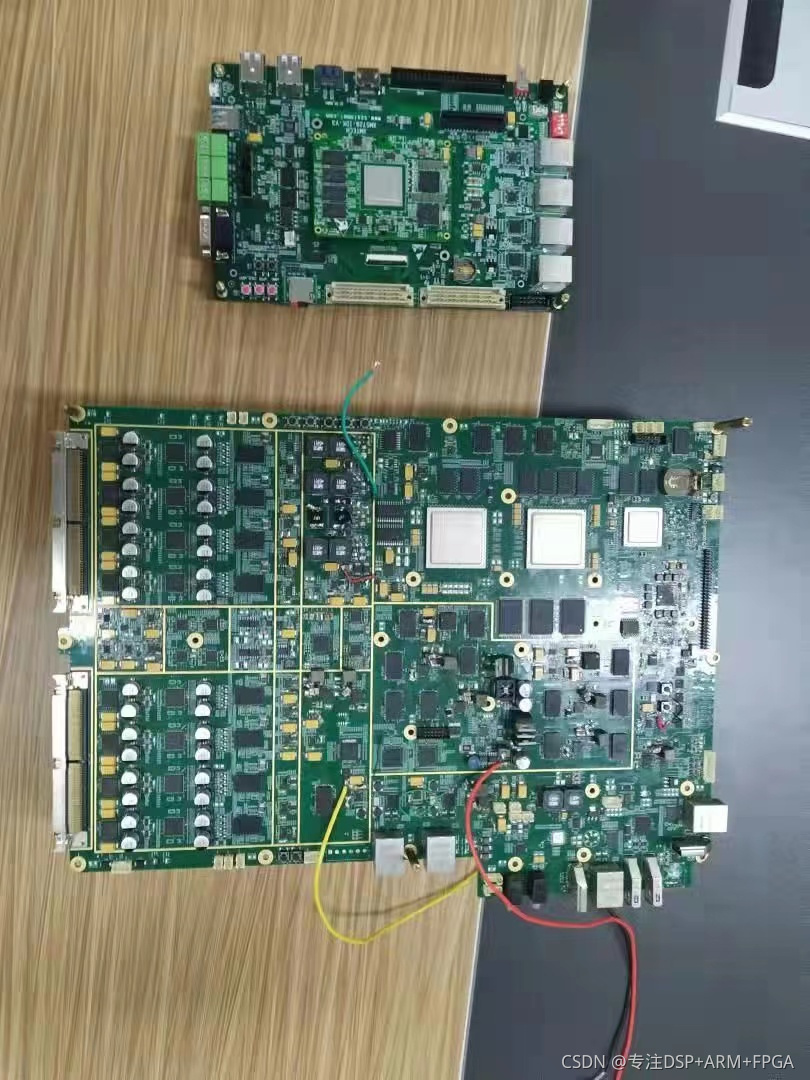
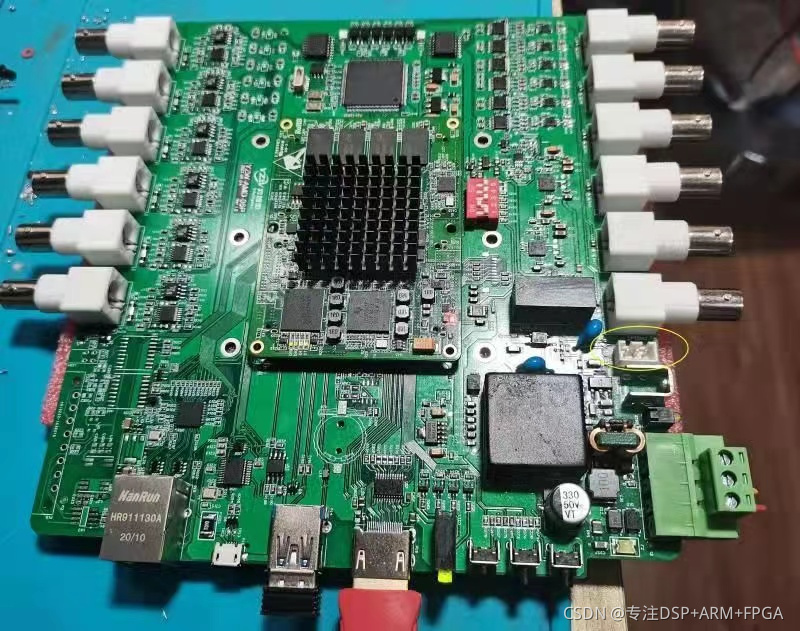
XM5728-IDK-V3 Machine Vision & Motion Control Main Board
■ The product adopts a core board + baseboard structure, allowing for flexible configuration.
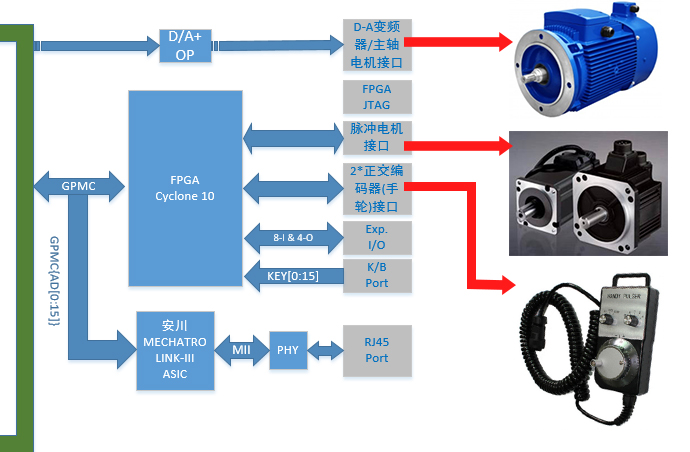
■ ARM core for HMI interface + DSP core for complex data computation + FPGA for high-speed motion control.
■ Supports various motor drives: pulse motors, variable frequency motors, Yaskawa motors.
■ Up to 3 Ethernet ports, supporting EtherCAT industrial bus devices.
■ ECNC motion control SDK package, easily implementing functions required for industrial control.
■ Applicable in industrial fields such as machine vision processing, machining centers, precision engraving machines, and robotic systems.
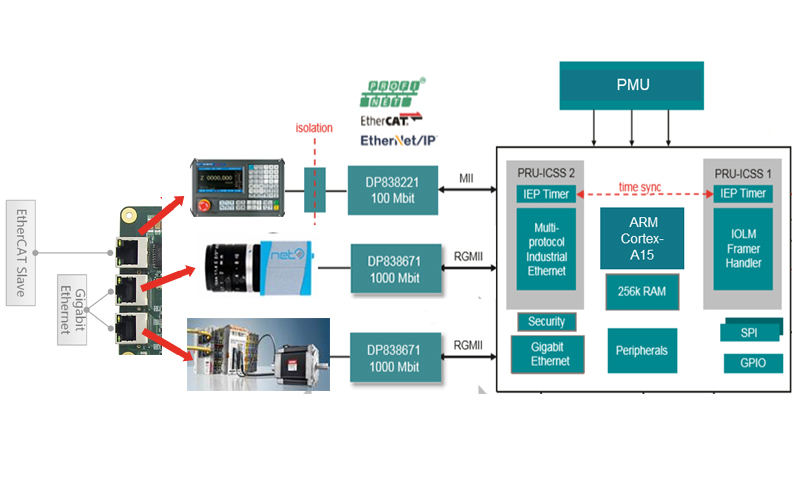
PRU-ICSS—Industrial Protocol Support
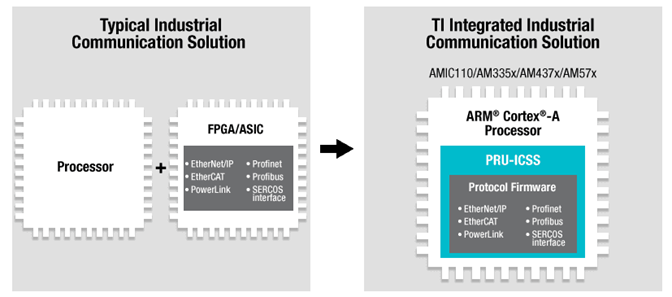
◆ PRU-ICSS: Industrial Protocol Support. The PRU-ICSS protocol supports real-time industrial communication for TI Sitara processors. The PRU-ICSS protocol is built on top of the processor SDK and includes optimized PRU-ICSS firmware, corresponding PRU-ICSS drivers for ARM processors, and example applications.
◆ PRU-ICSS firmware runs on the PRU cores, offloading time-critical link layer processing from the main ARM processor. PRU-ICSS drivers provide easy access to PRU-ICSS resources, enabling seamless integration with protocol stacks and application software running on the ARM core.
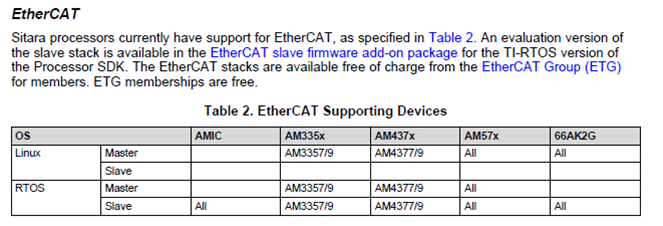
On AM57x, the PRU-ICSS software package is currently available for the following protocols:
EtherCAT
Ethernet/IP
Profinet
EtherNet/IP
Profibus
FPGA—Motion Control
Industrial Application Cases
CNC Machine Tool / Machining Center System
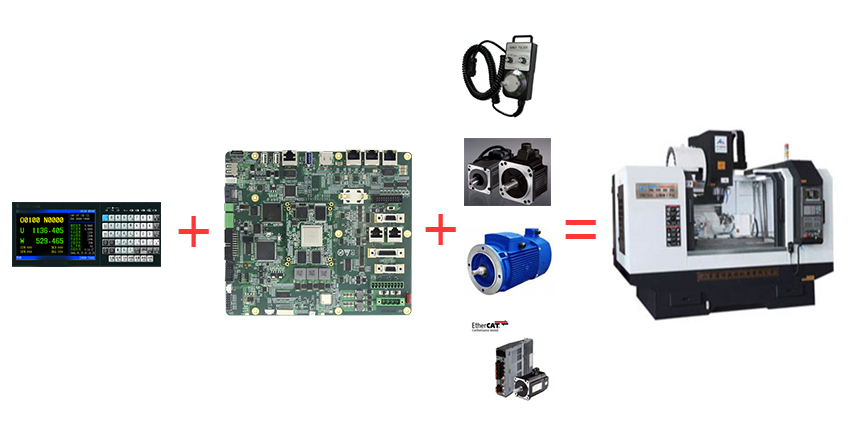
Array Incubator + Robotic Arm Control System

Machine Vision System
Application Areas
◆ Industrial Motion Control Systems
◆ Industrial Machine Vision Processing
◆ CNC Machine Tools
◆ Robot Control
◆ High-Definition Image Recognition Processing
◆ High-Speed Data Acquisition and Analysis
AM5728 Processor Introduction Benefits
● Sitara’s highest performance ARM device w/DSP accelerators
● 10,500 ARM Cortex-A15 DMIPS
● Upgraded graphics performance with HD Video support
Sample Applications
● Human Machine Interface (HMI)
● Industrial PC
● Digital Signage
● High-end Navigation and Consumer
Key Features
● Dual 1.5GHz* Cortex-A15s, 213MHz M4s, and 750MHz** C66x DSPs
● 1080p Video Decode/Encode
● 3D (x2) and 2D acceleration
● Multiple Video Input Ports
● Display Subsystem
● Quad core Programmable Real-time Unit (PRU)/Industrial Communications Subsystem (2x dual core subsys.)
● USB3, PCIe, SATA
Power Estimates
● Typical Power: 2.5-4W (nominal voltage)
● Idle Power: ~650mW
Package: 23x23, 760 pin, 0.8mm
AM57xx Software Support
Why Linux?
● Enables continuous access to the latest devices, features and bug fixes
● Provides a high-quality, stable Mainline Linux kernel for TI’s Sitara processors
● Will provide customers with long-term stable (LTS) kernel support*
SOM572x Core Board Introduction
Features:
Based on TI AM5728 floating-point dual DSP C66x + dual ARM Cortex-A15 industrial control and high-performance audio/video processor; Multi-core heterogeneous CPU, integrating dual-core Cortex-A15, dual-core C66x floating-point DSP, dual-core PRU-ICSS, dual-core Cortex-M4 IPU, dual-core GPU and other processing units, supporting OpenCL, OpenMP, SysLink IPC multi-core development; Powerful video encoding and decoding capabilities, supporting 1-channel 1080P60 or 2-channel 720P60 or 4-channel 720P30 hardware video encoding/decoding, and H.265 software video decoding; Supports up to 1-channel 1080P60 Full HD video input and 1-channel LCD + 1-channel HDMI 1.4a output; Dual-core PRU-ICSS industrial real-time control subsystem, supporting industrial protocols such as EtherCAT, EtherNet/IP, and PROFIBUS; High-performance GPU, dual-core SGX544 3D accelerator and GC320 2D graphics acceleration engine, supporting OpenGL ES2.0; Rich peripheral interfaces, integrating dual Gigabit Ethernet, PCIe, GPMC, USB 2.0, UART, SPI, QSPI, SATA 2.0, I2C, DCAN and other industrial control buses and interfaces, supporting high-speed USB 3.0 interface; The development board breaks out a V-PORT video interface, allowing flexible connection to video input modules; Extremely small size, only 86.5mm*60.5mm; Industrial-grade precision B2B connectors, 0.5mm pitch, stable, easy to plug and unplug, anti-reverse insertion, with high-speed connectors used for critical big data interfaces to ensure signal integrity.