Domestic DSP/ARM + Fudan Micro ZYNQ/A7/K7 FPGA Series Solutions
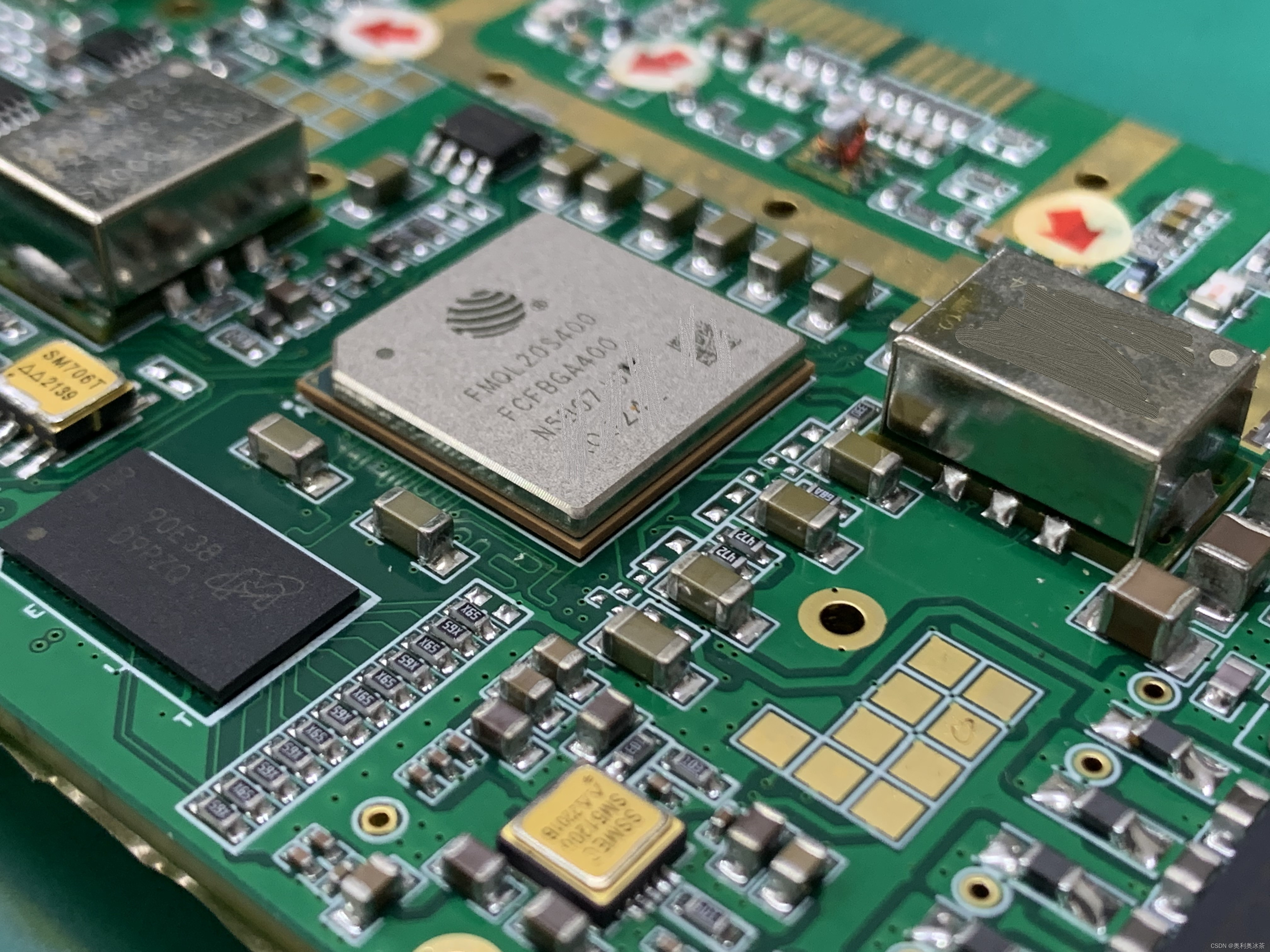
Customized DSP+ARM+FPGA Fudan Micro series solutions.
RK3399/TI AM5728/C6657/C6678 + Fudan Micro ZYNQ/A7/K7 series.
The pace of domestic substitution is urgent. Imported chips have only undergone functional verification and will soon be replaced by domestic ones. Currently, Fudan Micro is the only domestic company that has developed Zynq-like products. Shanghai Anlu and Chengdu Huawei are already developing them (it's not ruled out that Shenzhen Guowei is also working on it, as this market has huge potential).
Table of Contents
Application Scenarios
Differences in Chip Architecture
Procise Development Environment
IAR Development Environment
Market Potential
Where are the application scenarios? First, let's be clear: Zynq-like ARM+FPGA heterogeneous SOC chips are absolutely not suitable for low-cost solutions. Why?
Using these types of chips almost always requires accompanying DDR3. The price of a single DDR3 chip is about 100 RMB, and this is for imported ones; domestic ones are even more expensive. As long as DDR is used, at least an eight-layer PCB is required. How much does it cost to fabricate one board? Over 2,000 RMB. If you use Fudan Micro's FMQL, their Nor Flash will be bundled for sale because other brands are incompatible. Moreover, this Nor Flash is military-grade temperature rated, costing over 1,000 RMB per piece (imported ones only cost 30 RMB). So, what are the advantages of using such chips?
ARM compilation is fast, while FPGA compilation is slow. If certain early-stage indicators need urgent verification, ARM can be used for rapid validation. ARM is suitable for protocol layer and business layer data parsing, as well as some logical control, because these aspects usually require frequent modifications, making ARM very convenient. Portability is also excellent, meaning code can be directly copied from old projects. FPGA is suitable for algorithms, control with strict timing requirements, or high-throughput tasks like data acquisition. Such programs generally don't require significant changes later on. Due to the chip-level integration, communication between ARM and FPGA becomes very simple, directly using the AXI bus. Compared to routing on a PCB in traditional solutions, this is incredibly fast, efficient, and cost-effective. Differences in Chip Architecture Unlike Xilinx's dual-core Cortex-A9 + FPGA, Fudan Micro's design is a quad-core Cortex-A7 + FPGA. The FPGA architecture and resources are the same, allowing for almost parallel replacement. On the ARM side, both belong to the Armv7 architecture; it's like the difference between two mules and four donkeys – neither is particularly powerful. Zynq has been around for a while, and at the time, A9 was a relatively new architecture. However, Fudan Micro's FMQL, despite being a latecomer, hasn't surpassed it, and is even slightly less impressive (Chengdu Huawei's is reportedly quad-core A53, which is more powerful and highly anticipated).

ARM System Architecture Diagram
As for why they didn't adopt the same dual-core A9 architecture as Xilinx, I speculate it might be an intellectual property issue. After all, Zynq was jointly developed by Xilinx and ARM at the time. Fudan Micro would inevitably need authorization from ARM to incorporate an ARM core, and this hurdle cannot be bypassed.
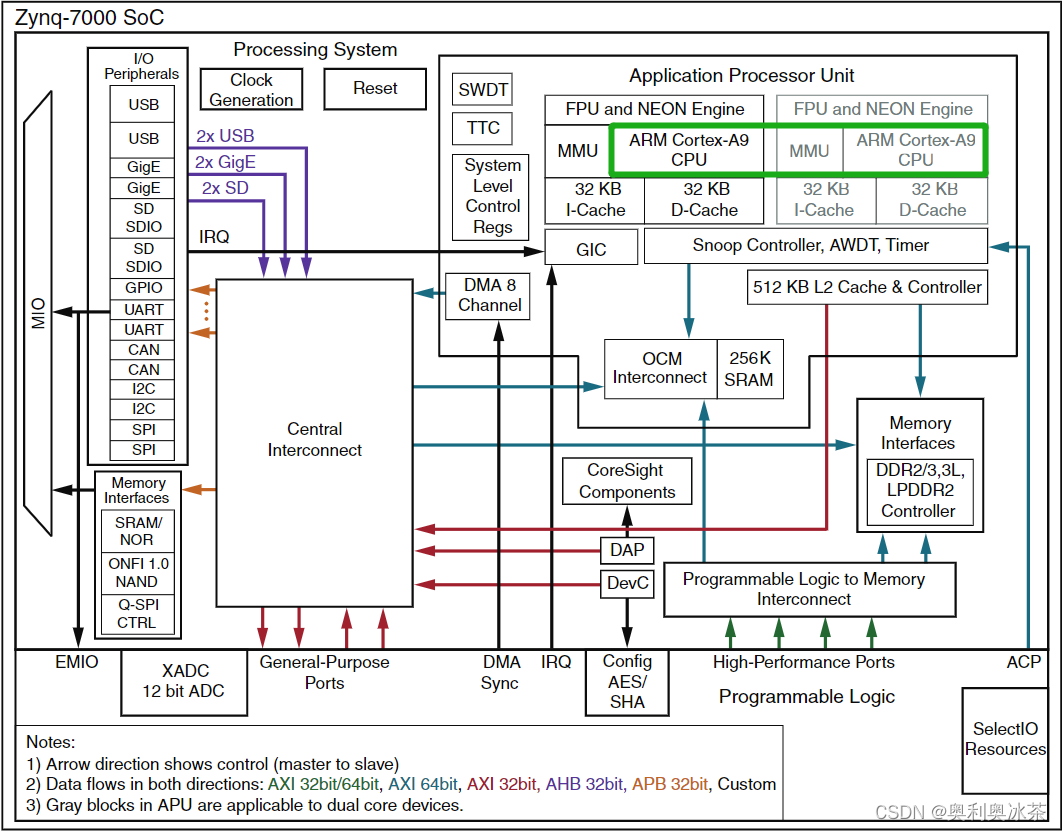
Zynq Chip Architecture Diagram
The different ARM architecture used here also brings software porting challenges. Zynq uses a customized Eclipse (called SDK) to develop ARM software, and with Vivado, the entire ecosystem is relatively closed-loop. Developers don't need to pay too much attention to low-level details, such as how BSP files are generated or how memory is allocated. However, FMQL has not developed its own IDE, so it uses the IAR development environment, coupled with a "lite" version of Vivado software – Procise.
Procise Development Environment There's not much to say about Procise; it's a "knock-off" Vivado. The sole purpose of this software is to import Vivado projects, generate the necessary BSP files for development, and then export them to IAR.
The bitstream generated by Vivado software can almost be directly programmed into the FPGA portion of FMQL, except for some functions that require patches to pass triple-temperature tests. This indicates that Fudan Micro has achieved full compatibility with Xilinx in the FPGA domain. The Procise software is only used during project creation and program flashing, after which its mission is complete.
Procise software interface
IAR Development Environment Those involved in embedded systems are probably familiar with IAR, this ancient IDE, but I estimate not many actually use it, as most people use Keil. This was my first time using IAR. The new version of IAR has an interface similar to Keil, but it's more amusing, with a "failed urban village renovation wasteland" vibe. However, to be fair, variable observation in debug mode is quite remarkable, even surpassing Keil.
IAR software interface
Market Potential Currently, in China's military-grade FPGA market, Shanghai Fudan Micro is far ahead, with Shenzhen Guowei, Chengdu Huawei, and several state-owned enterprises like the 58th Research Institute dividing the rest of the market. Fudan Micro started the earliest and has accumulated the most experience. However, as a consumer, I'm more pleased to see Shenzhen Guowei and Fudan Micro compete and engage in price wars. Taking K7 as an example, two years ago, Fudan Micro sold it for 15,000 RMB per piece; now, Guowei has driven the price down to 2,000-3,000 RMB per piece. The excessive profits from domestic products are fading, and everything will be subject to market choice.
In the civilian product market, competition is also fierce, with many players vying for dominance. Personally, I actually support Shanghai Anlu more; they have been diligently focusing on forward research and development, and their datasheets and technical documentation are very rigorous. Here's a brief prediction: in the future FPGA market, military products will still be dominated by Fudan Micro, but civilian products will be monopolized by Shanghai Anlu.
Overview of Domestic DSPs
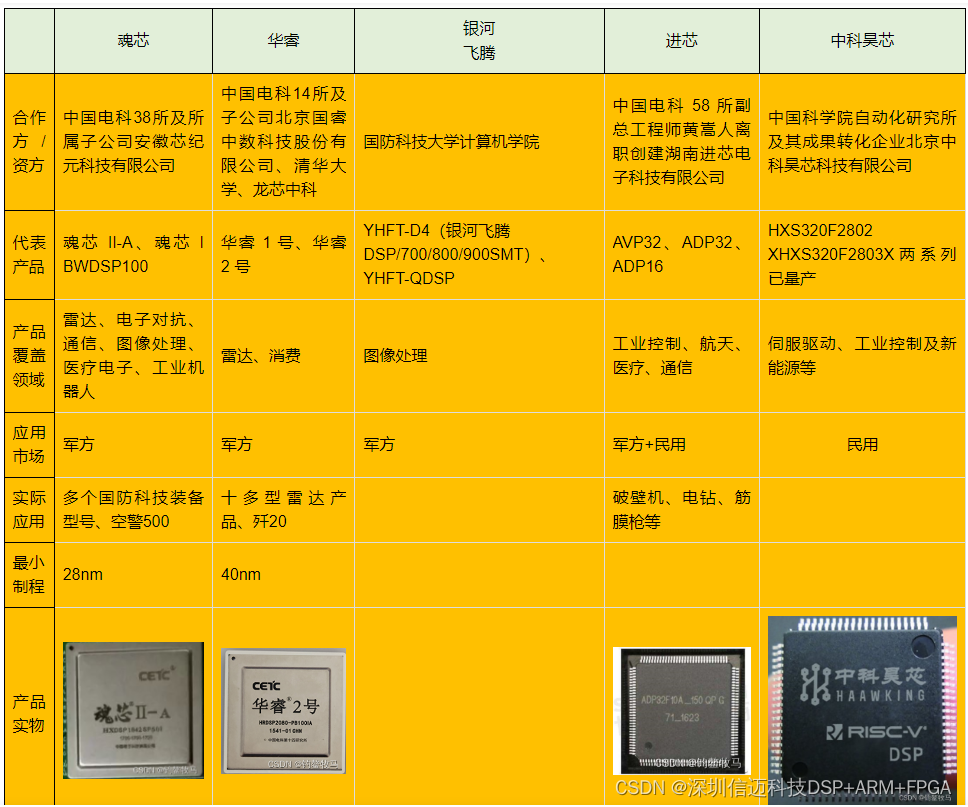
In 2020, China's total imports of various chips soared to 380 billion US dollars, surpassing oil imports for six consecutive years, becoming the largest source of trade deficit and accounting for over 45% of global chip demand. Under these circumstances, Western countries, led by the United States, have continuously imposed "trade frictions," various sanctions, and embargoes, "strangling" chip exports to China, especially high-end chips.
DSP (Digital Signal Processor) is a type of embedded general-purpose programmable microprocessor primarily used for algorithmic processing such as signal acquisition, identification, transformation, enhancement, and control. It serves as the "brain" of various embedded systems and is widely applied. DSP, along with CPU (Central Processing Unit), GPU (Graphics Processing Unit), and FPGA (Field-Programmable Gate Array), are often considered the "four major components" of high-end chips. Their domestic substitution is of great significance for improving chip self-sufficiency.

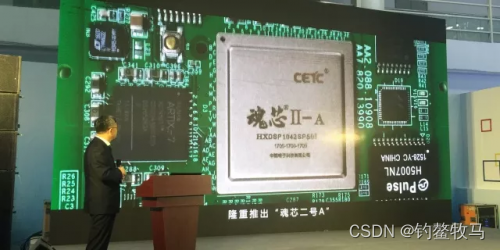
Although China's domestic DSP started relatively late, it has developed rapidly. The localization rate in certain specific fields is already high, and it is very likely to achieve the 70% target by 2025. The localization rate of domestic