DSP/ARM+FPGA-based PLC-like High-Performance High Real-time EtherCAT Motion Control System Solution
FPGAs, with their hardware programmability, are attracting increasing attention from developers in the motion control field. When FPGAs are used to implement motion control systems, realizing the main motion control functions within the FPGA can reduce the number of components required and shrink the system's volume. FPGAs offer good expandability, are easy to maintain, and allow for straightforward system upgrades. Their speed advantage enables them to meet the demands of control applications requiring high system performance and precision. Users can program the hardware according to their needs, allowing for optimized utilization of system hardware resources. Furthermore, it supports reconfigurable design, enabling users to update and upgrade their hardware in a timely manner when system requirements change. However, for implementing complex control algorithms, the required number of logic gates increases with complexity, raising system costs. The FPGA solution represents a trade-off between cost and performance, making it suitable for most motion control applications.
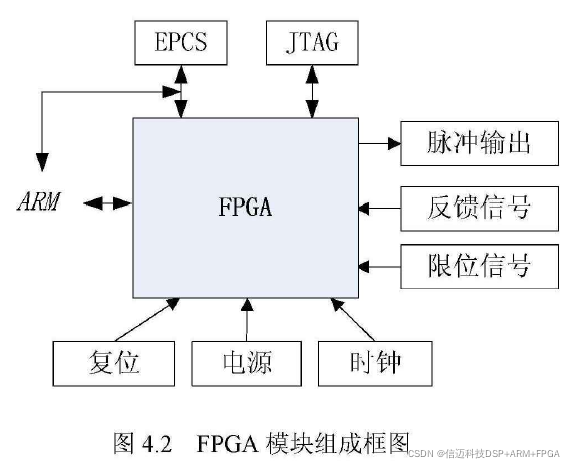
In many motion control designs requiring high control speed, a large number of control axes, high control precision, and complex control algorithms, the DSP + FPGA solution becomes an excellent choice. This solution maximizes the speed advantages (of FPGA) to assist in the implementation of various auxiliary functions such as fine interpolation, control output, address command decoding, feedback signal processing, and interface controllers. Simultaneously, it leverages the high-speed processing capability (of DSP) to implement various complex control algorithms in motion control, such as interpolation, speed control, and error compensation.
Its main functional specifications include:
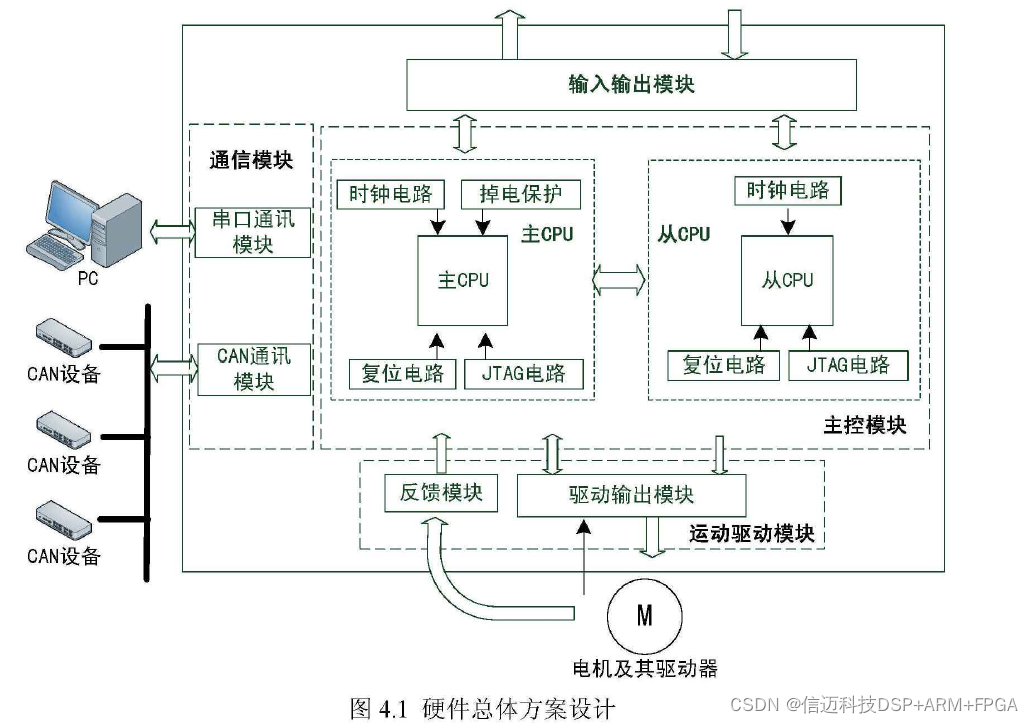
- High-speed serial communication interface for high-speed real-time communication between the human-machine interface (HMI) and the motion control system.
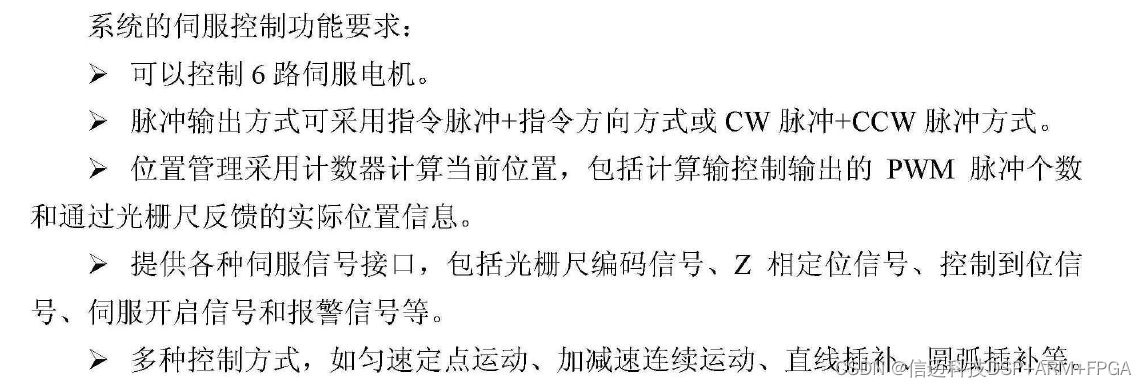
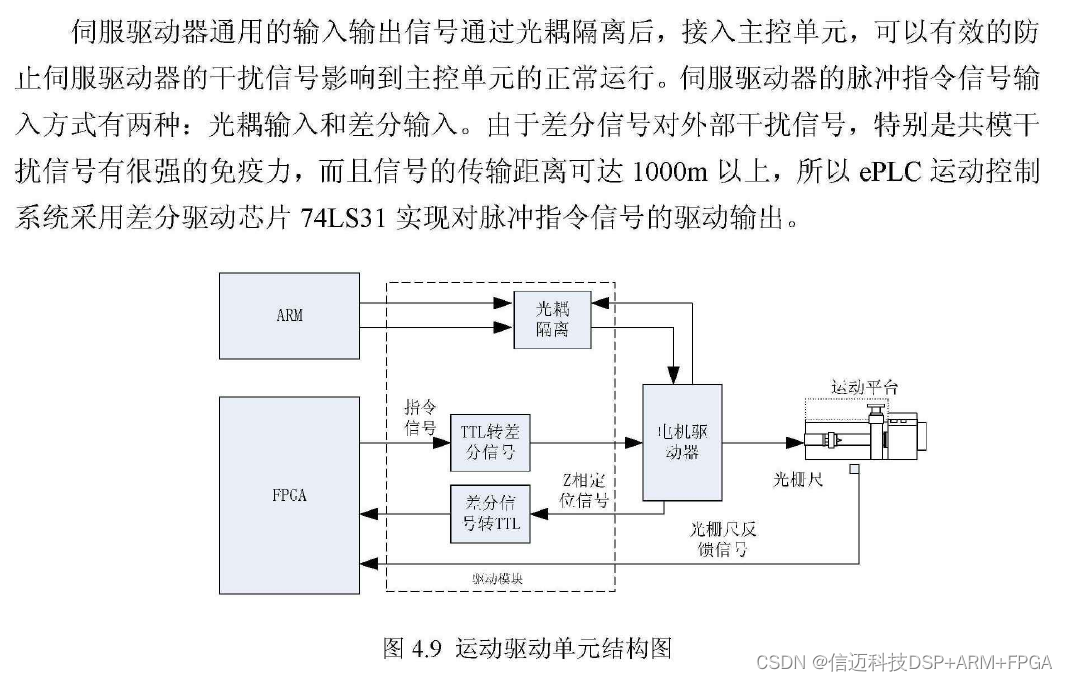
- Connects up to 4 axes for servo control, featuring 4-axis drive pulse and direction output functions, with a maximum pulse output frequency of 20 Mbps.
- Utilizes 52 dedicated I/Os for transmitting dedicated control signals to 4-axis servo drives.
- Features 64 I/O ports (32 inputs, 32 outputs) for user-defined purposes.
- 4 channels of quadrature encoder feedback, with a sampling frequency up to 20 MHz and a 32-bit encoder counter.
- Offers 4 operating modes: Auto mode, Jog mode, Ref mode, MDA mode.
- Standard RS232 serial port and JTAG serial port.
- Motion modes: Single-axis point-to-point motion in position control mode, multi-axis linear interpolation, two-axis circular interpolation, four-axis linkage, and manual pulse generator (MPG) control.
- Velocity control: Programmable S-curve acceleration/deceleration planning, with both calculation and trajectory planning parameters being 32-bit.
- Position control: Comparison between encoder feedback value and preset position.
- Programmable event interrupts: External input interrupt, event interrupt, and time interrupt.
- Network interface, fiber optic interface, and general-purpose serial port.
- The system comes standard with a manual pulse generator (MPG) interface and a magnification switch interface.
 For more information, please contact Shenzhen Xinmai Technology.