Open-Source EtherCAT Motion Control All-in-One Solution Based on AM5728 Linux
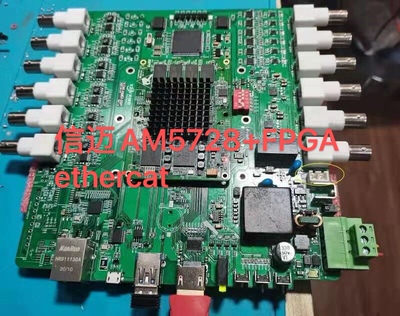
Xinmotion EtherCAT master station with FPGA high real-time performance and encryption support for up to 32 axes
Performance Advantages
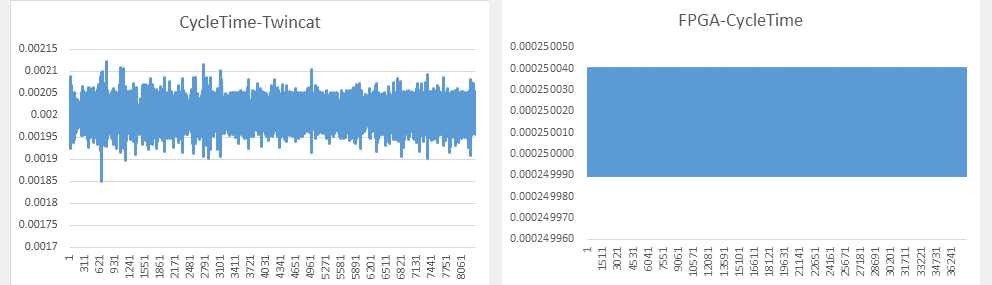
- Faster cycle times, down to 31.25μs
- Lower jitter, less than 0.004μs
- Excellent synchronization: clock synchronization accuracy between master and slave devices can be far below 1μs (measured at 50ns for 4 axes)
Performance Comparison:
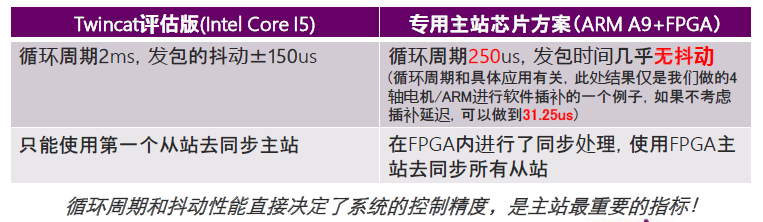
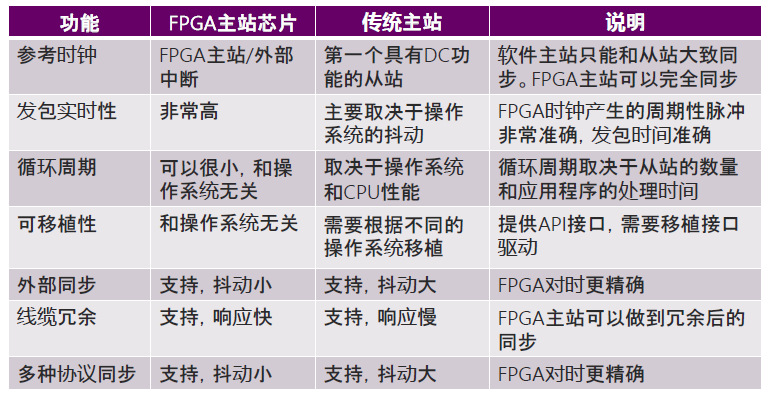
Further Performance Comparison Summary:
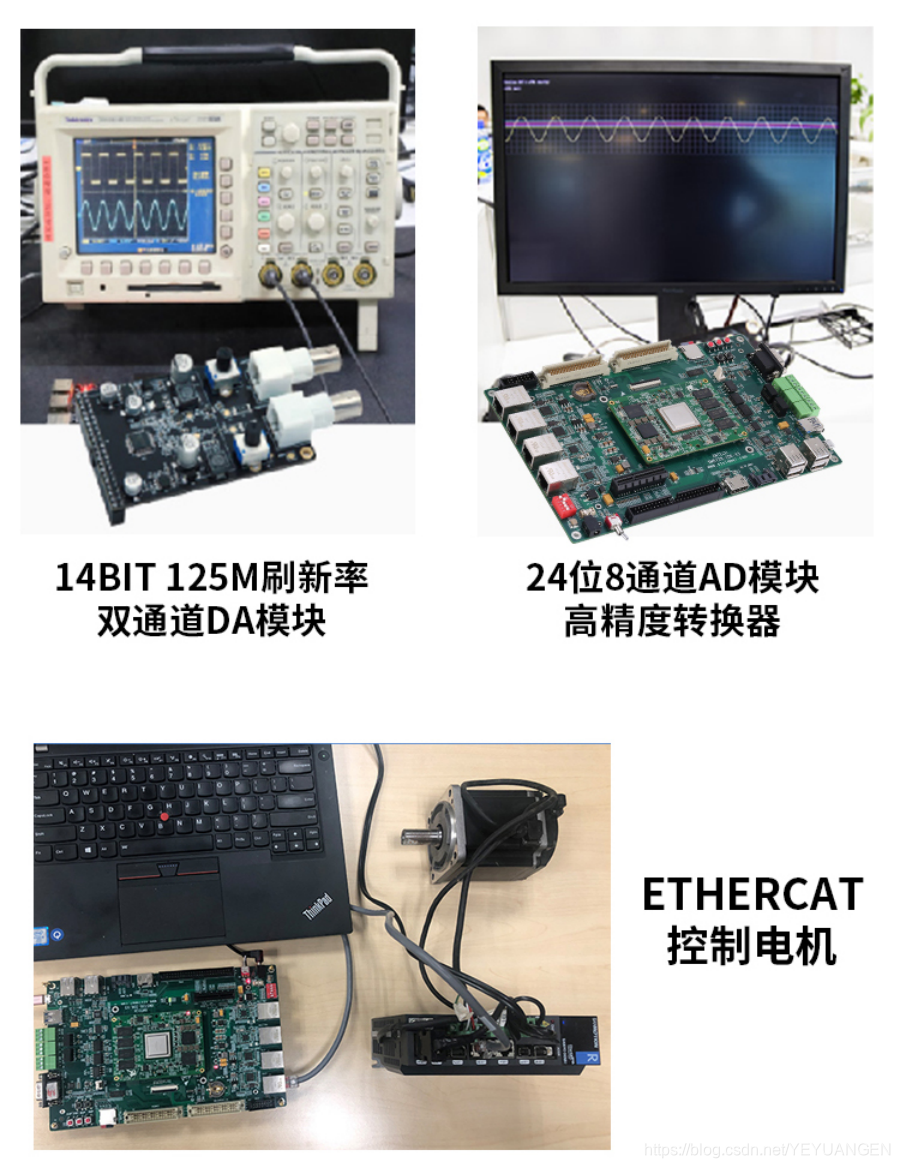
The XM5728-ETH bus controller integrates Gigabit Ethernet and USB 3.0 interfaces (supporting various industrial cameras), and supports EtherCAT bus, CAN, RS-232, RS-485, and encoder handwheel interfaces. It also features 16 digital inputs and 16 digital outputs (totaling 32 onboard digital I/Os).
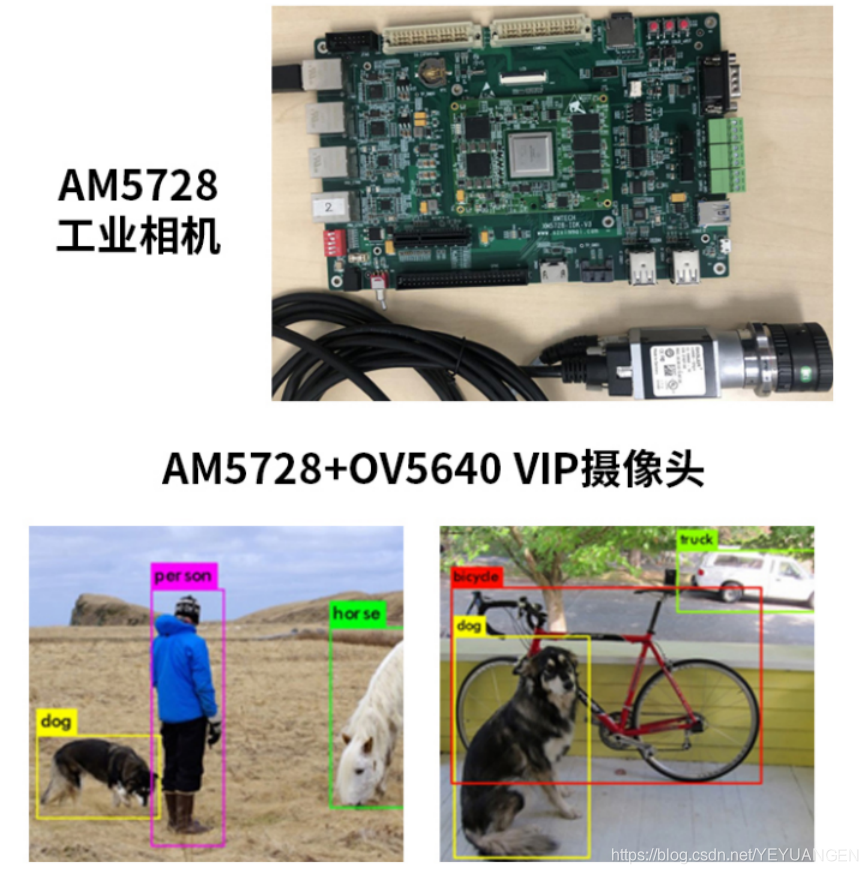
Complex motion control and third-party vision applications
Flexible system architecture and broad application scope
 Suitable for IoT and Industry 4.0 solutions
Supports freely adding application software under Linux platform
Supports Qt-based HMI development
On-chip localized interface with direct memory access for faster communication
Up to 32-axis motion control (EtherCAT axis / encoder axis / virtual axis)
Encoder interface supports position measurement and can be configured as handwheel input mode
16 channels of NPN general-purpose outputs, including 12 high-speed and 4 low-speed outputs; maximum output current up to 300mA, capable of directly driving certain solenoid valves
16 channels of NPN general-purpose inputs, including 2 high-speed and 12 low-speed inputs; high-speed inputs can be configured as latch signals
Up to 4096 isolated input/output points expandable via EtherCAT bus
4 USB interfaces (including 2 USB 3.0), 1 RS-485 interface, 1 RS-232 interface, 2 Gigabit Ethernet interfaces, and 1 100M EtherCAT interface
Supports up to 16-axis linear interpolation, arbitrary spatial arc interpolation, helical interpolation, and spline interpolation
Supports electronic cam, electronic gear, position latching, synchronized following, virtual axis functions
Supports hardware compare output (HW_PSWITCH2), hardware timer, and precise output during motion
Supports pulse closed-loop control, pitch compensation, and other functions
Supports ZBasic multi-file, multi-task programming
Multiple program encryption methods to protect customer intellectual property
1 Development Kit Overview
- Based on the TI AM5728 floating-point dual DSP C66x + dual ARM Cortex-A15 industrial control and high-performance audio/video processor
- Heterogeneous multi-core CPU integrating dual-core Cortex-A15, dual-core C66x floating-point DSP, dual-core PRU-ICSS, dual-core Cortex-M4 IPU, and dual-core GPU processing units; supports OpenCL, OpenMP, and SysLink IPC for multi-core development
- Powerful video encoding/decoding capabilities: supports hardware encoding/decoding of 2K@30fps, 1×1080P@60fps, 2×720P@60fps, or 4×720P@30fps; supports H.265 software decoding
- Supports up to 1×1080P@60fps full HD video input and dual outputs: 1×LCD and 1×HDMI 1.4a
- Dual-core PRU-ICSS industrial real-time control subsystem supporting industrial protocols such as EtherCAT, EtherNet/IP, and PROFIBUS
- High-performance GPU with dual-core SGX544 3D accelerator and GC320 2D graphics engine, supporting OpenGL ES 2.0
- Rich peripheral interfaces: integrated dual Gigabit Ethernet, PCIe, GPMC, USB 2.0, UART, SPI, QSPI, SATA 2.0, I2C, DCAN, and other industrial control buses and interfaces; supports high-speed USB 3.0 interface
- Development board exposes V-PORT video interface for flexible connection to video input modules
- Compact size: only 86.5mm × 60.5mm
- Industrial-grade precision B2B connector with 0.5mm pitch, stable, easy to plug/unplug, reverse-insertion protected; high-speed connectors used for critical high-data-rate interfaces to ensure signal integrity
XM5728-IDK-V3 is a development board designed by Shenzhen Xinmotion based on the TI AM5728 (floating-point dual DSP C66x + dual ARM Cortex-A15) XM5728-SOM system-on-module. It provides a testing platform for evaluating the overall performance of the XM5728-SOM module.
The XM5728-IDK-V3 baseboard uses a 4-layer PCB design with lead-free immersion gold process. It not only provides customers with comprehensive AM5728 getting-started tutorials but also assists in baseboard development, offering long-term, full technical support to help customers accelerate secondary product development and bring products to market quickly. It provides abundant demo programs and DSP+ARM multi-core communication development tutorials, comprehensive technical support, and assistance in baseboard design, debugging, and DSP+ARM software development.
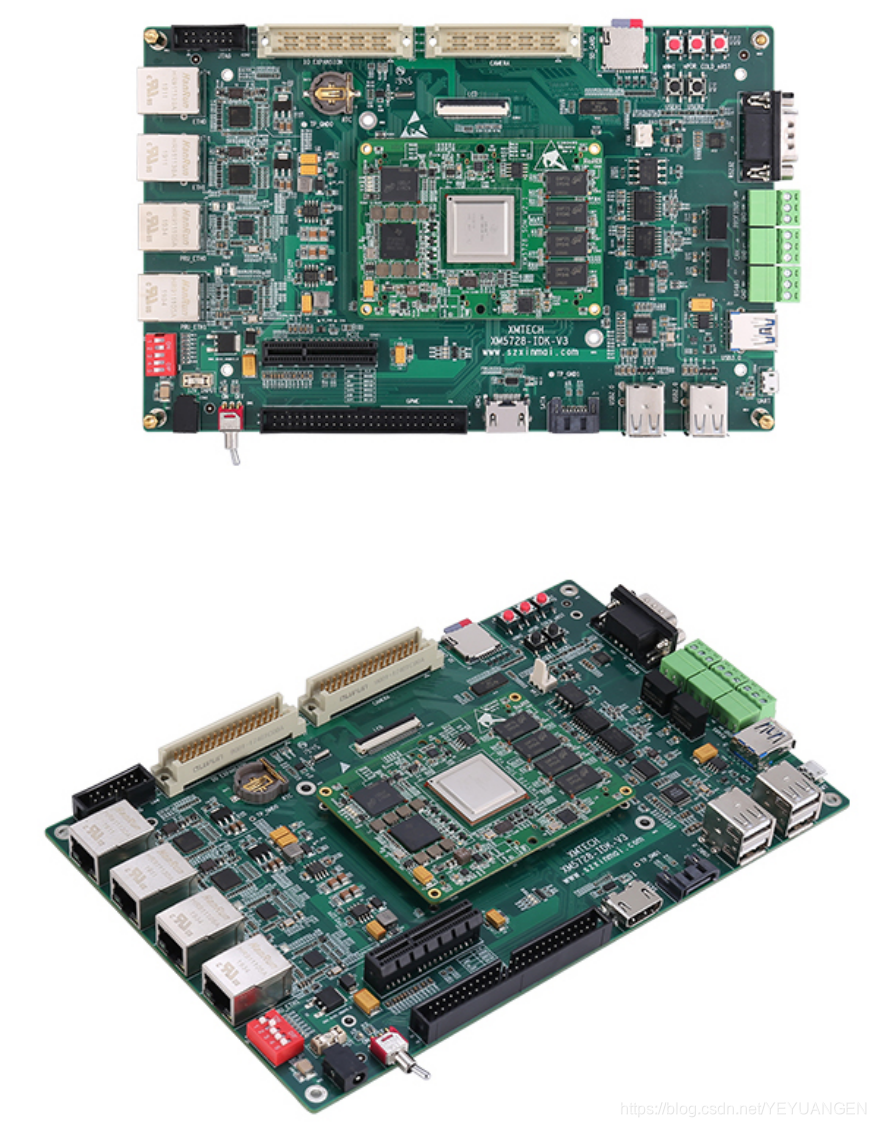
Figure 1: Development Kit Diagram
2 Typical Application Areas
- Industrial PCs & HMIs
- Industrial robots
- Machine vision
- Medical imaging
- Power automation
- EtherCAT master/slave controllers
- Industrial multi-protocol smart gateways
- High-end CNC systems
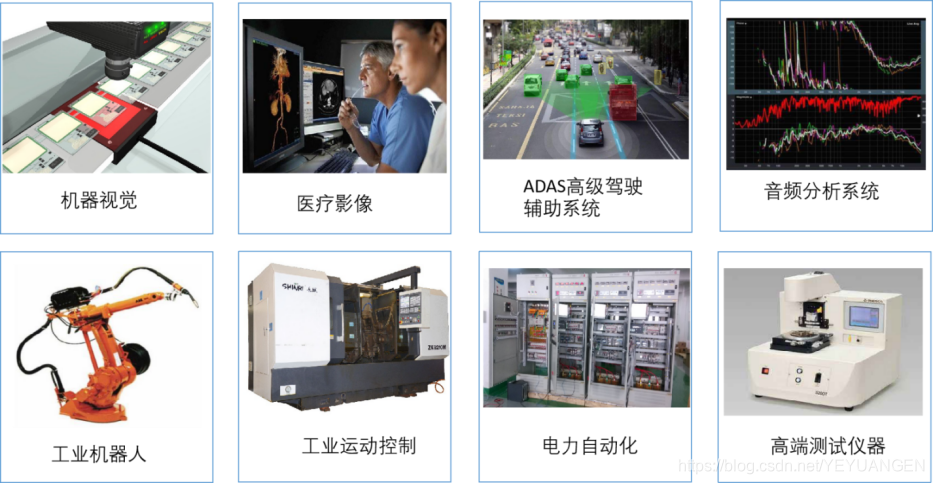
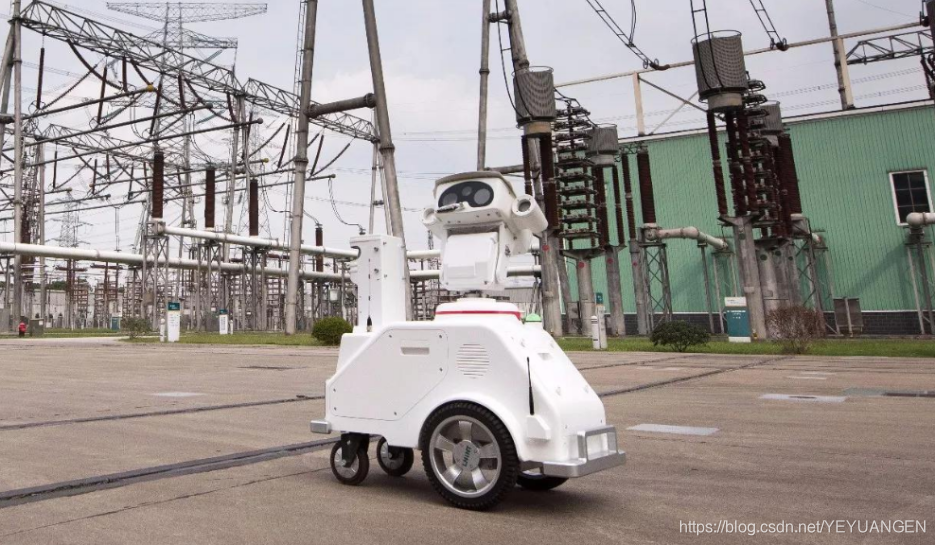
Power Inspection Robots / AGV Logistics Carts
3 Hardware and Software Specifications
Hardware Block Diagram
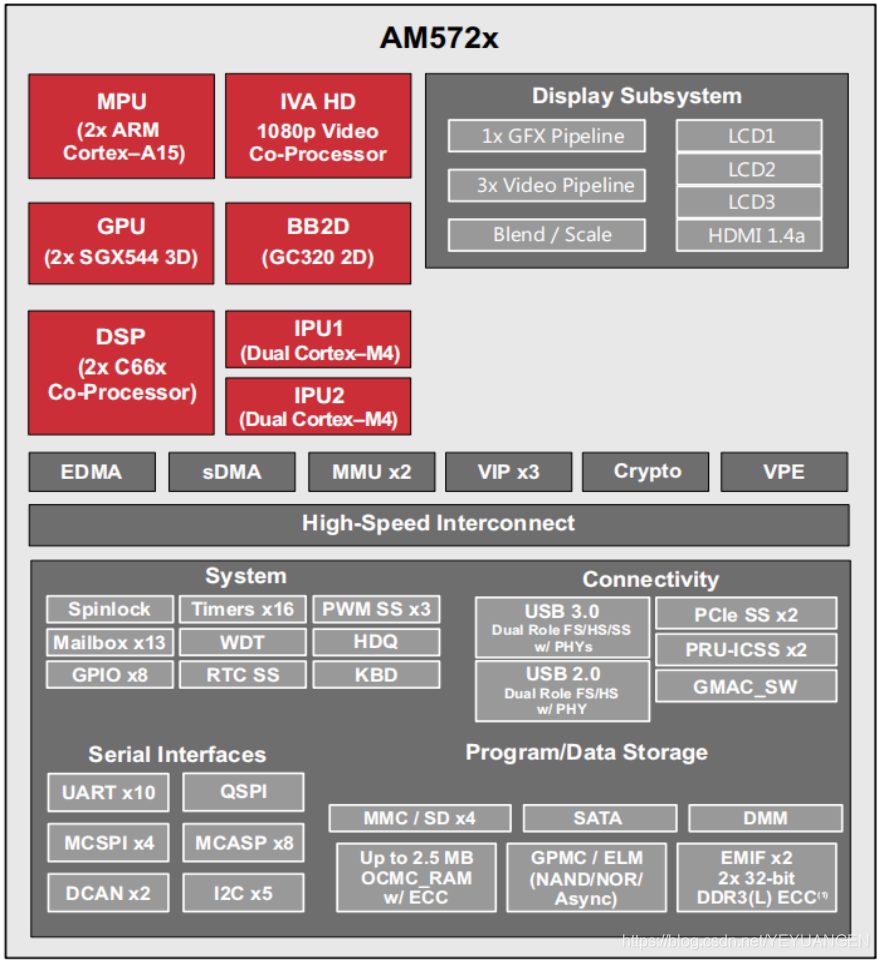
Table 1
SoC/CPU
TI AM5728, floating-point dual DSP C66x @750MHz + dual ARM Cortex-A15 @1.5GHz
2 x IPU (Imaging Processing Unit) for image acceleration, each IPU consists of two ARM Cortex-M4 cores, totaling 4 ARM Cortex-M4 cores
2 x PRU-ICSS, each PRU-ICSS contains a pair of PRUs (Programmable Real-Time Units), totaling 4 PRUs, supporting real-time industrial bus protocols such as EtherCAT
1 x IVA-HD Video Codec, supporting hardware encoding/decoding of one 1080P@60fps H.264 video stream
2 x SGX544 GPU 3D graphics accelerators
1 x GC320 2D graphics accelerator
On-Chip L2 Cache
ARM Cortex-A15: 1 MByte
C66x: 288 KByte
On-Chip L3 RAM
2.5 MByte
ROM
4/8 GByte eMMC
RAM
1/2 GByte DDR3
Temperature Sensor
1x TMP102AIDRLT
B2B Connector
2x 100-pin male B2B, 2x 100-pin female B2B, 0.5mm pitch, 5.0mm mating height, total 400 pins
IO EXTENSION
2x simple header connectors (2x 25-pin), 2.54mm pitch, including expansion signals such as GPMC, SPI, I2C, PWM, TIMER, UART, eQEP, eCAP
KEY
1x cold reset button
1x warm reset button
3x programmable input buttons (including 1 non-maskable interrupt button)
JTAG
1x 14-pin TI Rev B JTAG interface, 2.54mm pitch
DISPLAY (Optional Module)
1x 7-inch capacitive touch screen, 40-pin FP female connector, 0.5mm pitch
BOOT SET
1x 5-bit DIP switch for boot mode selection
SD
1x Micro SD interface
RTC
1x CR1220, 3V77-LOIH
Ethernet
2x RGMII, RJ45 interface, 10/100/1000M auto-negotiation
2x PRU MII, RJ45 interface, 10/100M auto-negotiation, supporting industrial bus protocols such as EtherCAT
USB
2x USB 2.0 interfaces
1x USB 3.0 interface
CAN
1x 3-pin 3.81mm Phoenix terminal
PROFIBUS
1x 3-pin 3.81mm Phoenix terminal
UART
1x UART0 to Micro USB interface, full-duplex mode
1x RS232 serial port (UART1), full-duplex mode
1x RS485 serial port (multiplexed with UART1), half-duplex mode
PCIe
1x PCIe Gen2, single-port dual-lane, maximum communication rate per lane up to 5 GBaud
SATA
1x 7-pin SATA hard drive interface
HDMI OUT
1x HDMI 1.4a interface
Camera Module (Optional Module)
1x VIP parallel camera interface
LED
2x power indicator LEDs (1 on baseboard, 1 on core board)
5x programmable indicator LEDs (3 on baseboard, 2 on core board)
FAN
1x 3-pin 5V fan connector
POWER
1x 12V 2A DC input DC417 power jack, 4.0mm outer diameter, 1.7mm inner diameter
3 Software Specifications
Table 2
ARM-Side Software Support
Linux-4.4.19, RT-Linux-4.4.19, TI-RTOS
DSP-Side Software Support
TI-RTOS
CCS Version
CCS 7.0
GUI Development Tools
Qt
Inter-Processor Communication Support
IPC inter-core communication
Software Development Kits Provided
Processor-SDK Linux, Processor-SDK RT-Linux, Processor-SDK TI-RTOS
Linux Driver Support
Camera
DDR3
PCIe/PCIe 2.0
eMMC
MMC/SD
USB 2.0/USB 3.0
LED
BUTTON
RS232
RS485
HDMI OUT
DCAN
SATA
RTC
PROFIBUS
7-inch Touch Screen LCD (Resistive)
SPI
AUDIO
UART
JTAG
EMCRYDTIC
TEMPERATURE SENSOR
KBD
HDQ
NMI
SYS INT
eCAP
I2C