Research and Design of an OFDM Underwater Acoustic Communication System Based on OMAPL138 DSP+ARM
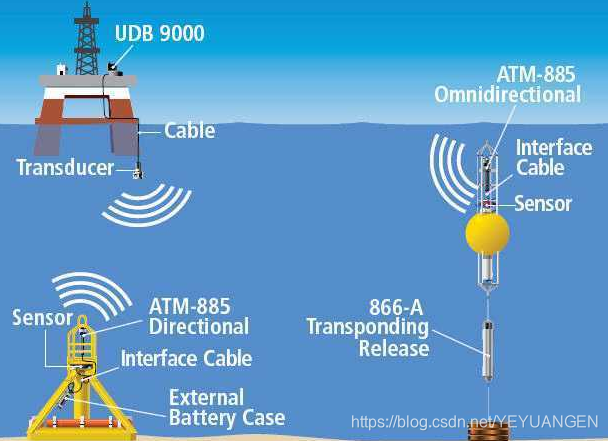
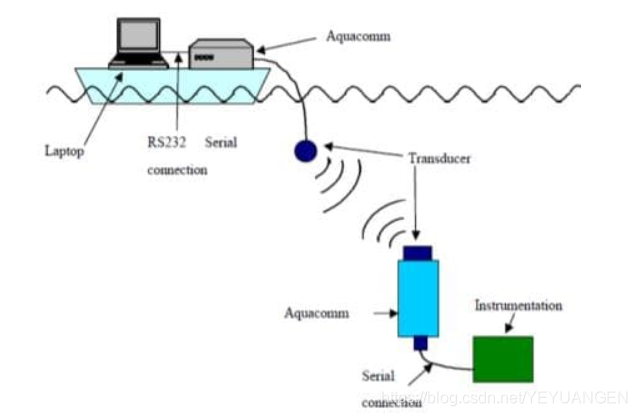
The ocean is a vital part of Earth and contains abundant resources, yet human exploration of the marine environment remains in its early stages. With increasing over-exploitation of terrestrial resources, the importance of studying and utilizing marine resources has become more evident. In this context, information transmission under marine conditions is crucial. Therefore, achieving high-speed and highly reliable communication in underwater environments has become a primary research goal. Among various communication methods, acoustic waves are considered the only viable means for medium- to long-range wireless communication in underwater environments. As such, underwater acoustic (UWA) communication has received significant attention from research institutions worldwide.
Underwater acoustic channels are characterized by strong multipath effects, high attenuation, high noise levels, and severe bandwidth limitations. Hence, a modem with strong multipath resistance and high spectral efficiency is required. OFDM (Orthogonal Frequency Division Multiplexing) modulation features orthogonality among subcarriers, with half of their spectra overlapping, resulting in very high spectral efficiency. Additionally, guard intervals can be inserted between symbol blocks to effectively combat multipath fading. Compared to single-carrier transmission, multicarrier transmission improves system capacity and data rates—making OFDM particularly suitable for underwater acoustic communication.
Under this background, this paper focuses on the research and design of an OFDM-based underwater acoustic communication system. The main research contents are as follows:
-
This study first analyzes the characteristics of underwater acoustic channels and noise sources, concluding that underwater acoustic channels are highly complex, varying in time, space, and frequency, and exhibiting strong multipath propagation, rapid fluctuations, high attenuation, high noise, and strict bandwidth constraints. Corresponding solutions and theoretical channel models are provided. By integrating the sonar equation, the optimal operating frequency of transducers is analyzed, along with estimation methods for transmission power and receiver circuit gain ranges. A channel testing scheme using LFM (Linear Frequency Modulated) pulse signals is adopted to obtain real-time channel characteristics.
-
For the aforementioned underwater acoustic communication channel, this paper employs OFDM modulation technology. It thoroughly discusses the implementation methods and technical characteristics of OFDM, including:
- Using conjugate symmetric sequence modulation,
- Employing LFM pulse signals to address synchronization issues,
- Utilizing cyclic prefixes and cyclic suffixes to mitigate inter-symbol interference (ISI),
- Applying PN sequence scrambling, random phase scrambling across subcarriers, and clipping techniques to reduce the system's high peak-to-average power ratio (PAPR).
-
First, the BELLHOP model is used to simulate the underwater acoustic channel. Based on analysis of the simulated channel, a specific underwater communication system is designed, including OFDM parameters, frame structure, overall architecture, and software flow. Then, combining the desired communication range with the sonar equation, the required transmission power and receiver gain range are estimated. Finally, using these estimated parameters along with the system architecture and functional requirements, a dedicated hardware platform is designed and implemented.
The reliability and effectiveness of the communication system are verified through simulations and experiments. Three main validation steps were carried out:
- System simulations under both Gaussian and multipath channels confirmed the system's reliability and effectiveness.
- Anechoic water tank experiments verified the correctness, reliability, and effectiveness of the system, enabling progression to lake testing.
- Lake trials conducted in Qiandao Lake further validated the system's performance under real-world conditions.

- Evaluation Board Overview: Xinmay XM138F-IDK-V3
- Based on the TI OMAP-L138 (fixed/floating-point DSP C674x + ARM9) and Xilinx Spartan-6 FPGA processor;
- OMAP-L138 and FPGA are connected via uPP, EMIFA, and I2C buses, supporting communication speeds up to 228 MByte/s;
- OMAP-L138 operates at a maximum clock rate of 456 MHz, delivering up to 3648 MIPS and 2746 MFLOPS computational performance;
- FPGA supports Xilinx Spartan-6 XC6SLX9/16/25/45, enabling strong platform scalability;
- The board exposes rich peripherals, including Gigabit Ethernet, SATA, EMIFA, uPP, and USB 2.0 for high-speed data transfer, as well as GPIO, I2C, RS232, PWM, and McBSP for general-purpose interfacing;
- Passed high- and low-temperature testing, suitable for harsh operating environments;
- Tri-core (DSP + ARM + FPGA) SOM measures 66mm × 38.6mm, using industrial-grade B2B connectors to ensure signal integrity;
- Supports bare-metal, SYS/BIOS, and Linux operating systems.
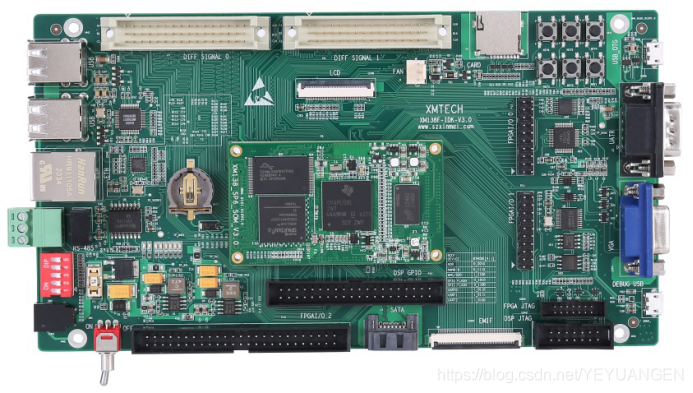

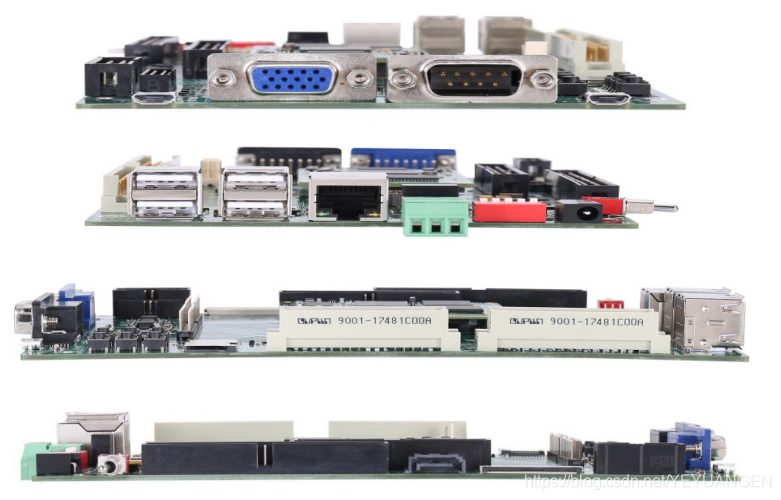
Figure 1: Front and side views of the evaluation board
The XM138F-IDK-V3.0 is an evaluation board designed based on the Shenzhen Xinmay XM138-SP6-SOM system-on-module (SOM), fabricated using a 4-layer, lead-free, immersion gold PCB process. It provides a test platform for the XM138-SP6-SOM, enabling rapid evaluation of the SOM’s overall performance.
The XM138-SP6-SOM exposes all CPU resource signal pins, making secondary development extremely easy. Customers can focus on higher-level application development, significantly reducing development difficulty and time-to-market, allowing products to quickly capture market opportunities. In addition to providing rich demo programs, comprehensive development tutorials and full technical support are offered to assist customers with carrier board design, debugging, and software development.