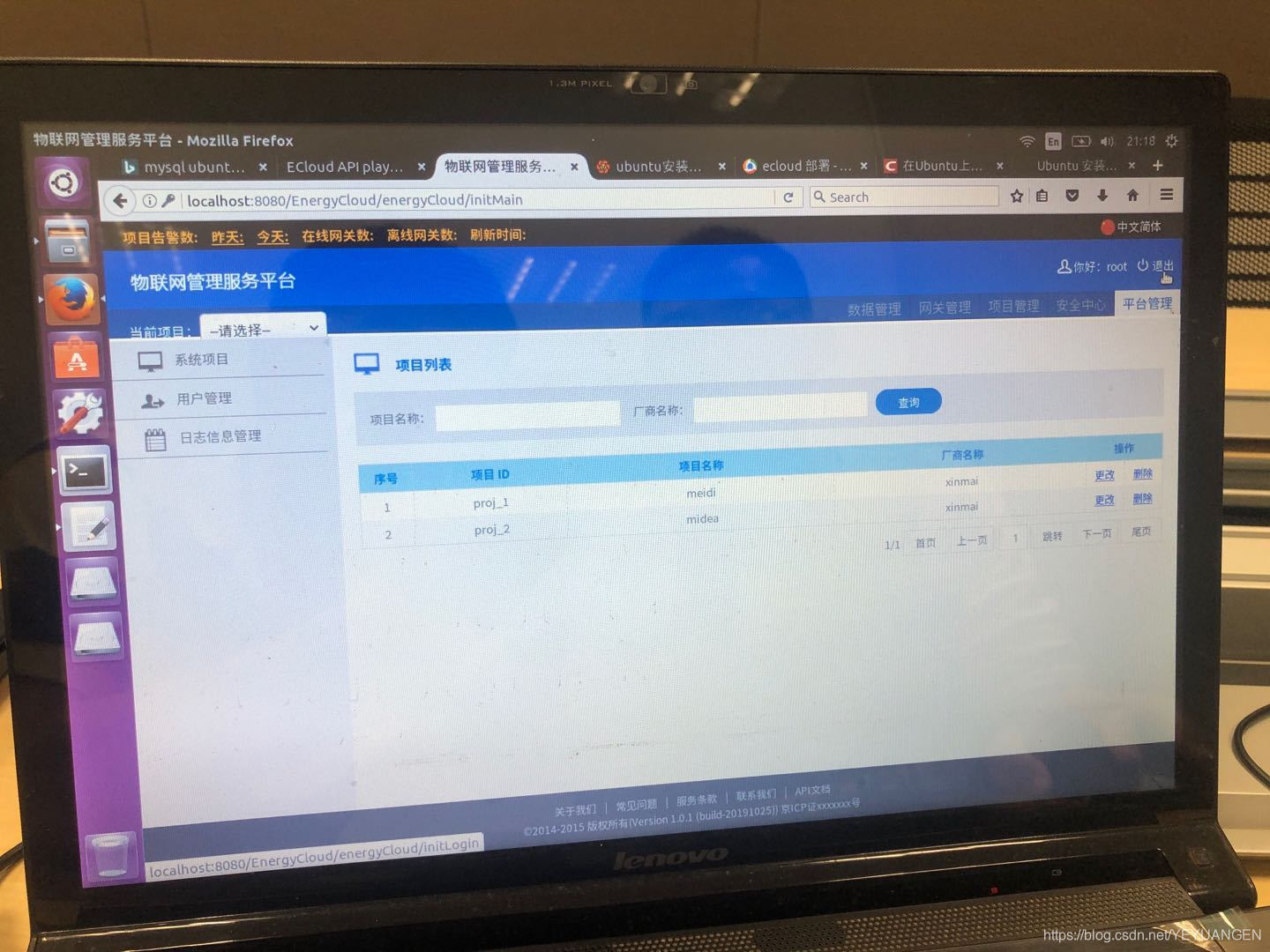
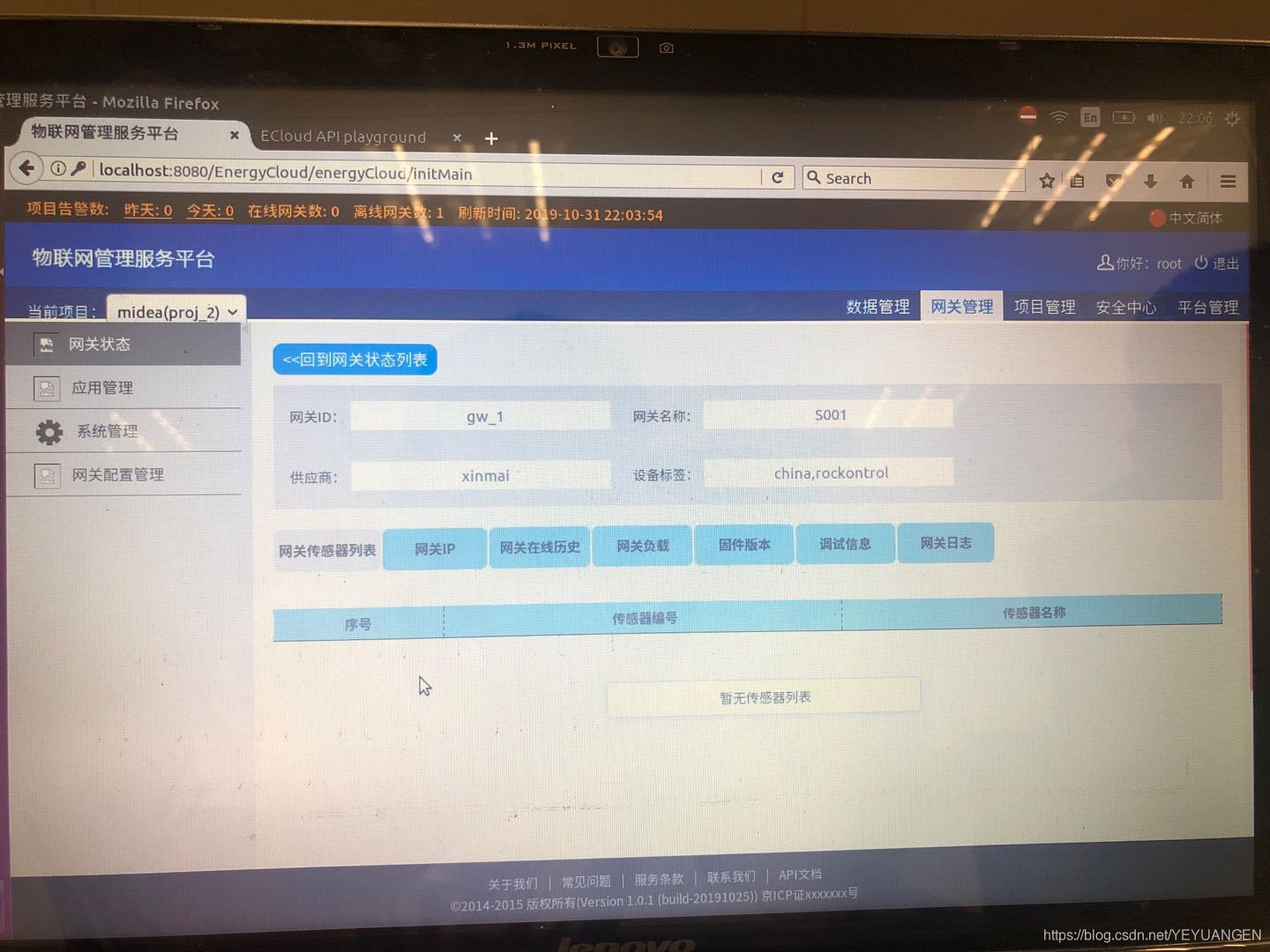
Applications of the AM5728 DSP+ARM Platform in 5G Industrial Gateways, Industrial Data Acquisition, and Edge Computing
The convergence of billions of IoT devices and 5G networks is poised to profoundly transform how computing workloads are deployed. With the advent of 5G and the IoT era, along with the growing adoption of cloud computing, traditional cloud technologies can no longer meet the terminal-side demands for "massive connectivity, low latency, and high bandwidth." Edge computing has thus emerged as a critical solution.
In fact, computing workloads have been shifting for years—first from on-premises data centers to the cloud, and now increasingly from cloud data centers to "edge" locations closer to data sources. This shift aims to minimize data transmission distance, thereby eliminating bandwidth and latency bottlenecks, ultimately improving application and service performance, reliability, and reducing operational costs.
Edge computing effectively reduces system latency, decreases data transmission bandwidth, alleviates pressure on cloud computing centers, and enhances data security and privacy. This article analyzes the concept, evolution, and key technologies of edge computing, summarizes typical industry requirements in the industrial internet domain, and proposes corresponding solution recommendations.
According to the definition by the Edge Computing Consortium, edge computing refers to an open platform located at the network edge near devices or data sources, integrating core capabilities of networking, computing, storage, and applications. It leverages the processing power of various devices across the data path to store and process private and redundant data locally, reducing network bandwidth usage and improving system real-time performance and availability. It meets critical demands of digital industries in agile connectivity, real-time operations, data optimization, application intelligence, security, and privacy.
In simple terms, edge computing brings cloud-like computing and storage capabilities down to the network edge, enabling distributed computing and storage to handle specific business needs locally. This approach satisfies the stringent requirements of emerging applications for high bandwidth and low latency.
Edge Computing Architecture
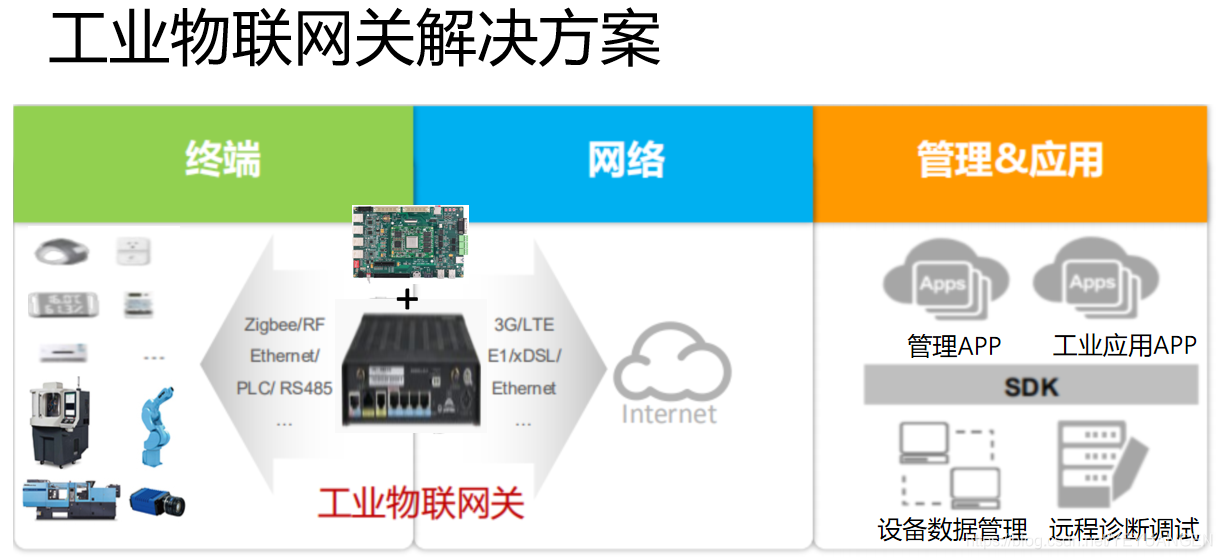
This industrial equipment IoT cloud platform is a highly customizable, industrial-network-ready digital and information platform developed based on data acquisition products and integrated digital & IT technologies. It delivers value-added services to customers, creates a new ecosystem for technical services, and bridges the last mile of industrial applications. The platform communicates with the cloud via network communication functions embedded in industrial intelligent gateways, enabling full integration and interconnection across device control, sensing, scheduling, and information management layers—achieving rapid deployment with minimal development effort.
- Device and Data Focus: The platform is designed from the perspective of industrial equipment, making it better suited for industrial IoT application scenarios—going beyond mere data transmission.
- High Performance: Supports 5G, employs a columnar database to accommodate large-scale device connectivity, enables data acquisition and analysis via multiple industrial protocols, and provides remote fault diagnosis, real-time monitoring, alerts, online debugging, and functional updates.
Rotating Equipment Monitoring and Diagnostics in Petrochemical Industry

Marine Power Equipment Monitoring and Diagnostics

(1) Device Connectivity
Industry-specific data acquisition and networking devices are developed for enterprises across typical sectors. This approach equips foreign-owned equipment with a "Chinese brain," completely transforming foreign automation control systems. Dedicated data acquisition ports are configured on specialized equipment using plug-and-play methods to securely and reliably extract real-time data from industrial field devices. This solves interoperability issues among equipment from different manufacturers, enabling ubiquitous device connectivity.
(2) Protocol Conversion
Industrial gateways are designed based on OPC UA, converting various standard or proprietary communication protocols used by on-site industrial devices and systems into the standardized OPC UA protocol. For heterogeneous fieldbus and Ethernet bus data with different message structures, standardized message parsing is achieved through built-in data access modules. Industrial gateways should support multiple network interfaces, bus protocols, and network topologies.
(3) Edge Data Processing
Edge computing and cloud computing are deployed collaboratively through edge devices. Based on the characteristics of data access in typical industries, edge devices perform real-time, on-the-fly processing of streaming data to rapidly respond to events and dynamic business conditions. Distributed edge computing nodes enable data and knowledge exchange, support horizontal elastic scaling of computing and storage resources, and execute local decision-making and optimization. Non-real-time data is aggregated and sent to the cloud for further processing, achieving seamless integration with cloud computing.
Typical industries in the industrial internet domain vary in their levels of digitalization and intelligence, leading to diverse edge computing requirements. However, with continuous advancements in networking, computing, storage, and security technologies, edge computing will fully leverage end-device computing capabilities to achieve ubiquitous connectivity and edge management.
It is foreseeable that as flexibility in computing deployment increases, cloud and edge computing will converge, becoming increasingly indistinguishable. When computing power becomes universally accessible and usable anywhere within the IoT ecosystem, "ubiquitous computing" will emerge.
This industrial gateway is custom-designed based on the Xinmai AM572X-IDK-V3 development kit. The evaluation board accelerates the validation process and serves as a valuable reference for project development.
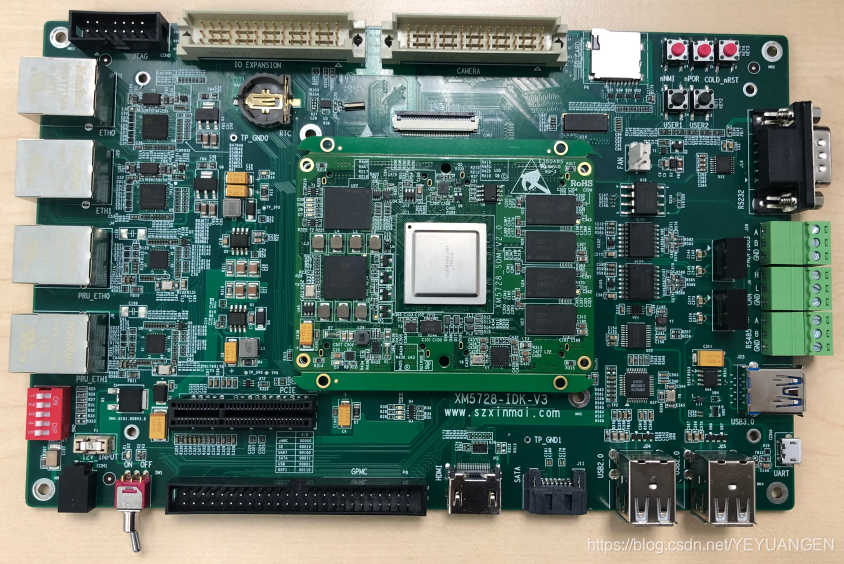
●Key Specifications●
Key specifications of the industrial data gateway are as follows:
(1) Meets industrial-grade requirements, cost-effective, and equipped with edge computing capabilities.
(2) Multiple Ethernet, serial, and CAN ports, with FPGA expansion interface.
(3) Supports 4G/5G/Wi-Fi/NB-IoT/LoRa/ZigBee wireless communication.
(4) System stability and reliability.
(1) Meets industrial-grade requirements, cost-effective, and equipped with edge computing capabilities?
Built on the Xinmai TI Sitara AM5728/OMAPL138 series ARM Cortex-A15/Cortex-A9 processors, operating from -40°C to 85°C, the industrial-grade core board delivers a maximum clock speed of up to 1 GHz, meeting edge computing demands in industrial environments.
(2) Multiple Ethernet, serial, and CAN ports, with FPGA expansion interface?
-
Supports 3 native Ethernet ports: one PRU-based 100 Mbps port and two Gigabit ports. One port can be used for LAN, and the other two for WAN. Additional Ethernet ports can be expanded via GPMC parallel interface or USB.
-
Supports 6 native serial ports, with expansion options for 8 additional serial ports via GPMC parallel or SPI interfaces, supporting configurable RS232/RS485/RS422 interfaces as needed.
-
Features 2 CAN interfaces, suitable for harsh industrial environments.
-
Supports FPGA expansion via GPMC parallel interface, enabling flexible connection to multiple or high-speed ADCs, or expansion of other data interfaces. The measured data transfer rate between ARM and FPGA via GPMC in EDMA mode can reach up to 624 Mbps, meeting industrial data transmission speed requirements.
(3) Supports 4G/5G/Wi-Fi/NB-IoT/LoRa/ZigBee wireless communication?
Wireless communication modules can be connected via common interfaces such as USB, SDIO, and UART. Reference designs for 4G/Wi-Fi are provided to facilitate rapid user evaluation.
(4) System stability and reliability?
The core board has undergone temperature cycling, vibration, aging tests, and over 3,000 power-cycle endurance tests, ensuring stable system operation. It features low power consumption, approximately 1W.